AI boom gives ASMPT reason to keep its circuit board unit
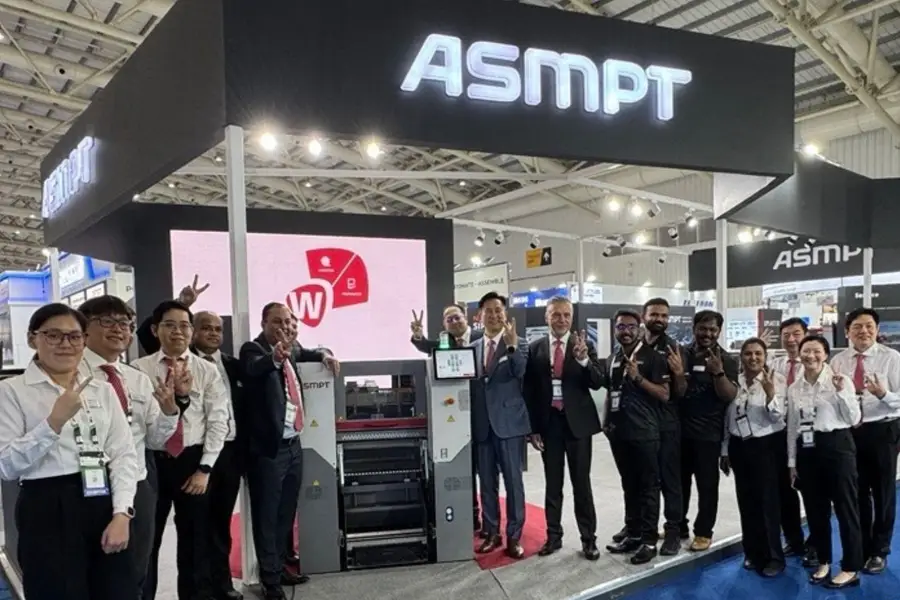
After attracting potential buyers, the chip equipment maker has decided to keep its circuit-board equipment business, which is staging a comeback on AI demand
Key Takeaways:
- ASMPT has decided to keep its circuit-board equipment unit on improving performance from AI demand, after previously considering a sale
- The unit’s 2027 sales target implies average quarterly sales about a third higher than for this year’s third quarter
By Hu Minghe
Back in 2015, ASMPT Ltd. (0522.HK) told investors that its expertise in chip assembly and circuit-board equipment put it in strong position to develop new packaging solutions for its customers. In January, it put the circuit-board equipment business, one of its two main units, known as SMT for “surface mount technology,” under review. By October, private equity firm IDG Capital had emerged as the most advanced bidder, with FountainVest Partners and Triton Partners also interested, Reuters reported.
But now, the company has had a change of heart about a stumbling unit it once considered as increasingly peripheral to its larger chip assembly equipment business. On Nov. 5, ASMPT announced it had decided to keep the business after all. It cited AI infrastructure investment, more demanding electronics manufacturing and the unit’s improving performance, technology and customer position behind its decision.
While ASMPT is casting its decision to keep SMT as strategic, price also could have been a factor. In its October report, Reuters said a sale could value SMT above $1 billion, while ASMPT was seeking about $1.5 billion. Citi said in a note after the decision that the reported valuation looked low against earnings implied by the company’s latest outlook for SMT. Still, some investors had hoped a sale would leave ASMPT as a focused chip-equipment company commanding a higher valuation, Citi said.
The company’s shares fell 10.3% the day of the announcement, wiping out a similar-sized gain the previous day during a rally for Hong Kong chip stocks. ASMPT now has to turn its renewed confidence in SMT into sustained sales and show skeptical investors how one plus one can equal more than just two by keeping the two units under one roof.
AI changes the picture
The SMT machines that have suddenly won ASMPT’s new affection are used to mount parts on circuit boards. ASMPT’s equipment handles a range of tasks, from printing solder paste, which forms electrical connections when heated, to placing chips, resistors and other components and inspecting the results. The final circuit boards are a central component in most computing devices, from PCs to smartphones and smart devices, and increasingly high-performance AI servers.
The circuit-board business brought in about 44% of ASMPT’s sales in this year’s third quarter. It is also a major supplier worldwide: ASMPT estimates it won about 31% of global orders for such equipment so far this year. The unit combines the circuit-board placement business bought from Siemens in 2011 with DEK, the solder-paste printing specialist acquired in 2014.
AI demand has helped revive the business’ outlook. SMT’s sales fell 26.6% year-on-year in the first half of last year, then returned to growth in the third quarter that year, with AI servers among the factors behind the turnaround. Orders roughly doubled year-on-year to $1.46 billion in the first nine months of this year, with AI-related applications accounting for over half of its orders so far this year, the company said.
The opportunity also extends into chip packaging, which once looked set to become ASMPT’s main business when it was planning to potentially offload SMT. That business, known as SEMI in the company’s reports, makes equipment to assemble chips into packages that can connect to other components. Advanced packaging includes placing several chips close together to work as a system, as in some AI processors. Some of SMT’s own machines are used in advanced packaging too, with such applications accounting for about a quarter of SMT’s orders so far this year.
One machine shows how the technologies overlap. ASMPT sells its circuit-board placement machines under the SIPLACE brand, inherited from Siemens. The CA2 model, featured at a Korean trade show in 2023, combines two jobs: a die bonder’s work attaching bare chips and an SMT placer’s work positioning conventional components. Combining the placements can save a separate step.
Both divisions also supply equipment for making optical transceivers, which convert electrical signals into light to carry data over fiber between servers. Keeping both gives ASMPT exposure to more stages of AI hardware production, the company says.
Szeho Ng, a managing director at BOCI Research, said ASMPT’s SEMI division’s precision capability in picking and placing chips “makes its SMT product offering stand out.”
A rival has built the same pairing. Japan’s Yamaha Motor Co. (7272.T), better known for its motorcycles, started selling chip-assembly equipment to complement its machines for making circuit boards in 2019. Selling SMT would have left ASMPT unable to do the same.
Once scorned, now embraced
The rebound for SMT had already begun before ASMPT put the business under review in January. Robin Ng, who had moved up from CFO to become the company’s CEO at that time, acknowledged buyer interest in March but said retention remained possible, according to a Hong Kong media report.
In June, ASMPT completed the sale of NEXX, its U.S. business making equipment that applies thin layers of material to semiconductor devices, to chip-equipment maker Applied Materials (AMAT.US). It said that sale would also sharpen its chip-packaging focus.
Then Ng left the company, replaced as CEO in August by Bassel Haddad, previously an Intel executive with senior roles in edge computing and AI. “Since I joined ASMPT in August, I have continued to witness how AI is creating new opportunities across ASMPT’s portfolio,” Haddad said in last week’s announcement of the decision to keep SMT.
Turning orders into sales
Analysts expect ASMPT’s total revenue to rise about 18% next year to HK$23 billion ($2.93 billion), according to the average of 19 forecasts compiled by Yahoo Finance. ASMPT has said it expects SMT sales to rise by double digits in the fourth quarter from the third, according to its latest results filing.
The company has also said it is aiming for about $1.6 billion in SMT sales next year, nearly double last year’s total. That works out to an average of about US$400 million a quarter, roughly a third more than the $295 million it sold in the third quarter of this year.
The unit’s profitability is also improving. SMT’s adjusted segment profit margin reached 17.7% in the third quarter, nearly double a year earlier. Management is aiming for even more improvement, targeting a full-year segment profit margin of 20% next year. It expects bigger volumes and a shift toward higher-value applications to help it reach that target.
The clearest proof that the two businesses belong together would be an order ASMPT wins because it sells both kinds of machines. But it has yet to point to such a win in its recent results and announcement of its decision to keep SMT.
To subscribe to Bamboo Works weekly free newsletter, click here
Related Articles

Haitian finds bitter taste in China’s restaurant slowdown
Hisense catches chill from cooling Chinese economy
Senior Material’s quarterly profit surges, but investors unimpressed
RELATED ARTICLES
-
ESWIN Computing powers up its RISC-V growth story for Hong Kong investors
- Kinwong runs hot on AI boom, cold on plunging margins
- Lufax reshuffles board as delisting clock ticks down
- Its stock eviscerated, Keep faces difficult road back to fiscal fitness
-
PCB leader Dynamic Electronics holds the line on prices – to its detriment
603175.SHG
-
Han’s CNC etches out triple-digit growth on AI infrastructure boom
3200.HK301200.SHE
- Circuit Fabology leaps in Hong Kong trading debut on strong demand