Mapping commercial paths for robots in industry and at home
Factories need robots that cut costs and work reliably, while homes need compelling reasons to buy them
By CLS Marketwatch
The robotics industry is on the rise. On the one hand, demand for automation and intelligent systems in manufacturing continues to grow, with tasks such as material handling and sorting as key points for robots to “enter the workforce.” At the same time, consumer desire for companionship, interaction and home services is steadily gaining momentum, garnering widespread public enthusiasm.
Yet, in moving from the drawing board to the factory floor or living room, robots are confronted with very different environmental complexities, clarity of demand and evaluative criteria. This is the backdrop where commercial exploration for robotics is gradually unfolding.
Factories first
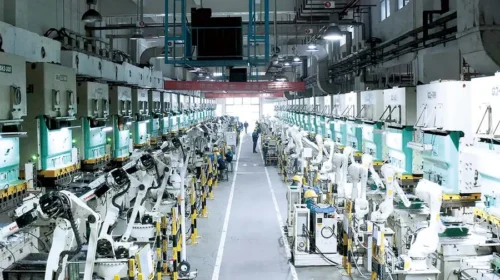
Industrial applications are widely considered the top priority for commercial deployment of robots, primarily due to their well-defined demand and quantifiable evaluation criteria. In a factory setting, a robot’s ability to execute a task is only the first step. A company’s willingness to make the purchase hinges on whether sustained operational efficiency, stability and overall cost can confer an advantage over traditional manual labor. This implies that even if a robot can perform tasks such as material handling and sorting, commercialization remains difficult if it cannot offer a cost advantage.
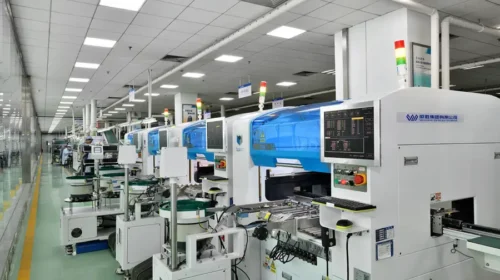
Among these, automotive manufacturing and 3C light industry are the most likely first large-scale adopters, since they feature standardized processes, a high degree of task repetition, labor-intensive operations, and stable working conditions – all of which align with current robot capabilities. Nonetheless, industrial setting constraints shouldn’t be overlooked: efficacy data remains relatively fragmented, and capacity for autonomous operation by most models is limited. What’s more, adaptation between robot hardware and production workflows is lengthy, debugging costs are high, and long-term reliability needs to be improved.
Consumers want more than gadgets
Unlike industrial applications, where demand is well-defined, the market for consumer-grade robots is relatively vague. That said, the well-known PrimeBOT brand has identified families with children, tech enthusiasts, and developers as primary target groups, even as expectations from these groups are far from uniform. At the same time, home settings are highly complex and unstructured, making points of entry the biggest challenge. This reveals the core difficulty in commercializing household robots: technology is not the primary objective, but rather, the crux lies in users’ perception of product value that can be translated into purchasing decisions.
Notably, needs such as listening to music, learning English, and searching for information are already met by mature devices like smartphones. Therefore, offering such functions by a robot hardly provides a compelling reason for a purchase. Instead, the value of home-based robots should be based on their mobility, sensory capabilities, and ability to interact with the physical world, offering an experience that existing devices cannot easily replicate.
Manufacturing also presents another hurdle. Robots are highly complex, with hardware, AI, and the ecosystem intricately intertwined. While building one prototype is relatively straightforward, ensuring batch consistency across 10,000 robots can be exceptionally challenging. In view of this, PrimeBOT has embraced manufacturing and quality management practices used in the automotive industry, achieving the rollout of one robot every 2.5 minutes. The company is expected to spend 500 million yuan ($75 million) on R&D this year to advance full-stack development. As for pricing, the newly released PrimeBOT Q1 and PrimeBOT T1 both cost 19,999 yuan, the PrimeBOT Q1 Explorer Edition costs 26,999 yuan, and the PrimeBOT T1 Pro costs 29,999 yuan.
Three tiers
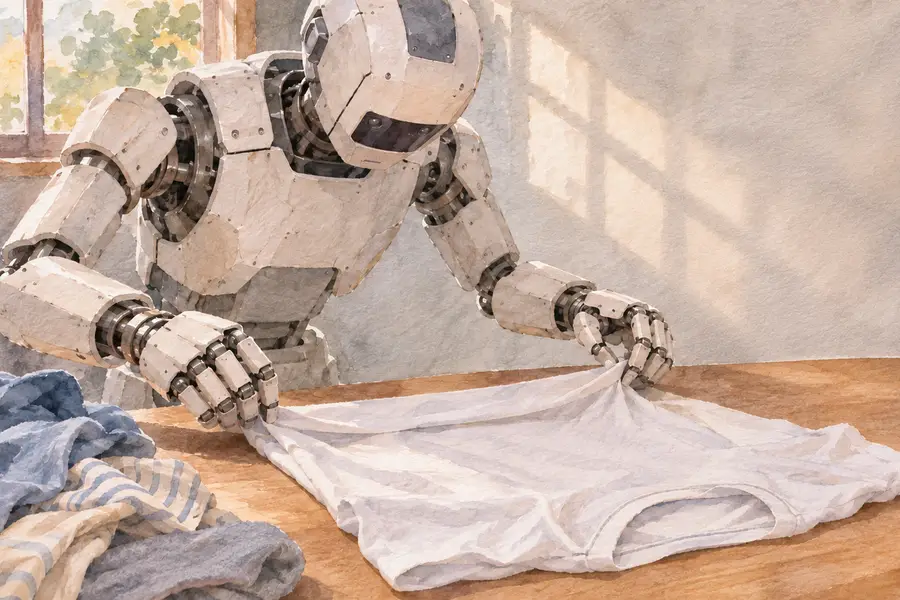
In terms of technological evolution, robotic intelligence can be divided into three tiers: interactive intelligence, locomotive intelligence, and operational intelligence. Interactive intelligence is the communication gateway between humans and robots, helping robots understand human behavior, habits and living environments; operational intelligence refers to actual performance of tasks using the robot’s own hands, such as folding clothes, and relies on continuous investment in large language models and data. Robots currently generate value mostly through interactive intelligence, while operational intelligence also presupposes mature interactive intelligence.
In terms of capability evaluation criteria, embodied intelligence is subject to scaling law, though its manifestation differs from that of large language models. Taking a single task as the benchmark, scaling law converges relatively quickly, and the real challenge lies in generalization. This, in turn, raises a more concrete question: in gauging a robot’s capability, should one look at how many skills it can perform, or how many times a given task can be reliably completed. A more pragmatic path, therefore, is to first achieve a high success rate for a small number of tasks, and then expand the scope of tasks.
Household scenarios also bring extra safety requirements. Beyond the safety of the hardware itself, power-source safety must also be ensured. Data security is equally critical, since using robots in the home involves family members’ private data, including the elderly and children.
At the end of the day, there’s no denying the commercialization of robots is currently in full swing. Among the two major development paths, industrial scenarios feature well-defined demand and relatively quantifiable evaluation criteria, whereas household settings depend on a clear and compelling value proposition, and must surmount challenges involving generalization, stability, security and privacy. The parallel advancement of these paths is jointly delineating how the industry will advance from simply creating robots that can move, to ones that are genuinely needed.
CLS Marketwatch provides insights and analysis on China’s industries. You can contact the author at liujingyi@cls.cn
To subscribe to Bamboo Works weekly free newsletter, click here
Related Articles

RELATED ARTICLES
-
Ubtech charms investors with companion robots – until reality sinks in
- The embodied intelligence puzzle: A deep dive into China’s humanoid robot industry
- Specialized embodied robots: A massive next-generation opportunity
- INTERVIEW: Cainiao rolls out ZeeBot in latest step toward ‘Dark Warehouses’
- Why humanoid robots are still more about showmanship than productivity
- Dobot taps Shenzhen market to fund its bet on humanoid robots
- Who needs humanoids? Direct Drive Tech bets on simpler household robots