Ping An’s operating profit climbs 8.3% in first nine months despite market volatility
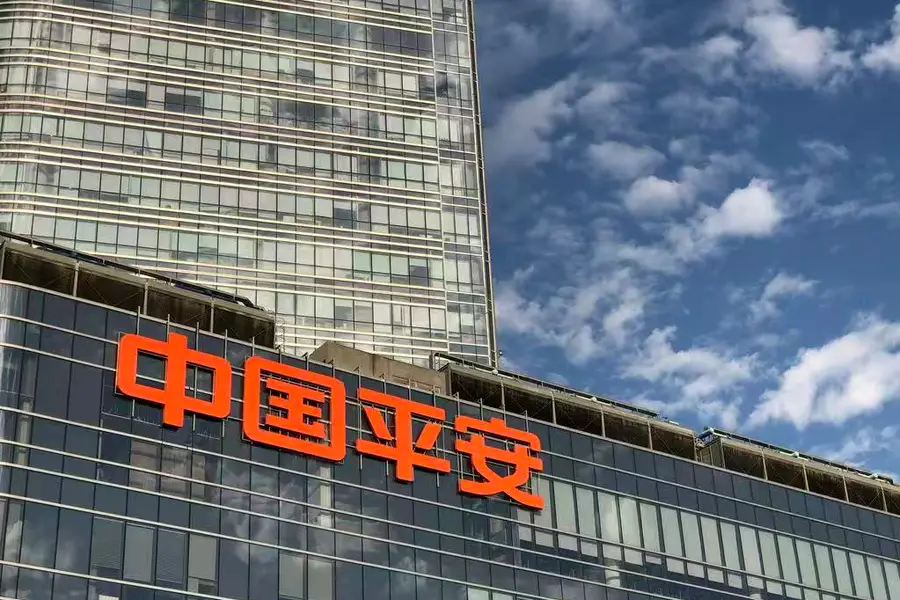
Ping An’s H-shares rose 2.6% after it reported core earnings growth, as its financial services and growing health and senior-care businesses lay a foundation for longer-term growth
Key Takeaways:
- Ping An’s operating profit rose 8.3% to 126 billion yuan in the first nine months of 2026 despite market swings that affected its net profit
- The insurer’s diversified financial services, expanding health and senior-care units and continued technology investment are driving longer-term value creation
By Warren Yang
When it comes to corporate report cards, headline profits don’t always tell the whole story.
That’s particularly true for businesses such as Ping An Insurance (Group) Co. of China Ltd. (2318.HK), where long-term insurance liabilities sit alongside substantial investment portfolios, and short-term market movements can create volatility in reported earnings.
Ping An’s net profit fell 27.3% year-on-year to 96.6 billion yuan ($14.5 billion) in the first nine months of 2026, partly reflecting changes in the fair value of its equity holdings and a high comparison base from a year earlier.
Those movements matter, but they are only one part of the picture. Changes in investment values can move reported net profit sharply from one period to another without necessarily reflecting the direction of the underlying business. The better question for long-term investors is therefore whether Ping An’s core operations remain on track.
In the first nine months of the year, the answer appears broadly positive.
Ping An’s operating profit after tax (OPAT), also known as core earnings at global insurance peers, grew 8.3% year-on-year to 126 billion yuan in the first nine months of the year, driven by solid underwriting performance in its core life and health segments, resilience in its integrated finance operations, and the steady expansion of its health and senior care ecosystem. Growth in its operating profit has allowed Ping An to raise dividends for more than 10 consecutive years, a key focus for investors amid market volatility.
Another metric closely tracked by analysts is new business value (NBV), which measures the present value of future profit generated by freshly written policies.
NBV for its life and health segments decreased 13.3% year-on-year in the first nine months, largely due to temporary factors rather than company-specific issues. For starters, September 2025 saw an exceptional industry-wide surge in policy sales ahead of mandated pricing rate reductions, creating an unusually high comparative benchmark in the year-ago period.
In addition, Ping An has been driving a strategic shift toward higher-margin policies with longer payment terms. This weighed on Ping An’s NBV volume as its sales force needed time to recalibrate selling tactics, but business quality improved as evidenced by an uplift in the new business margin of the agency channel.
That confluence of factors all contributed to Ping An’s NBV decline, which seems to reflect a transition in the industry’s overall operating environment rather than signaling weakening underlying consumer demand.
Management said on the company’s earnings call that the entire industry is still on track to move into a strong growth period as demand remains intact. They stressed that Ping An’s strong product mix, distribution channel and service capability positions the company well to capture the market opportunity.
The company added that it is deepening reforms across its distribution channels, such as agency and bank channels and through community grids and community finance, to ensure its growth momentum continues. It said it is confident that the company can deliver growth over the medium to long-term given the persistent trend of household wealth reallocation and demand for health and senior care services.
Aging population opportunity
China’s aging population is creating structural challenges for many sectors, but the opposite is true for insurers like Ping An. As households increasingly try to protect and diversify their wealth in a choppy economy, demand for health, pension and long-term savings products is also growing.
Ping An is actively capitalizing on this demographic shift with a strategy combining finance with health and senior care. This creates opportunities to engage policyholders more frequently beyond annual renewals. At the same time, internal cross-selling across Ping An’s base of nearly 256 million retail customers lowers acquisition costs compared to reliance on fee-charging third-party channels. Customers who utilize these integrated services consistently buy more products from Ping An and demonstrate stronger retention. According to the company’s third-quarter announcement, ticket size of new policies sold to customers who used healthcare services was 2.6 times that of non-users. Customers holding products across three or more business lines had a retention rate of 99%.
This ecosystem is underpinned at scale by Ping An’s enterprise-wide technology and growing use of AI. The company leverages proprietary AI tools for underwriting, claims processing and risk management to improve efficiency and lower unit delivery costs across its entire retail network. For instance, its property and casualty (P&C) unit uses AI for fraud detection, with cost savings exceeding 10 billion yuan in the first nine months of this year.
Still, there’s no question that Ping An and its peers are facing immediate operational and macroeconomic friction in a slowing Chinese economy.
Foremost among the challenges is China’s prolonged low interest-rate environment. As the country’s benchmark bond yields hover near historic lows, insurers face continuous reinvestment risks as older, high-yielding fixed-income assets mature and must be replaced with lower-yielding instruments. This raises the bar for all insurers’ asset-liability management capabilities. And as the sector’s nine-month results clearly show, capital market volatility is always a risk.
This is not a completely new challenge. For years, Ping An has been investing in longer-duration assets as well as high-yielding blue-chip stocks, in anticipation of lower rates to come. Compared to its peers that focus solely on life insurance, Ping An’s diversified income streams could also offer more resilience.
Ping An’s Hong Kong-listed shares rose 2.6% on Thursday after the results announcement, paring the stock’s declines this year to 24%. The shares now trade at a modest price-to-book (P/B) ratio of 0.74, The broader Chinese financial sector also trades below 1 time P/B, probably reflecting persistent skepticism over China’s broader macroeconomic recovery.
Given Ping An’s relatively sound fundamentals and strong position in the large Chinese market, patient investors looking past short-term noise may well see a potential buying opportunity for this discounted financial titan. The stock offers a 6.5% dividend yield at its current price.
The Bamboo Works offers a wide-ranging mix of coverage on U.S.- and Hong Kong-listed Chinese companies, including some sponsored content. For additional queries, including questions on individual articles, please contact us by clicking here
To subscribe to Bamboo Works free weekly newsletter, click here
Related Articles

RELATED ARTICLES
-
Longsys profit leaps in first nine months
 9976.HK301308.SHE
-
Luxshare Precision’s profit grows 15% or more in nine months to September
002475.SHE
-
Han’s CNC revenue doubles in first nine months on booming demand from AI
3200.HK301200.SHE
-
Qinhuangdao Port’s throughput edges up in first nine months of 2026
3369.HK
-
China’s baby bust drives Kidswant pivot to scalp care
301078.SHE
-
After nine lost years, China Literature opens new chapter with AI-IP combo
0772.HK
-
Keytop hits the skids less than two months after Hong Kong IPO
2272.HK