Keytop hits the skids less than two months after Hong Kong IPO
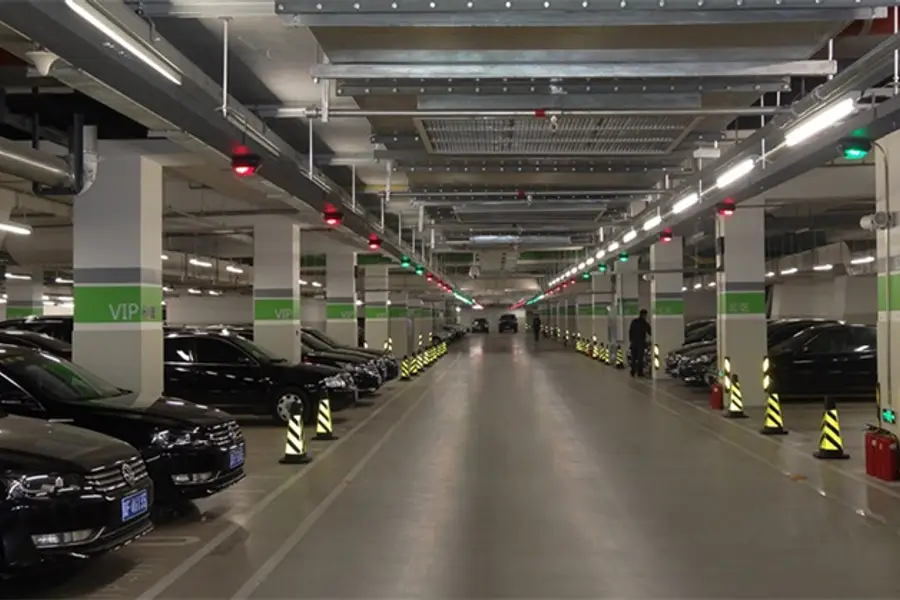
China’s ‘first smart parking stock’ reported double-digit revenue and profit declines in the first half of 2026, blaming project delays
Key Takeaways:
- Keytop Parking reported its revenue fell 11.9% in the first half of this year, with its core smart parking systems and management services down by nearly 18%
- The smart parking lot builder and manager’s net profit fell by 12% during the six-month period, and was down 40% on an adjusted basis
By Edith Terry
Did it hit the skids, or was it merely slowing down for a turn in the road? That’s what some investors might have been asking last week after Keytop Parking Inc. (2272.HK) issued results that hardly looked encouraging in its first post-IPO financial report since its Hong Kong IPO two months ago.
The company’s profit sank 12.5% year-on-year to 25.2 million yuan ($3.75 million) in the first half of 2026, and was down by an even steeper 40% on an adjusted basis to 28.7 million yuan. Its revenue wasn’t much better, down by 11.9% to 333.9 million yuan.
Keytop’s main business segments were equally uninspiring. Revenue from its core smart parking systems business was down by 17.4% to 161.5 million yuan, while its smart parking management services segment was down by 11.8% to 80.9 million yuan. Its parking facility and platform operations unit was roughly flat at 90.8 million yuan.
The uninspiring results weren’t completely unexpected, since Keytop warned late last month that its profit fell during the period, blaming project delays as it increased the size of its sales and marketing team to manage its new parking space rental platforms. Keytop doesn’t own or build parking garages, but instead helps third parties outfit their garages and manages existing parking spaces.
The declines in revenue and profit put the brakes on three years of growth, which saw Keytop’s revenue rise from 738 million yuan in 2023 to 830.6 million yuan in 2025, and its profit grow from 87 million yuan to profit of 107.9 million yuan over that time. Keytop described the recent reversal for its smart parking system and smart parking management services as “minor fluctuations,” adding that it believes both businesses remain well-positioned for long-term development.
Keytop’s shares fell about 10% in the week after its original profit warning in late July. Investors had a change of heart later, sending the shares up 4.4% on the first trading day after the release of the midyear results last week. By the end of Wednesday this week, the stock was roughly where it was before the original profit warning in July.
Tied to car ownership
So, what’s going on? Since its founding in 2006, Keytop’s growth has been tied both to car ownership and China’s property sector, which both boomed for the first two decades of the 21st century, only to hit the skids in the 2020s. Parking failed to keep up with the new cars driving onto the road during the boom years, and there were 80% more cars on the road than parking spaces at the end of 2024 – specifically, 345.7 million cars to 190 million spaces.
That logic helped Keytop’s shares to more than triple in their trading debut on June 26. The stock has given back some of the gains since then, but at Wednesday’s close was still about 180% above its listing price.
On the positive side for investors, Keytop is unique as one of the only listed companies globally with a large-scale language model dedicated to parking lots, using data from its over 30,000 facilities to manage lots and spaces remotely. It doesn’t hurt that Tencent is a major backer and that Yu Minhong, founder of education giant New Oriental, was an early investor.
More importantly, under the hood, Keytop has been building the part of its business that doesn’t depend heavily on new property construction, specifically the business of providing parking facility management and operation services on behalf of other owners.
Based in South China’s Fujian province, the company earns nearly 50% of its revenue by providing smart parking systems for parking lot owners, with another 24% coming from parking management services. Both segments depend on sales to third-party customers, with hardware sales making up over half of smart parking systems revenue in the first half of this year. This is the company’s original legacy business, which began with sales of parking space availability indicators and parking guidance systems.
A third, newer business, providing 27% of revenue in latest report period, is parking facility and platform operations, which includes Keytop’s AI apps business. Revenue from the segment grew by 80% between 2023 and 2025, with much of that coming through contract operations. These are parking facilities managed under contract for a fixed annual fee, with Keytop either sharing or retaining revenue based on negotiated terms. Many of these facilities are existing garages, which Keytop refits with its own technology and software.
AI apps
Keytop’s apps are built around an AI-driven automatic number plate recognition (ANPR) system and include an AI kiosk that replaces on-site personnel, an AI parking manager and AI customer service agent. The company has drawn on its Tencent connection to partner with WeChat’s payment app for cardless payments since 2017.
Keytop said it plans to increase its investment in its parking facility and platform operations business, which currently looks like its biggest growth engine. Among other things, it plans to develop customized services on top of existing application scenarios for public parking, and to introduce its parking facility and platform operation services to large commercial complexes, scenic areas and industrial parks. It also plans to expand its international footprint, with a focus on developing markets including Southeast Asia and the Middle East.
Keytop was founded by Sun Longxi, a graduate of Changchun University of Science and Technology in Northeast China, who moved to the Southern city of Xiamen with 300,000 yuan in capital to build a startup selling communications products. He started with ultrasonic testing equipment for a city parking guidance system, only to have his first client cancel the deal after just three months, leaving Sun with a warehouse full of inventory.
Then he had a stroke of luck when a Singaporean customer found him through his website. It turned out that only one other company in the world made a similar product, a Spanish producer that charged much more. Sun pivoted to the parking industry as car ownership was exploding but parking management was still primitive. He launched his first ultrasonic car-finding systems, and Keytop took off.
Sun has proven that he is able to rebound from an apparently bad situation, and China still sorely needs better management of its limited volume of parking facilities to make them more efficient. Now, Sun must just show investors that he can shift his company back into growth mode, proving Keytop’s weak first-half results were just a minor bump in the road.
To subscribe to Bamboo Works weekly free newsletter, click here
Related Articles
RELATED ARTICLES
-
Digital China’s AI reboot gets stuck in its low-margin past
 0861.HK
 - Fairland’s ‘smart pools’ swim closer to IPO with CSRC application
-
Autohome skids as China’s car market slams on the brakes
ATHM.US2518.HK
-
PCI Technology stuck in low-margin ICT systems integration
600728.SHG
-
The next big EV idea for investors? Bethel bets on the intelligent chassis
603596.SHG
- Luxury e-commerce ‘gondolier’ BMax paddles towards Hong Kong IPO
- Zhejiang Energy Marine steams ahead on green shipping boom