Inkeverse ditches micro-dramas in face of AI challenge, tries out data centers
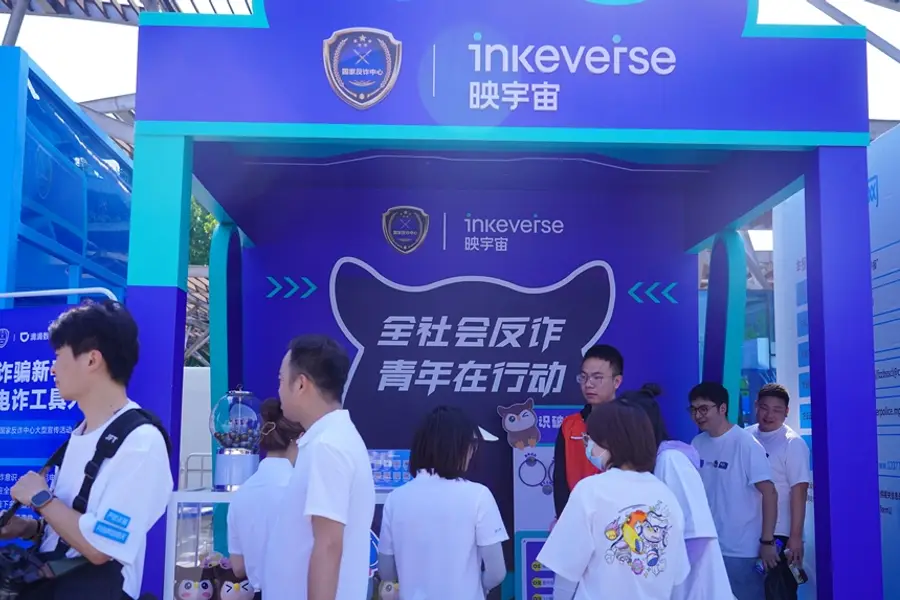
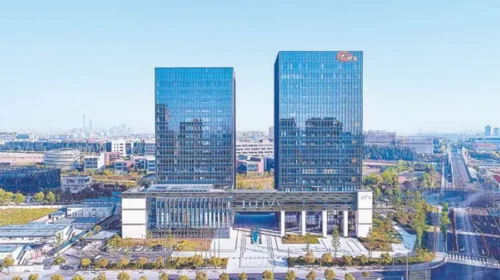
The company, formerly known as Inke, was China’s second largest livestreaming platform in 2017 before launching apps for social networking, dating and micro-dramas
Key Takeaways:
- Inkeverse is dropping its micro-drama business after just four years in the face of overwhelming competition from AI-generated content
- The sale of its Kuaichuang Network unit will cost Inkeverse nearly a quarter of its revenue, but frees up cash for its data center business plans
By Edith Terry
When Inkeverse Group Ltd. (3700.HK) launched its Hong Kong IPO in 2018, the Tencent-backed company, then known as Inke, appeared to have a bright future as the livestreaming business at its core was all the rage in China. The year before the listing, Inkeverse recorded revenue of 3.9 billion yuan ($583 million) and 194.5 registered users, making it China’s second largest mobile livestreaming company with 15.3% of the market.
When founder and chairman Feng Yousheng, a former clerk, set up his company in 2015, he had little competition. But as giants like ByteDance’s Douyin, Kuaishou (1024.HK) and Tencent (0700.HK) piled into the space, Inkeverse was forced to complement its original Inke livestreaming with other services like social networking and matchmaking to avoid being crushed.
After re-branding as Inkeverse in 2022 to reflect its diversification, the company dove into the latest craze with a move into the hot micro-drama sector. It rapidly built up that business until micro-dramas represented 19.1% of its revenue, raking in 1.31 billion yuan in 2024.
But now history seems to be repeating itself for the company, as China’s internet giants rapidly transform the micro-drama genre using AI, steamrollering smaller companies using traditional production methods. Douyin reflects the trend, hosting 220,000 AI-generated micro-dramas that attracted 500 billion views in the first half of this year alone, according to DataEye, a market research firm. Such productions typically cost less than a tenth of live versions, without the need for actors and filming sets.
Against this backdrop, Inkeverse has decided to call it quits. And in an equally surprising move, it’s putting proceeds from the sale of its micro-drama subsidiary, announced last week, into data centers. But whereas Inkeverse was a savvy leader in its early embrace of livestreaming and micro-dramas, it’s a bit behind the curve in embracing data centers that have become all the rage among a growing number of companies from fields as varied as crypto mining to commodities trading.
AI computing infrastructure investment
Inkeverse said it will sell its 40% stake in micro-drama subsidiary, Guangzhou Kuaichuang Network Technology, to a related company, Guangzhou 1846 Technology, for 80 million yuan. Notably, Inkeverse said it will spend a big part of the proceeds from the sale on optimization of its underlying AI computing infrastructure and to develop multi-modal AI applications.
Inkeverse shares initially fell after the announcement, but rebounded after that and were up about 8.5% over pre-announcement levels at their Wednesday closing price.
The reasons given for the sale reflect the carnage sweeping through the micro-drama industry over the past year. AI began to transform the business starting in late 2025, and more than 90% of the 430,000 micro-dramas launched online in the first eight months of 2026 were AI-generated, according to China’s National Radio and Television Administration, which is encouraging AI-generated content to improve quality. Six major platforms, including those operated by ByteDance and Kuaishou, have committed 6 billion yuan to support the government initiative.
In its announcement, Inkeverse explained that its micro-drama unit’s top and bottom lines were moving in opposite directions, a story that is likely playing out around the industry. Despite a near doubling in revenue in the first half of this year to 948 million yuan from 503 million yuan a year earlier, the unit’s bottom line swung to a 6.2 million yuan loss from a 52.8 million yuan profit over that time. Inkeverse blamed the swing into the red on competition, as well as higher production, traffic acquisition and promotional costs.
The company’s overall results for the first half of the year looked similarly discouraging. Its revenue for the six-month period fell 26% year-on-year to 1.98 billion yuan, while its profit tumbled 54% to 126 million yuan. Its monthly active users also fell by 21.4% to 15.86 million, more than offsetting a 5.4% increase in average monthly revenue per user.
The half-year report acknowledged a “period of deep consolidation” in the online interactive entertainment industry, leading the company to focus on “value-driven” operations and away from traffic volume.
A big factor behind this year’s first-half profit decline stemmed from cryptocurrency-related losses, which are unrelated to the company’s core online media operations. Nonetheless, the latest disposal of the micro-drama business and new focus on data centers may leave some investors feeling skeptical about the company’s future.
Data center pivot
Inkeverse discussed its data center pivot as early as May, when it raised HK$328.5 million ($42 million) through a new share sale, with 75% earmarked to acquire GPUs for use in data centers in Singapore and Malaysia. Inkeverse said that investment was part of a computing power buildup to handle its overseas customers’ needs. It began building its app business in Southeast Asia in 2023 and now sees the region as a core market.
Inkeverse explained that it needs data centers in those countries both for compliance reasons and for speed to keep its products competitive with rival offerings. Although the company said at the time that it would use the data centers for its own operations, it also indicated it would open their computing capacity to outsiders as well.
Investors got quite excited by the May announcement, at a time when data center operation was becoming popular among non-traditional operators. Its shares nearly doubled in the month after the announcement, before giving back all the gains and more after the release of its bleak midyear report in August.
Investors may also be tiring of all the companies moving into data centers lately, with names like commodities trader Deep Source (0990.HK) and bitcoin miner Cango (CANG.US) making similar moves lately.
Whether Inkeverse will succeed as a data center operator depends in part on the competition and capital costs. So far, funds raised from the sale of its micro-drama unit and the share sale in May are just a tiny fraction of what it will need. On average, a standard data center costs $10 million to $13 million per megawatt of compute load. Inkeverse has raised just over $50 million from its micro-drama unit sale and the May fundraising, or enough to build just 4 MW to 5 MW of computing power capacity.
In addition to the Johnny-come-latelies, Inkeverse is also competing against domestic big-tech names like ByteDance, Tencent and Alibaba (BABA.US; 9988.HK), not to mention independent data center specialists like China’s GDS (GDS.US; 9698.HK) and DayOne, which focuses on Southeast Asia. Against such formidable, well-funded competition, it’s a bit unclear what advantages Inkeverse has to offer both customers and investors.
To subscribe to Bamboo Works weekly free newsletter, click here
Related Articles

RELATED ARTICLES
-
Luxury e-commerce ‘gondolier’ BMax paddles towards Hong Kong IPO

-
Newborn Town leans on better monetization as user growth slows
9911.HK
-
Xunlei charms market with share buyback, as global business faces slowdown
XNET.US
-
What robot boost? Zhaowei Machinery faces challenge as growth stumbles
2692.HK003021.SHE
-
Huaqin stock rises in Hong Kong debut as AI data center business booms
3296.HK603296.SHG
-
GDS commits up to 50 billion yuan to capture booming AI data center demand
GDS.US
-
Deep Source’s data center foray gets yawn from investors
0990.HK