From microchips to fast food: How Apple and Burger King are adapting to the Chinese market
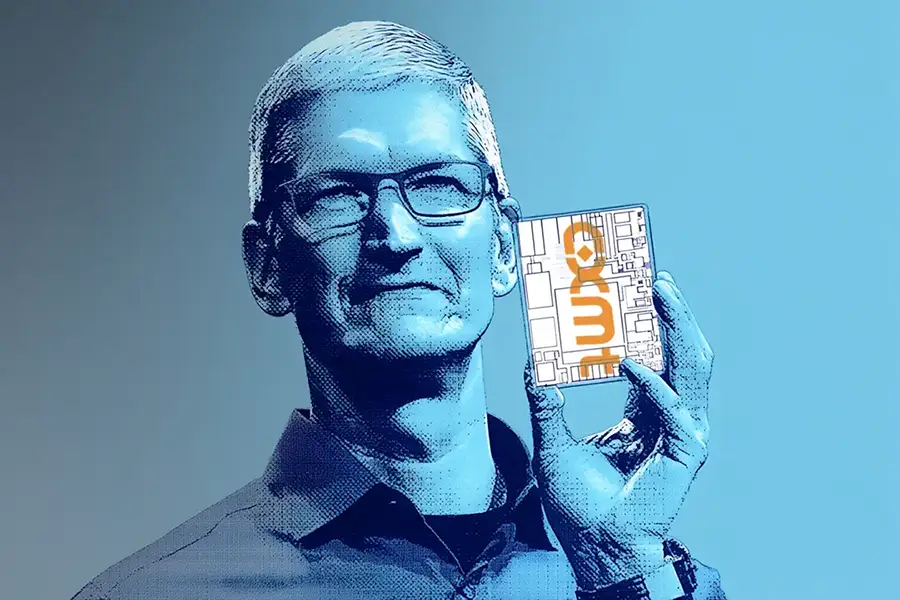
“As much as the high-tech sector has become national interest in China, the same thing has happened in the U.S.” – commenting on perils Apple could face as it explores using Chinese memory chips

Key Takeaways:
- Apple’s reported plan to use Chinese memory chips highlights a complex balancing act between commercial needs and geopolitical pressures
- Burger King’s turnaround after taking a major state-owned partner demonstrates how the right local alliance can revive a struggling Western brand
By Rene Vanguestaine and Doug Young
Multinationals operating in China are increasingly adopting highly tailored, localized strategies to survive and thrive. Whether navigating supply chain shortages in the tech sector or battling fierce competition in the fast-food arena, the playbook is changing. This is playing out now with two major Western names. Apple (AAPL.US) is exploring a strategy to buy memory chips from a leading Chinese producer, while Burger King is having a renaissance after forming a new alliance with a massive state-owned conglomerate.
We’ll start with Apple. According to The Wall Street Journal, the tech giant is reportedly looking into buying memory chips from CXMT (688825.SH), one of China’s leading computer memory makers. For decades, the global memory sector toiled in anonymity, producing a commodity for PCs and smartphones dominated by the South Korean duo of Samsung (005930.KS) and Hynix (000660.KS), alongside U.S. giant Micron (MU.US). However, the sudden explosion of AI has created a massive global shortage, leading to spiking prices.
From a purely commercial standpoint, Apple’s move makes sense as the company attempts to solve this supply shortage and potentially secure more favorable pricing. But this is where it gets complicated. Apple is acutely aware of the trade tensions between the U.S. and China. To mitigate this, the company has reportedly developed a regional isolation strategy: using CXMT chips exclusively in devices sold within China, while utilizing other suppliers for the rest of the world. We believe this represents a fascinating potential business template for other multinationals that might hesitate to use Chinese components globally.
Will this satisfy Washington and Beijing? The U.S. government has determined that CXMT works with the Chinese defense industry, which makes any partnership a deeply sensitive issue. Additionally, Washington has been actively trying to build a self-sufficient domestic chip industry. As much as the high-tech sector has become a national interest in China, the exact same thing has happened in the U.S. This shift started during the first Trump administration, continued under Biden, and accelerated during Trump’s second term. The message from Washington is clear: don’t help China build a growing business in the chip sector, use what’s available in the U.S., and invest heavily alongside everybody else.
To soothe these political concerns, Apple has already announced it will help Intel (INTC.US) and Micron grow in the U.S. Ultimately, Washington’s primary fear is that American companies might engage in technology transfer. As long as Apple simply uses existing CXMT chips, it may be viewed as the lesser evil. However, if U.S. companies ask these Chinese firms to get involved in custom designs, Washington will likely step in.
A state-owned recipe for fast food success
Shifting from tech to fast food, we’re seeing another Western giant make a major tweak in its localized strategy. Burger King had been struggling in China in the face of better-run competition from McDonald’s (MCD.US) and KFC (YUMC.US). But the brand appears to be turning a corner after its parent, Restaurant Brands International (QSR.US), partnered with Citic, a major state-owned conglomerate.
On a recent earnings call, Restaurant Brands executives noted that under this new partnership, Burger King China recorded another quarter of “double-digit comparable sales and a sequential improvement in unit economics.” In the current environment, double-digit comparable sales are incredibly strong.
What does a massive state-owned conglomerate like Citic bring to the table? We think it brings unparalleled “fire power.” Beyond basic benefits like better sourcing of food ingredients and improved pricing, Citic provides tremendous leverage for securing building leases. Being state-owned also gives Citic an additional aura and the ability to get things done, particularly through better relationships with local governments. For a consumer brand, this looks like a win-win.
This state-backed partnership model contrasts sharply with other routes, such as aligning with private equity firms. We recently saw Starbucks (SBUX.US) choose a major local private equity name called Boyu to help navigate a market where it has fallen behind Luckin Coffee (LKNCY.US) in total outlets. There are cases where private equity firms have been very successful, and they can course-correct very quickly if something goes wrong. However, they historically present less certainty than state-owned giants. Because Starbucks is already an established brand, going with a PE firm represents less risk for them than it would for a smaller player. Sadly, smaller or mid-tier brands don’t always have the luxury of choosing a giant like Citic. Brands like Tim Hortons and Dunkin Donuts often end up with smaller partners and ultimately struggle or close. These smaller partners simply aren’t as efficient in operating and financing as the bigger PE firms, let alone state-owned conglomerates. It’s a classic chicken-and-egg situation: major players like Citic want to partner with the biggest names, leaving smaller brands to take what they can get.
About China Inc
China Inc by Bamboo Works discusses the latest developments on Chinese companies listed in Hong Kong and the United States to drive informed decision-making for investors and others interested in this dynamic group of companies.
Subscribe to China Inc on your favorite app:


Related Articles

RELATED ARTICLES
-
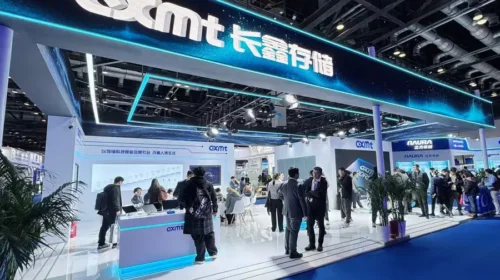
CXMT IPO tests China’s state-driven chip dream
-
Longsys rides soaring memory wave to Hong Kong IPO
301308.SHE
- How AI’s growth left consumer electronics facing an uncertain future
- XTX Technology rides surging memory prices to Hong Kong IPO
-
Citic Bank breezes into China’s insular tobacco sector with new investment
601998.SHG
-
GigaDevice’s profit soars as celebrity founder sells down stake
3986.HK603986.SHG