The retailer of sports shoes and athletic apparel posted double-digit growth in quarterly sales, despite broader market pressures and fragile consumer sentiment
Key Takeaways:
- Offline sales of the main 361 Degrees brand and the firm’s sports clothing for children rose about 10% while e-commerce sales posted brisk growth
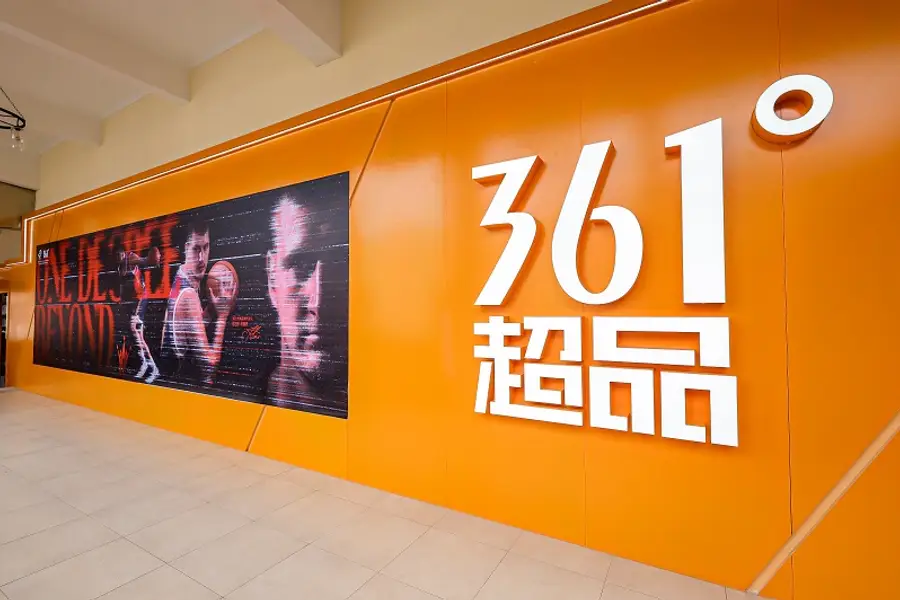
- The company pressed ahead with its rollout of super stores selling multiple ranges of performance footwear and specialized sports outfits
By Lee Shih Ta
Chinese sportswear company 361 Degrees International Ltd. (1361.HK) is jogging along at a steady pace while cautious consumer spending is forcing other athletic brands to veer up or down market.
The retailer of running shoes and children’s sports kits has defied the market divergence that might be expected in a period of spending restraint, reporting stable double-digit growth in its core sales for the final quarter of 2025.
Typically in a challenging sportswear market, leading brands would accelerate promotions and product investment to attract a premium consumer, while other players fight it out in the mass arena with price cuts and shrinking margins.
Meanwhile, 361 Degreesappears to have found its own a sweet spot, selling at a consistent pace through its online channels and network of sports superstores.
According to a quarterly update from the company, offline sales of its core 361 Degrees brand and its junior sportswear lines grew by around 10% compared with the same period a year earlier. Meanwhile, the gross value of sales across its e-commerce platforms recorded what 361 Degrees described as growth in the high double digits.
In fact, the retailer’s first-half results had already pointed to stable demand for its sporting goods. Revenue for the first half rose 11% to nearly 5.71 billion yuan ($817 million), while profits increased 8.6% to 858 million yuan, an outcome that compared favorably with the performance of other sportswear brands.
Anta (2020.HK) revenues rose around 14% but net profit fell 8.9%, with growth in its namesake brand slowing to the mid-single digits and overall earnings increasingly reliant on FILA and other labels. Li Ning (2331.HK) eked out turnover growth of 3.3%, while net profit slipped nearly 11%, squeezed by tight demand and discounts. Xtep (1368.HK) delivered a 7.1% rise in revenue and a more than 20% jump in net profit, mainly driven by niche brands such as Saucony, but the growth pace in its core label lagged in the low-to-mid single digits.
Those results do not indicate a broad-based recovery in sportswear demand. Rather, they support the premise that 361 Degrees has found a rhythm of its own amid weak consumption and growing brand divergence.
In recent years, 361 Degrees has increasingly focused on specialist categories such as running and basketball, looking to gain traction in the mid-priced segment rather than just relying on affordability. It has incorporated carbon-based technologies in its athletics shoes and delivered more professional basketball offerings, leveraging competitive events and athlete endorsements. The aim is to build a stable and loyal customer base for performance products that are not prohibitively expensive.
The company has also been tweaking its online strategy, moving away from a focus on clearance-driven inventory and major promotional events, while instead prioritizing exclusive products and content-based marketing in its e-commerce channels. The fact that gross merchandise value from its online business sustained double-digit growth through the third and fourth quarters, outside a single peak season, suggests the shift is starting to bear fruit.
Expansion of big stores
Meanwhile in offline retail, the company has been rolling out a network of super stores with footprints exceeding 1,000 square meters. By the end of last year, it operated 126 such stores across China, mostly multi-functional outlets supplemented by standalone stores for children’s sports clothing, in a family-focused strategy. For 361 Degrees, the value lies not simply in scale but the breadth of its sales categories, with less reliance on single hero products or promotion-driven sales cycles.
The junior sportswear business serves as a stabilizing force for revenues. Spending on sports clothing for children tends to be less volatile than for adults, being more akin to essential consumption. In the fourth quarter, offline sales for the children’s range rose by around 10%, in line with the core brand, helping 361 Degrees smooth out earnings fluctuations and reduce its reliance on products for adults.
In the first half, the company’s gross margin held above 41%, although higher spending on R&D, brand marketing and channel expansion pushed operating margin lower. The company has yet to realize the full margin payoff from these initiatives, as it is still ramping up stores, getting fresh endorsements and developing new products.
Shares in 361 Degrees dipped about 0.34% on the day the operating update was released, but the stock has outperformed the broader market over the past six months, with a rise of around 17%. Investors appear to be reevaluating the company’s fundamentals, though the underlying shift in business structure may not yet be fully priced in.
At present, 361 Degrees trades at a forward price-to-earnings ratio of roughly 8.7 times, below Xtep at 9.8 times, Anta at 14.7 times and Li Ning at 16.3 times. This comparatively conservative valuation offers some protection on the downside. If earnings keep growing and cash flow improves, the company could attract greater investor attention over time.
To subscribe to Bamboo Works weekly free newsletter, click here
Related Articles

Can Longcheer buy its way to the top of the AI rack?
Two auto giants hitch wagons to combat harsh industry winter