New labor clocks in: How humanoid robots are moving into everyday jobs
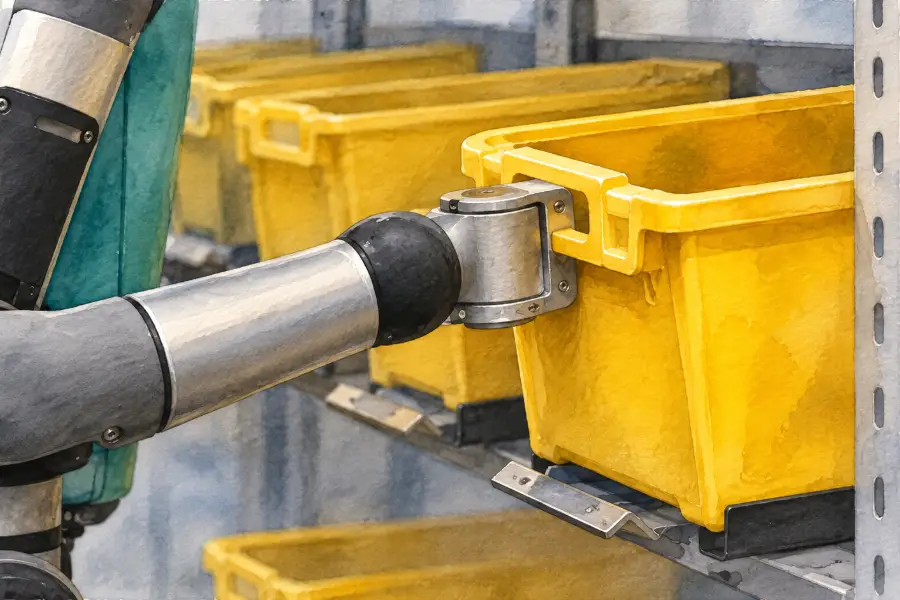
Humanoid robots are entering factories, but still work more slowly than skilled workers, and require better efficiency and returns on investment
By CLS Marketwatch
In modern manufacturing facilities, a quiet substitution of human labor is underway. As some manufacturers begin integrating humanoid robots into their routine production, the industry’s focus has shifted from “can it be done” to “is it worth using.” Behind this shift lies both practical pressures stemming from changes in the labor force and support provided by advances in embodied intelligence technology.
Robot hiring boom begins
As robotics technology matures, some manufacturers have begun treating humanoid robots like everyday workers. Domestic humanoid robot shipments are expected to rise from about 18,000 units in 2025 to 62,500 in 2026, with industrial manufacturing the preferred entry point. In a workshop set up by leading automotive wheel hub bearing maker ZhaoFeng Mechanical (300695.SZ) and Leju Robotics about a dozen Kuavo humanoid robots have taken on routine material-handling tasks. After a year in operation, they have accumulated around 1,000 hours of runtime, completed production of over 60,000 parts, and maintained a stable success rate above 98%.
At present, work done by humanoid robots is concentrated in basic areas such as loading and unloading, handling, and sorting, while they’re not expected to perform highly technical processes in automotive production, such as wiring harness assembly, welding, painting, and polishing, for at least another eight years. It’s evident, therefore, that tasks currently suitable for deployment involve relatively simple processes, with demand for flexible loading and unloading the most urgent.
A natural question hence arises: Given that cycle times for fixed robotic arms can be as quick as 10 seconds, why introduce slower humanoid robots? The answer is that for small and medium-sized enterprises whose production lines frequently switch processes, traditional robotic arms cannot be directly adapted after tool changes, and manual loading and unloading is still the norm. When handling flexible materials such as soft packages, ordinary robotic arms are also hard-pressed to replace manual labor, whereas humanoid robots can be deployed more quickly and offer greater versatility. At the same time, potential labor shortages are prompting factories to train humanoid robots.
Gripping, timing, and fitting in
However, introducing humanoid robots into a factory is not a simple “plug-and-play” process. It requires cost-effective fine-tuning across three areas: gripping stability, cycle time, and adaptation to specific work environments. Taking the ZhaoFeng workshop as an example, 15 robots have been adapted to 15 workstations and handle more than 10 types of parts, and can stably grasp parts with an inner diameter of 80 millimeter to 120 millimeters. But when the robots first entered the workshop, their “hands” were unable to grasp parts steadily, requiring them to undergo about 15,000 grasping training iterations, involving repeated adjustments to grip force and algorithm models.
In fact, success rates above 95% under laboratory conditions are feasible. But oil stains on factory floors, combined with personnel movement and lighting fluctuations, require continuous refinement of datasets and synchronization with the automated production line’s cycle time to maintain a production line success rate of over 98%. This demonstrates that disruptive factors in real-world environments are difficult to fully simulate under laboratory conditions, making production line data irreplaceable.
Cycle time is the next major hurdle. A single loading cycle for Kuavo robots takes 35 seconds to 40 seconds, while a skilled human-worker can complete the task in about 15 seconds. Currently, robot accuracy and mean time between failures (MTBF) have both met required standards; the next goal is to compress the single-piece loading time to 15 seconds to match the human production cycle time. Moreover, ZhaoFeng is also exploring cross-time-period multi-skill package scheduling. One of the company’s production lines has 26 to 28 workstations; allowing robots to fulfill position calibration in advance during non-operating hours can gain an additional two to three hours of production time each day, translating to increased production capacity.
Beyond simulation: Learning on the line
In addition to sharing production line tasks, humanoid robots serve another critical purpose in factories: collecting operational data from the production environment, as scarce high-quality real-machine data from production lines is a common industry bottleneck. Combining real-life data collected in workshops with simulation data, deploying it into the robot body for fine-tuning, and then feeding operating data back to train the model to complete this closed-loop R&D process forms a foundation for robots to advance to more complex manufacturing processes.
Simulation data can only train the model to a score of 30 to 60, while real-world data from training grounds can bring it up to around 80. Only by relying on production-line feedback data that includes oil stains, lighting changes, and abnormal placements can the model’s success rate rise above 98%. However, training a basic general-purpose embodied intelligence model typically requires tens of millions of hours of real- machine interaction data. But globally available, compliant data of this type amounts to only about 500,000 hours.
As evidenced by ZhaoFeng Mechanical’s practical experience, humanoid robots are entering a phase of routine deployment, with cycle time, success rates, and return on investment as key metrics being watched. That said, capital market investment in humanoid robot complete machines and joint modules has noticeably declined this year, with funds increasingly directed toward areas requiring dexterous manipulation, such as dexterous hands, embodied large language models, and tactile sensors. Overall, for humanoid robots to achieve widespread, routine deployment in factories, improvements are needed across three dimensions: return on investment at the commercial level, whole-machine life cycle at the engineering level, and operational cycle time at the technical level.
CLS Marketwatch provides insights and analysis on China’s industries. You can contact the author at liujingyi@cls.cn
To subscribe to Bamboo Works weekly free newsletter, click here
Related Articles

RELATED ARTICLES
-
Why humanoid robots are still more about showmanship than productivity
- Ubtech charms investors with companion robots – until reality sinks in
- The embodied intelligence puzzle: A deep dive into China’s humanoid robot industry
- Mapping commercial paths for robots in industry and at home
- Dobot taps Shenzhen market to fund its bet on humanoid robots
- China’s state playbook fuels humanoid robot boom, resolves Evergrande crisis
- INTERVIEW: Cainiao rolls out ZeeBot in latest step toward ‘Dark Warehouses’