From scarcity to execution: China’s AI valuation reset

Zhipu and MiniMax have lost more than 40% of their market value in just two weeks, as investors reassess the true worth of China’s large language model developers
By Lee Shih Ta
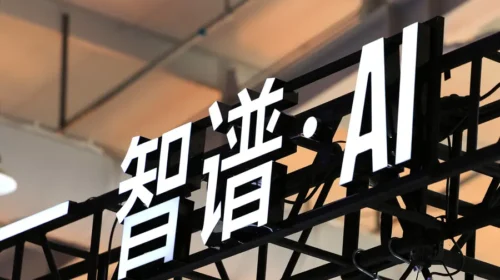
Investor enthusiasm for AI stocks was in overdrive earlier this year, when Knowledge Atlas Technology Joint Stock Co. Ltd. (2513.HK), better known as Zhipu, and MiniMax Group Holdings Ltd. (0100.HK) made their Hong Kong stock market debuts amid sentiment reminiscent of the most exuberant days of China’s internet and electric vehicle booms.
As some of the first large language model (LLM) developers to reach public markets, both companies quickly became investor darlings. On May 29, Zhipu’s shares surged to an intraday high of HK$1,993, more than 17 times their IPO price, giving the company a market value of more than HK$880 billion ($112 billion). MiniMax closed the same day at HK$840, more than four times its listing price, with a market value exceeding HK$260 billion.
Based on Zhipu’s 2025 revenue of 724 million yuan ($107 million), the company was briefly valued at more than 1,000 times sales at its peak. Its market capitalization even surpassed that of some profitable technology companies, underscoring how investor optimism toward China’s AI champions had stretched far beyond what conventional financial metrics could justify.
But sentiment reversed sharply just two weeks later. By June 12, Zhipu’s shares had fallen to HK$1,097, down 44.9% from their peak, while MiniMax had dropped to HK$396, a decline of 52.9%. Together, the two companies lost more than HK$400 billion in market value.
At first glance, the selloff appears to be the result of upcoming lockup expirations. According to Hong Kong Stock Exchange filings, stock held by Zhipu’s first batch of cornerstone investors will become eligible for sale on July 8, involving 25.68 million shares, equivalent to about 11.9% of its H-share capital. Given that only about 11.74 million shares are currently freely tradable, the company’s free float will triple overnight. MiniMax faces a similar situation on July 9, when shares held by cornerstone investors, anchor investors and certain existing shareholders will be unlocked, significantly increasing the supply of stock available for public trading.
Yet attributing the recent plunge entirely to lockup expirations oversimplifies the story. In global capital markets, a company’s first major lockup expiry six months after listing is hardly unusual. The more important question is whether investors believe existing shareholders have a compelling reason to sell once their lockup periods end.
If investors were chasing scarcity value when they bought shares of China’s AI companies earlier this year, the recent pullback reflects a different mindset. The market is beginning to recalculate how much time and capital these companies will need to turn their technological advantages into sustainable commercial returns.
In fact, the lofty valuations given to Zhipu and MiniMax were never fully supported by their financial performance. In 2025, Zhipu generated revenue of 724 million yuan, up 132% year-on-year. But it still reported an adjusted loss of 3.18 billion yuan. MiniMax posted revenue of 543 million yuan, a 159% year-on-year increase, while recording a net loss of 1.75 billion yuan. By conventional valuation standards, both companies remain a long way from profitability.
A more important reason investors were willing to pay such rich valuations was scarcity. As UBS China internet analyst Xiong Wei has noted, there are very few publicly listed large language model companies available to investors globally. The relatively recent listings of Zhipu and MiniMax, combined with their limited free floats, further amplified both their scarcity and liquidity premiums.
Investors were buying not only the technology, but also the promise of China’s AI future and the premium that comes from a lack of other comparable investment opportunities. Those premiums now appear to be fading.
The capital race begins
Even as investors worried about upcoming lockup expirations, the two companies moved almost simultaneously to pursue listings on China’s domestic A-share markets in Shanghai and Shenzhen. MiniMax announced in late May that it was exploring a potential listing on Shanghai’s STAR Market, while Zhipu unveiled plans in early June to seek an A-share listing and raise 15 billion yuan, without specifying a market. The fact that both companies pushed ahead with domestic fundraising plans while their share prices remained well above IPO levels suggests management may see far greater capital requirements in the future than investors currently expect.
This seemingly contradictory situation reflects a new stage in the development of China’s AI industry. On one hand, early investors are beginning to consider their exit options. On the other, the companies themselves continue to require large amounts of fresh capital. The reason is straightforward. Compared with traditional internet companies, large language model developers are far more capital-intensive. Training models requires massive GPU computing resources, inference services demand continued investment in data centers, and fierce competition for talent keeps pushing up R&D costs. Even after going public, these companies will likely be unable to fund the next phase of competition through existing cash flow alone.
As investors reassess these companies’ capital needs and prospects for profitability, the basis for valuation is also changing. The market is gradually moving from a first phase of valuing technological capabilities to a second phase focused on commercialization. In the first phase, investors cared most about who had the strongest model. In the second, they are increasingly focused on which companies can convert technology into revenue, control costs and ultimately build sustainable business models.
Viewed from this perspective, the recent pullback in Zhipu and MiniMax shares does not necessarily signal the end of the AI boom. Instead, it may mark the beginning of a transition away from scarcity-driven valuations toward a more mature stage of price setting.
Such a shift is a familiar part of the maturation process for emerging technologies. Be it the internet two decades ago, electric vehicles a decade ago, or biotechnology more recently, investors were initially willing to pay hefty premiums for technological breakthroughs and future potential. But as industries mature, attention inevitably returns to more fundamental questions: Are customers willing to pay for the product? Can revenue continue to grow? And when will the company become profitable?
China’s large language model industry now stands at a crossroads. Over the past year, investors have focused on model performance, technological breakthroughs and which company might emerge as China’s equivalent of OpenAI. In the years ahead, however, the competitive battleground is likely to shift toward who can achieve the most commercial revenue, enterprise customer scale and capital efficiency. Put simply, the contest among AI companies is evolving from a race in technology to a race in business execution.
Lee Shih Ta is an editor at Bamboo Works.
You can contact him at shihtalee@thebambooworks.com
To subscribe to Bamboo Works weekly free newsletter, click here
Related Articles

RELATED ARTICLES
-
Unsated by Hong Kong listing, Knowledge Atlas seeks more funds in Shanghai
-
Phancy’s revenue growth, lagging margins fail to support its fancy valuation
6682.HK
- GoFintech’s soaring valuation on ‘buzzword of the day’ approach masks low-margin reality
- Fear of missing out fuels Chinese instant commerce bids, as reality bites Hong Kong AI stock bubble