Deep Source’s data center foray gets yawn from investors
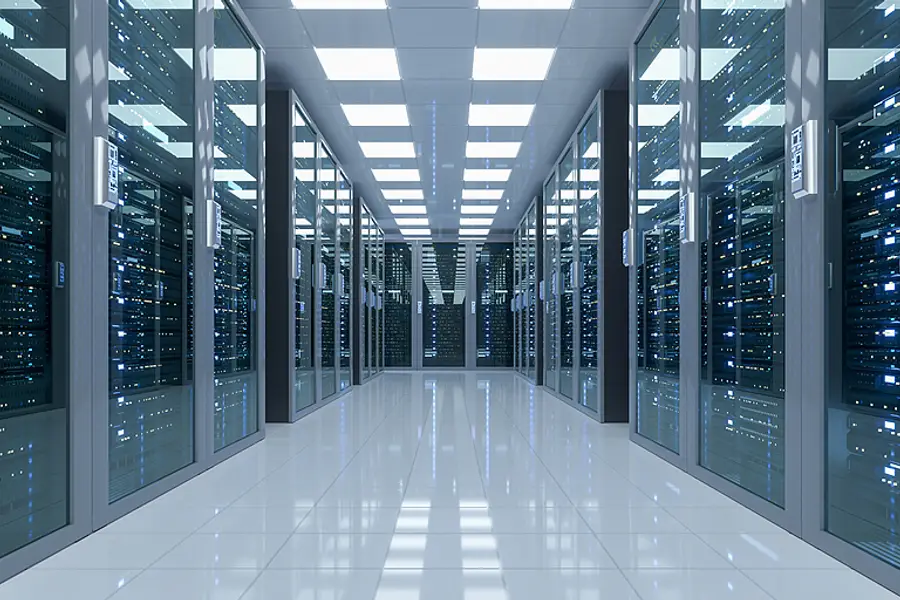
The commodities trader is moving ahead with construction of a $221 million, 67 MW data center project in Malaysia
Key Takeaways:
- Deep Source is building a 67 MW data center in Malaysia, following government approval and its signing of customer for the facility
- The company’s core commodities-trading business operates on notoriously thin gross margins, compared to much higher figures for data center operation
By Doug Young
Could investors finally be burning out on the newest story of a Johnny-come-lately pivoting from a stodgy traditional business to AI?
That certainly appears to be the case with Deep Source Holdings Ltd. (0990.HK), a commodities trader that this week announced terms for a new data center it’s building in Malaysia. The company’s stock has barely budged since it first revealed it was exploring AI computing infrastructure opportunities in June.
Since then, Deep Source disclosed on Sept. 7 that it had chosen Malaysia to develop a data center business. It said that its plan was approved by the country’s Ministry of Investment, Trade and Industry, but provided little additional information.
It finally revealed the first significant details on Wednesday, unveiling a relatively modest project that already has a signed customer. The project will include 67 MW of computing capacity in the city of Penang, with a construction price tag of about $221 million, according to the Wednesday filing.
Some might scoff at such a small project, which is tiny compared to the huge amounts of new computing capacity under construction as companies large and small rush to build new facilities for the AI boom. Global capacity stood at nearly 100 GW at the beginning of this year, with another 100 GW expected to be added by 2030, according to JLL. The Americas represents about half of global capacity, while the Asia Pacific region where Deep Source is building is expected to grow from about 32 GW now to around 57 GW by 2030.
JLL said AI could account for about half of data center workloads as the technology rapidly expands from powering large language models to agentic and other applications.
In such a massive buildout, Deep Source’s 67 MW looks like very small potatoes, equal to just 0.2% of the current capacity in the Asia Pacific region. But truth be told, such caution looks relatively prudent in the current environment for a company that has zero experience in the area. There’s also the very real possibility that the current AI bubble will burst, which would leave a landscape littered with huge amounts of unused computing capacity in thousands of underutilized data centers.
Deep Source’s decision to only build its data center after finding a customer seems to address that issue, though it’s hard to say just how much it mitigates the risk without knowing who exactly the customer is.
Deep Source said it has entered into a 10-year agreement with the customer, which has agreed to pay for the data center’s full 67 MW of capacity, according to this week’s announcement. It said that under terms of the agreement, the customer will pay a full monthly recurring service charge regardless of how much capacity it uses. It will pay additional electricity charges based on its actual consumption.
Deep Source said it has signed an agreement with a local contractor, Longmotive DC Solutions Pte. Ltd., to build the center. The total construction cost is $221 million, with the company required to make an advance payment of $11 million, equal to 5% of the total. That looks relatively manageable to Deep Source, which had about HK$3.73 billion ($475 million) in cash at the end of June.
Preparatory work for the facility has been authorized to begin, with completion set to occur in two phases. The first will see 26 MW of capacity delivered by the end of March next year, with the remaining 41 MW to follow by the end of June.
Stodgy commodities trader
Data center operation certainly represents a sexier business than Deep Source’s current operation in commodities distribution, trading and processing. That older business is notorious for its low profitability, with the company reporting a gross margin just 3.02% in the first half of this year.
By comparison, big data center operators like Digital Realty (DLR.US) and Equinix (EQIX.US) typically command gross margins of around 50%, and operating margins of 20%.
Deep Source certainly generates plenty of income, reporting its revenue rose about 50% to HK$15 billion in the first half of this year from HK$10 billion a year earlier. The majority of its revenue, around 80%, comes from iron ore-related services, while most of the rest comes from other ores like chrome and nickel. The company credited this year’s big revenue jump to rising iron ore trading volumes.
Deep Source’s profit attributable to owners of the company rose far slower than its revenue, up just 18% to HK$379 million in the first half from HK$322 million a year earlier. But that discrepancy looks largely technical, as a large portion of the company’s overall profit for the period was attributed to non-controlling interests rather than ordinary shareholders.
Deep Source’s stock has been listed since 2000, and has been almost as steady and boring over much of the last decade as its core business. One notable exception was a sudden spike in late 2020 and 2021 on the back of hype about its participation in a copper mining project in the African nation of Namibia that ultimately collapsed. That makes the company’s latest move look somewhat like déjà vu, since copper-related stocks are also doing quite well now as investors bet that demand for the commodity will explode as copper wire is used to transmit the huge amounts of electricity used to power AI data centers.
So, where does all this leave Deep Source? The company is hardly the only smaller player making a pivot from an older business into small-scale data center operation. Former car trader Cango (CANG.US) has also moved into the space, and is currently converting a 50 MW former cryptocurrency mining site in the U.S. state of Georgia to high-performance computing use. And like Deep Source, Cango has also signed its first customer.
A big difference between these two companies is that Cango has laid out a relatively detailed roadmap for its data center business, including its establishment of a new subsidiary and hiring of an industry veteran to lead the effort. Deep Source hasn’t done any of that, and has only released very limited details about its plans. That could help to explain why investors have yet to embrace the company’s AI transformation story.
To subscribe to Bamboo Works free weekly newsletter, click here
Related Articles
RELATED ARTICLES
-
ESWIN Computing powers up its RISC-V growth story for Hong Kong investors
-
Huaqin stock rises in Hong Kong debut as AI data center business booms
3296.HK603296.SHG
- PPLabs eyes capital refresh as losses linger on heavy investments
- Where China’s AI models make their money
-
GDS commits up to 50 billion yuan to capture booming AI data center demand
GDS.US
-
Jack Ma-backed insurer seeks riches in Hong Kong gold tokenization foray
0376.HK
-
INTERVIEW: Maase pursues AI infrastructure in new business initiative
MAAS.US