Bleeding cash and mired in debt, Haichang teeters on the brink of collapse
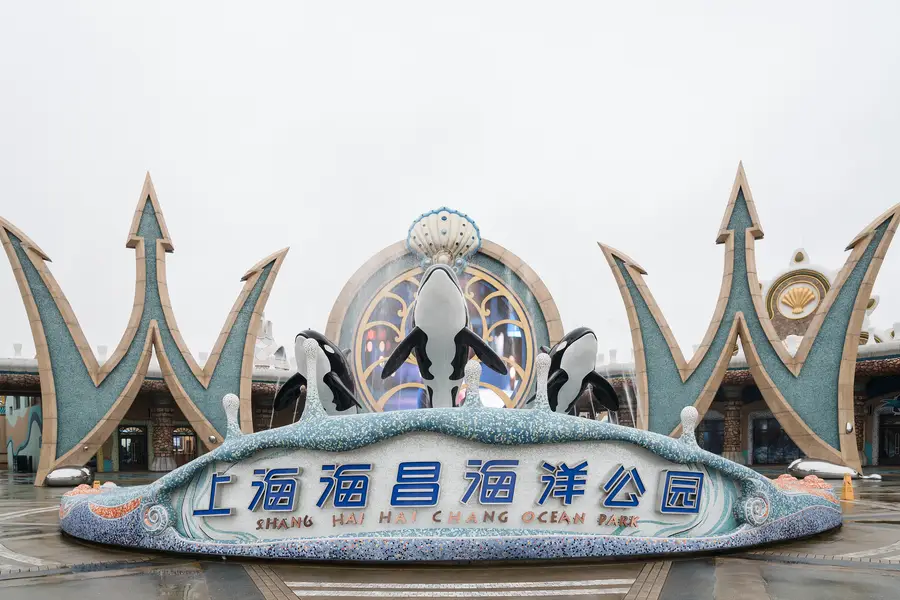
The struggling marine theme park operator’s revenue slid in the first half of the year and its loss widened, as its massive debt load continued to swell
Key Takeaways:
- Haichang Ocean Park reported its revenue tumbled over 20% year-over-year in the first half of 2026
- The marine theme park operator’s short- and long-term interest-bearing debt neared 5.5 billion yuan at the end of June
By Lau Chi Hang
Some might say it’s desperately treading water in a race against time.
Marine theme park operator Haichang Ocean Park Holdings Ltd. (2255.HK) has weathered quite the storm these last few years. Beyond its steadily deteriorating financials and frequent ownership shake-ups, its core business continues to erode. The company’s latest financial scorecard, released last week, contains more of the same, painting a bleak picture of sinking revenues, ballooning losses, and stubbornly high debt.
Haichang booked revenue of 536 million yuan ($80 million) in the first half of this year, down 22% year-over-year. Its net loss for the period grew by 12.7% to 332 million yuan from 295 million yuan a year earlier.
The company’s core theme park operations remained dismal, with ticket sales down 17% year-over-year to 265 million yuan. Food and beverage sales retreated 12.3% to 60.11 million yuan, while merchandise sales plunged an alarming 50% to 39.58 million yuan.
Despite the falling revenue, the company’s selling and marketing expenses surged 47% year-over-year to 75.35 million yuan. And even as Haichang scrambled to slash costs across the board, its gross profit margin for the period shrank by half to just 5%, down 5.4 percentage points from the prior year.
Gearing ratio soars
Beneath its sinking parks, Haicheng’s debt is its most glaring red flag. Its net gearing ratio jumped to 209.9% by the end of June from an already-high 171% just six months earlier. Its short- and long-term interest-bearing bank and other borrowings totaled 5.45 billion yuan midway through this year. And while its interest-bearing debt due for repayment this year fell by 25% from six months earlier, the overall figure still sits at a high 1.28 billion yuan. Compounding its pressure, the company’s cash and cash equivalents dwindled to just 460 million yuan by the middle of this year, down by more than half from 1.06 billion yuan at the end of last year.
Adding to its woes, and in a sign of its growing distress, Haichang was accused of missing payments from some of its suppliers in the first half of the year. As a result, several of its bank accounts with 24.13 million yuan were frozen, forcing Haichang to make full provisions for the sum.
Yet, despite being cash-strapped and buried under heavy debt, the company’s capital commitments showed no signs of easing. It spent 330 million yuan in that regard during the latest six-month period, nearly matching its capital commitments for all of last year.
Many may be scratching their heads at the company’s growing woes. China’s tourism industry has rebounded sharply post-pandemic, with domestic travel still strong as Beijing heavily backs the cultural tourism sector. Reflecting that, domestic tourist trips reached 1.9 billion in the first quarter of 2026, up by 107 million year-over-year, according to the Ministry of Culture and Tourism. Given such strong industry fundamentals, why has Haichang faced such difficulty?
Cultural tourism real estate stumbles
Haichang’s founder Qu Naijie started out in oil trading and maritime transport in his early years. He established his Haichang Group in the 1990s, and, in 2001, began operating theme parks in the Northeastern city of Dalian. As the business grew and more Chinese began traveling for leisure, the company rolled out theme parks across the country. It had 10 locations at its peak, including parks in Shanghai, Zhengzhou, Sanya and Chongqing.
Qu Naijie’s template was straightforward: leverage the promise of economic benefits from theme parks to acquire land at low prices from local governments. The ability of well-planned parks to stimulate regional tourism and elevate a city’s profile led governments to make the types of concessions Qu was seeking.
As that happened, he snapped up cheap land surrounding the parks to build sprawling residential developments, seeking to capitalize on China’s soaring property market at that time. A portion of the profits from property sales would then be funneled back into theme park operation and construction. In essence, Haichang was really as much a property developer as a theme park operator.
But all that came to an end in 2020 when the government cracked down on easy credit for property developers, causing the real estate market to nosedive. Despite its theme park credentials, Haichang wasn’t spared, as it was forced to record impairment losses on its investment properties.
It’s also worth noting that marine theme park operation is quite cash intensive. Rearing marine life requires large amounts of food, stringent water quality management, and dedicated professional care, all of which come with hefty price tags. Deprived of real estate revenue and profits, the parks have struggled to stay afloat by purely relying on ticket sales and in-park consumption.
When it rains, it pours
In 2024, Qu Naijie found himself in even deeper water. Found guilty in court of misusing government subsidies to purchase vineyards in France, his assets were seized and he was fined by a French court. Crushed under all that pressure, Qu went in search of a white knight. Last October, he raised nearly HK$2.3 billion ($293 million) for his company by selling shares to Sunriver Holding, which got a controlling 38.6% of Haichang in exchange.
But that wasn’t the end of the story. Sunriver chief Yu Faxiang was subsequently subjected to criminal measures on suspicion of illegal “self-financing.” With Yu out of the picture, hopes of a rescue vanished, sending Haichang back to the drawing board to search for a new white knight.
In July this year, Haichang announced that Qu Naijie’s son, Qu Cheng, sold 1.2 billion Haichang shares, or about 9.08% of the company, to Mei Zhiming for HK$360 million. At the same time, Sunriver offloaded 1.68 billion of its Haichang shares to Mei Zhiming for another HK$754 million, representing 12.67% of Haichang’s total shares. The series of moves made Mei Zhiming Haichang’s second-largest shareholder with a 21.75% of the company. Qu Cheng’s holdings dropped to 19.13%, while Sunriver retained its controlling position with a 25.92% stake.
So, who exactly is Mei Zhiming? As it turns out, he brings serious credentials to the table. He is a co-founder of investment manager GLP, which oversees more than $80 billion in global assets. But investors were most impressed by Mei’s track record: he once engineered a rescue for Hong Kong’s Li & Fung Ltd., a local trading giant, and spearheaded the restructuring of Bicester Village Suzhou, ultimately transforming the latter into a cultural and tourism landmark in the Yangtze River Delta.
Haichang shares ticked up after the announcement about Mei Zhiming in late July, but have given back those gains and more since then. Now the billion-dollar question is whether Mei can work his financial wizardry with Haichang to bring it back from the brink.
To subscribe to Bamboo Works weekly free newsletter, click here
Related Articles

RELATED ARTICLES
-
China Travel Int’l spinoff spotlights its natural scenery and cultural tourism aspirations
 0308.HK
 - Zhejiang Energy Marine steams ahead on green shipping boom
- With looming debt pressures, Agile faces tough road to restructuring
- A heritage boat business steers towards a stock-market berth
- JD.com slows its bleeding, but investors want growth
-
Baiwang breaks long silence with AI academic partnership after post-IPO stock collapse
6657.HK
- ‘Plum king’ sweetens fourth IPO bid with new products, price cuts