Fosun tries again with new Club Med Hong Kong IPO bid
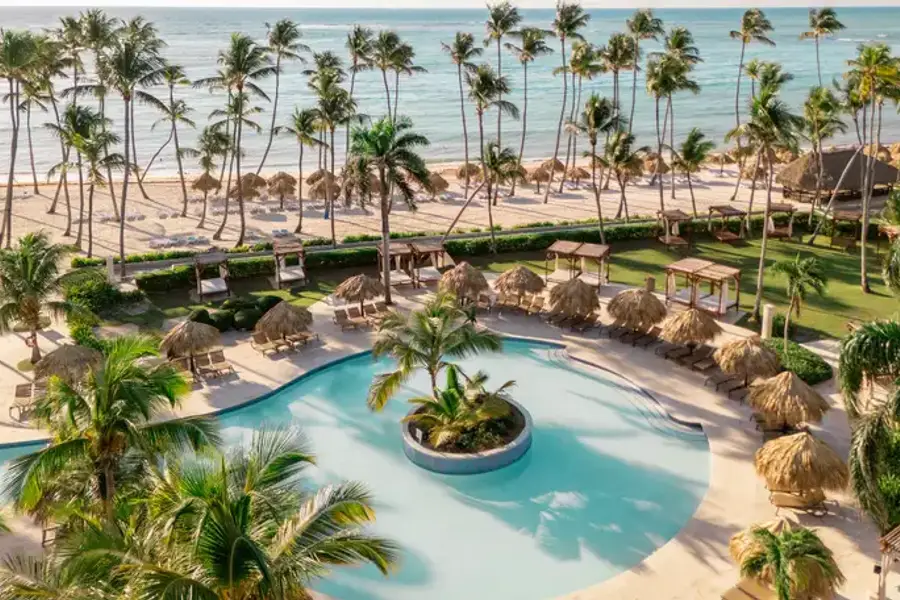
The plan would mark the third time as a public company for the resort operator, following previous listings in Paris, and later in Hong Kong as Fosun Tourism
Key Takeaways:
- Fosun International has applied to list its Club Med asset in Hong Kong, aiming to expand the company’s global resort operation to 85 properties from the current 69
- The IPO candidate doesn’t contain any vacation home element, distinguishing it from the previously listed Fosun Tourism, which privatized in early 2025,
By Doug Young
If at first you don’t succeed, then try again. That’s the mantra these days at Fosun International Ltd. (0656.HK), one of China’s most successful private conglomerates, which has announced a new plan to spin off and separately list its ClubMed Lifestyle Group, operator of the France-based Club Med resort chain.
Club Med was previously part of Fosun Tourism, a company that Fosun spun off and listed separately in 2018. The shares never traded much higher than their listing price of HK$15.60, mostly because the pandemic plunged the company into chaos just over a year after its listing. The stock later plunged as low as HK$3, before Fosun International took the company out of its misery last year with a privatization at HK$7.80 per share.
Even though its business largely recovered post-pandemic, anyone who bought the IPO shares still lost half their money at the buyout price.
So, why does the company think it can do any better with a new listing? The latest plan, contained in ClubMed Lifestyle’s new listing application submitted to the Hong Kong Stock Exchange on Friday, contains two key differences with the old Fosun Tourism.
Most critically, the new company doesn’t contain any vacation home assets. Such assets were once a major selling point for investors when China’s economy and real estate market were booming and newly wealthy Chinese were snapping up new homes as well as vacation properties at a rapid clip.
Many companies used similar real estate forays to boost their revenue and profits in those boom times, even when their core businesses had little or nothing to do with property development and management. But with the property market now in a prolonged slump, such assets are no longer desirable. And in Fosun Tourism’s case they were actually dragging down the company before its privatization.
The second big difference is the lack of the Atlantis mega-resort on South China’s Hainan Island in the new listing candidate. Atlantis Sanya was a relatively important piece of Fosun Tourism, contributing about 10% of its revenue and 20% of its adjusted earnings before interest, taxes, depreciation and amortization (EBITDA) before the privatization.
Fosun spent 11 billion yuan ($1.63 billion) to develop Atlantis Sanya, and was positioning it as a high-end family mega-resort complete with hotel, aquarium, water parks and restaurants, among other things. But with China’s economy now stumbling, it’s possible Fosun has decided this property is better left outside the new ClubMed. The new prospectus says that Atlantis is being spun off for a separate listing as a real estate investment trust (REIT).
That means the new company Fosun will list is roughly the same one it got when it completed its takeover of Club Med in 2015, in a deal that valued the French resort operator at about $1 billion. At the time, Fosun was hoping to leverage its connections to expand Club Med in China at a time when the Chinese economy was booming and there was still big growth potential there.
Stagnating company
Fosun tried a few different things to jumpstart growth at Club Med, which was stagnating at the time. In addition to the vacation home business, one of its main initiatives was development of two new sub-brands for the China market, Club Med Joyview and Club Med Urban Oasis, catering to urban and city-adjacent short-haul vacation needs.
But that initiative didn’t get too far, with Joyview currently hosting just four locations in China, while Urban Oasis has just three. The bottom line is that Club Med’s footprint hasn’t changed all that much since Fosun acquired the chain. It currently has 69 resorts worldwide, including both owned and managed properties, which is roughly what it had at the time of the acquisition.
ClubMed said it plans to use funds from the listing to expand that footprint to 85 resorts in the next few years. But truthfully speaking, the company has probably floated similar aggressive expansion plans in the past, and then failed to deliver, even though we should note it faced some major unforeseen challenges, first from the pandemic and then from China’s economic slowdown.
The company has hired the relatively high-powered trio of BNP Paribas, HSBC and JPMorgan as underwriters for the listing, showing it has relatively high hopes of attracting investors, especially international ones more familiar with the Club Med brand. But the truth of the matter is ClubMed’s financials hardly look too impressive, showing a company whose business has basically stagnated in the last three years after a sharp post-pandemic rebound.
ClubMed’s revenue reached 1.95 billion euros ($2.26 billion) last year, up just 1.6% from the 1.92 billion euros it reported in 2024. The figure plateaued in the first half of this year at 1.08 billion euros, identical with last year. The company still gets the majority of its revenue from the Europe, Middle East and Africa (EMEA) region, which has remained relatively steady at 60% over the last three years. The Americas are second at 24%, while Asia provides just 17%, despite all the company’s attempts to develop the China market.
Nearly all the company’s major metrics, including its overall number of guests, capacity and occupancy rates, have remained largely unchanged over the last three years. Its average daily room rate has done slightly better, rising from 220 euros in 2023 to 235 euros last year, which helped to lift its gross margin to 30.3% last year from 28.9% over that period. But even that change looks quite incremental.
Such small gains haven’t done much for its bottom line, with the company’s profit actually falling to 10.9 million euros last year from 29.6 million euros in 2024 due to unusually high tax expenses. The situation improved this year, with the company’s profit in the first half of the year falling to 57.1 million euros from 65.1 million euros a year earlier.
The bottom line is that Fosun is offering up a cleaner company under a globally familiar brand in this new IPO bid by getting rid of the vacation home element and the Atlantis mega-resort. But investors will hardly be excited by the company’s stagnating business, which was why the stock languished in its earlier life as a Paris-listed company before Fosun purchased and privatized Club Med in 2015.
To subscribe to Bamboo Works free weekly newsletter, click here
Related Articles