Xiaocaiyuan shuns takeout delivery for in-restaurant dining
The mid-scale restaurant chain’s in-restaurant dining revenue rose 18.1% in the first half of 2026, more than double its 7% overall revenue growth
Key Takeaways:
- Xiaocaiyuan’s revenue rose 7% in the first half of the year, but its profit fell 24.3%, as it focused on a price-for-volume strategy and reined in its delivery service
- The mid-range restaurant operator slowed its expansion, opening just 17 new stores in the latest six-month period after opening 135 in the second half of 2025
By Edith Terry
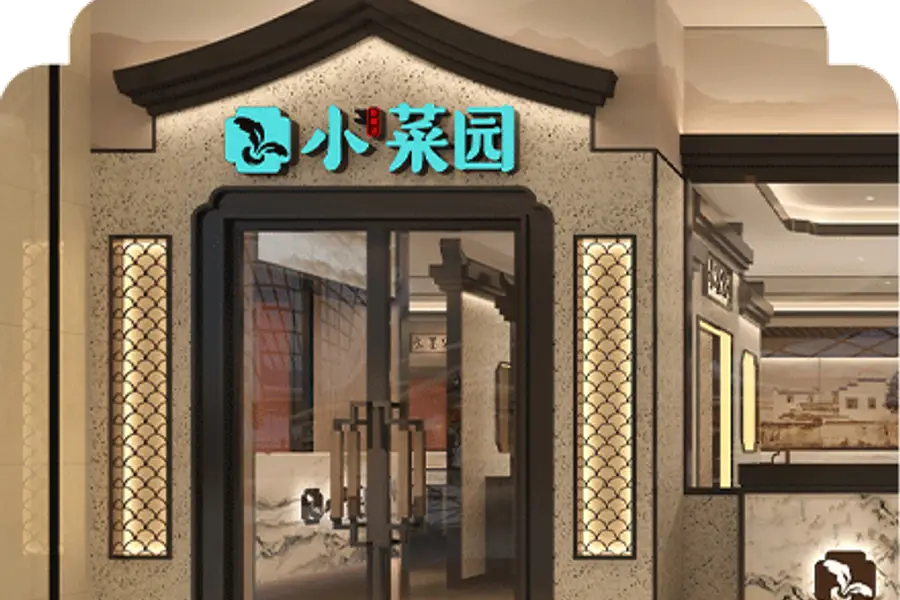
Wang Shugao, founder and chairman of Xiaocaiyuan International Holding Ltd. (0999.HK), was a farm boy who, after moving to the city, spent 10 years pushing carts before training as a chef and opening his own restaurant, aptly named “Little Vegetable Garden.”
He and wife Zhou Taoxia pulled together their savings and invested in business hotels, before a failed venture in Nanjing turned them back to their roots in the city of Tongling of East China’s Anhui province. After opening their first Anhui cuisine restaurant in 2013, their chain’s business exploded by appealing to diners with its homespun approach and budget meals.
Now, Wang and Zhou are cooking up a new recipe to reinvigorate their chain in China’s constantly changing restaurant landscape. Xiaocaiyuan’s midyear results, released last week, are showing some early signs of success for the new strategy. The company is playing down its takeout delivery business, which has become a major battleground among Chinese restaurants, in favor of lower-cost in-restaurant dining.
“The second half of 2025 to the first half of 2026 will be a transformative year for Xiaocaiyuan,” Wang said in an interview last year, hinting at things to come.
The company’s half-year results showed a 7% revenue increase and a 24% profit dip, mostly due to price slashing to encourage volume – not the most mouth-watering figures by most standards. Wang framed lower prices as a way of giving back to customers, saying the company needed to reduce excess and return profits to its customers.
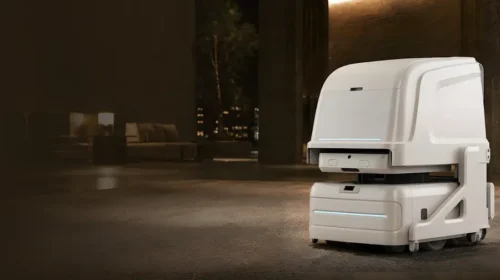
He said the company is intentionally reining in its delivery business, reinforcing the brand value of its ‘dine-in’ restaurants, and delivering major cost efficiencies through a billion-yuan, state-of-the-art central food processing factory in the Anhui city of Ma’anshan, with a capacity to serve 3,000 restaurants. The company has also installed 300 robots in its restaurants and is looking ahead to a separate business supplying cooking robots to households.
Strong investor appetite
Investors seemed to agree that Xiaocaiyuan is on the right trajectory, despite the declining profits. The stock rose 2.2% the day after the announcement, and continued to climb after that to close at HK$8.18 on Thursday, up 4.3% from pre-announcement levels.
Analysts also like the stock, with seven of the eight surveyed by Yahoo Finance rating it a “buy” or “strong buy.” Its price-to-earnings (P/E) ratio of 11.5 is only a fraction behind better-known competitor Haidilao (6862.HK), and is well ahead of Green Tea Group (6831.HK) at 7.3.
All the chains have reduced their prices to adjust to a new normal of hyper-competition and growing consumer caution in China’s slowing economy, although Xiaocaiyuan comes with a twist. It has conceded China’s hotly contested takeout delivery battleground, and last August stopped participating in discounts offered by specialist delivery platforms to prioritize dine-in services at its restaurants. Now, the results are showing up.
In an interview last year, Wang said too much takeout business destroyed a brand’s image and made it more difficult to adequately serve dine-in customers. He added that takeout revenue ideally should account for around 30% of the total, rather than the nearly 40% in both 2024 and 2025. The company now divides takeout orders into two categories, peak and off peak. During peak hours, dine-in orders get priority, while during off-peak, takeout orders take priority.
Overall, it appears Xiaocaiyuan’s new formula is going exactly as planned. Its 2.9 billion yuan ($430 million) in first-half revenue, in addition to rising 7% year-on-year, was also up 10.3% sequentially. And while its profit dropped 24.2% year-over-year to 289.8 million yuan, the figure was down by a lesser 13% on a sequential basis.
Revenues from Xiaocaiyuan’s delivery business fell to 32.6% of its total in the latest reporting period, approaching Wang’s 30% goal, from 39% a year earlier. As a result of that downplaying, revenue from the company’s delivery business dropped by 10.6% in the latest six-month period, even as revenue from its dine-in business rose by 18.1%.
The company blamed the profit decline on across-the-board price reductions at its restaurants, as well as the strategic cutback in its delivery business. The increase in restaurant revenues partly reflected new restaurant launches, as well as Xiaocaiyuan’s price-for-volume strategy, which Wang initiated in 2023. The company operated 824 Xiaocaiyuan restaurants at the end of June, up 23% from 672 a year earlier. Its new openings slowed to just 17 in the first half of the year from 135 in the second half of 2025, following a typical seasonal pattern.
Small-town roots
Wang has said his chain, whose origins trace back to China’s smaller third-tier cities like his hometown of Tongling, has penetrated just 20% to 25% of the Chinese market, and will stay focused on that domestic market for the next five to 10 years. Around 40% of revenues came from third-tier cities and below in the first half of this year.
He said Xiaocaiyuan’s restaurants cost about 1 million yuan to open, and typically recoup their investment within 10 to 11 months. The company’s same-store sales dropped 12.5% in the first half of the year compared with a year ago due to its lower pricing strategy. But it was able to offset that with new store openings.
As its prices dropped, average spending per dine-in customer fell from 57.1 yuan in the first six months of 2025 to 50.5 yuan in 2026. But the lower prices helped to boost same-store table turnover to 3.3 times per day from 3.1 a year earlier.
The lower price strategy included a new ‘88VIP’ membership program that was introduced in January, offering 12% discounts with an 88-yuan annual fee. By July, the chain had signed up 1.5 million members, with a repeat customer rate of 65%, driving an incremental 1.89 million in customer traffic.
To boost its efficiency, Xiaocaiyuan is betting that its new Ma’anshan central food processing factory will reduce costs by using robotic production, AI quality control and intelligent warehouse scheduling. The company cited examples of robots that now cut all of its braised pork into chunks, and a chicken fillings production line that is almost unmanned.
Sometimes appearances can be deceiving, which could be the case with Xiaocaiyuan’s big profit decline in the latest reporting period. The company would probably like investors to believe that hit was temporary as it positions itself for longer-term success. As Wang likes to say, “Everybody in the restaurant industry knows that food is delicious. Yet affordable wins out. It’s no mystery that someone born into poverty was able to master this principle.”
To subscribe to Bamboo Works weekly free newsletter, click here
Related Articles

RELATED ARTICLES
-
Slowing takeout dining wars leave Luckin with bitter aftertaste

- Is China’s express delivery price war over? The answer will lie in profits
- Juhui rides domestic catering boom to Hong Kong IPO
-
Haidilao brings its chief ‘firefighter’ back to China to rekindle growth at home
6862.HK
- JD.com slows its bleeding, but investors want growth
-
Cafe de Coral emerges to new dawn, as hidden concerns remain
0341.HK