Deye chases Hong Kong IPO in face of draining new energy valuations

Energy storage stocks are undergoing a major correction, including a plunge of more than half for Deye’s Shanghai-listed shares from a peak in May
Key Takeaways:
- Deye Technology has applied for a second listing in Hong Kong, reporting its profit surged 75% in the first four months of this year
- The new energy inverter maker gets 80% of its revenue from overseas markets, subjecting it to risks from trade policies and foreign exchange rate fluctuations
By Cheng Shui Tong
Hong Kong’s IPO wave may be ebbing, but some notable names continue washing up in the steady string of new filings nonetheless. One of those, Ningbo Deye Technology Corp. (605117.SH), harkens from a corner of the new energy sector providing energy storage inverters that are a critical component in solar and wind power stations. But the timing may be slightly off, as this sector, which was once an investor darling, has lost much of its star power in the last few months.
That said, Deye boasts some relatively strong financials. Its profit has been growing steadily over the last three years, rising from 1.79 billion yuan ($265 million) in 2023 to 3.17 billion yuan last year, according to its preliminary prospectus filed late last month. A month ago, Deye, which is already listed in Shanghai, projected more strong profit gains this year, saying it expects to report a profit of 2.67 billion yuan to 2.73 billion yuan for the six-month period, up 75% to 79% year-on-year.
Deye’s gross margin is also relatively high, ranging between 38% and 39.2% over the last three years. It has maintained such high margins by adjusting its product mix, and also by expanding in sales overseas where margins tend to be higher than for China.
Energy storage inverter leader
Deye’s bread-and-butter is energy storage inverters that convert direct current generated by solar and wind farms into alternating current that meets power grid requirements. According to third-party market data in its listing document, the company ranked first in the global residential energy storage inverter market last year with 20.6% share. It also produces environmental management equipment, such as dehumidifiers, solar air conditioners and heat exchangers.
Among Deye’s two main businesses, new energy boasts the higher gross margin, which stood at 39.9% in the first four months of this year. Energy storage inverters were the star of that segment with a gross margin of 51.1% during that time, while energy storage batteries and PV inverters clocked in at 31.1% and 30.2%, respectively. Environmental management appliances were the company’s laggard, with a gross margin of 25.4%.
Big business overseas
A key factor keeping Deye’s margins high has been its pursuit of overseas markets. Exports rose from 58% of its sales in 2023 to 79.7% last year, and climbed further to 87.6% in the first four months of this year. Within that figure, Europe was the largest destination, accounting for as much as 45% of sales as EU members raced to install more renewable power in response to challenges created by the Russia-Ukraine war. Deye’s overseas gross margin reached 40% last year, far higher than the 28% for domestic sales.
While things generally look positive for Deye, there are also some red flags in its business. Leading those is its heavy reliance on overseas sales, which could place it in the crosshairs of international trade conflicts. Illustrating that, the U.S. recently announced a ban on Chinese power inverters on national security grounds, causing related new energy stocks to plunge. Deye wasn’t too affected by the decision, since North America accounts for only 3.3% of its business. Still, similar moves in an increasingly protectionist Europe and other regions are always possible.
Another important risk lies in the foreign exchange rates. Because the company relies so heavily on exports, a strengthening Chinese yuan this year has resulted in net foreign exchange losses of 172 million yuan in the first four months of 2026 alone. The company states that a 5% appreciation of the yuan against the U.S. dollar would result in 240 million yuan in foreign exchange losses this year through April. A similar appreciation against the euro would generate about 11.4 million yuan in foreign exchange losses over the same period.
China is the world’s largest producer of energy storage products that play a key role by storing excess electricity generated by wind and solar farms for later use. The market has grown steadily in recent years, but competition has also become fierce. Reflecting that, the average price of Deye’s energy storage inverters fell by about 20% from 8,567 yuan in 2023 to 6,763 yuan in 2025, only to rebound somewhat to 7,015 yuan this year. Its selling price for energy storage batteries also dropped from 6,930 yuan in 2023 to 4,933 yuan in 2025, but then bounced back to 5,325 yuan this year.
Roller coaster stock prices
Deye filed to list in Hong Kong back in January this year, and only refiled last month after that initial application lapsed. That timing may be critical, as investor sentiment towards new energy IPOs has cooled markedly over that time. A case in point is Guoxia Technology (2655.HK), an energy storage company whose shares more than tripled after their IPO last December, giving it a sky-high leading price-to-earnings (P/E) ratio of more than 200 times. But the stock has cratered more recently, and now trades below its IPO price. Sigenergy (6656.HK), a provider of energy storage systems, has followed a similar trajectory. Its shares initially more than doubled after its April IPO, only to give back all those gains and more to trade below their IPO price.
Deye’s Shanghai-listed shares haven’t been spared in the bloodbath, also down by half from their peak in May. Shenzhen-listed peers Sungrow (300274.SZ) and Ginlong (300763.SZ) have recorded similar declines, showing that investors remain concerned about stiff competitive and the potential for protectionist measures to affect exports. More broadly, market sentiment has also shifted away from high-growth emerging industries back toward traditional sectors, pressuring new energy stocks across the board.
Deye’s performance looks strong, but that hasn’t resonated lately with investors. Its Shanghai-listed stock currently trades at a trailing P/E ratio of about 33 times. While that still looks relatively solid, the figure would drop significantly on a forward basis if its profit continues to grow strongly this year. That could ultimately work to the company’s advantage with the Hong Kong listing, since a pricing at today’s more reasonable valuation levels could draw in not only sector bulls, but also some bargain hunters.
To subscribe to Bamboo Works weekly free newsletter, click here
Related Articles

RELATED ARTICLES
-
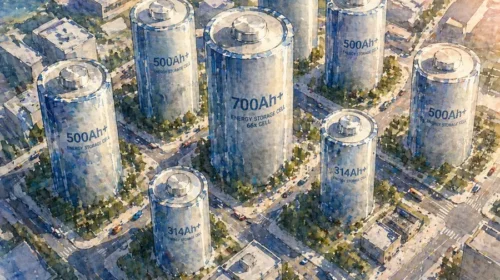
Rethinking bigger Is better: China’s long march toward higher-capacity energy storage cells
- Can crypto power supplier Boco plug into the AI boom?
- Qingtao Energy reaches solid-state battery milestone, but model remains unproven
-
Xinyi Energy’s profit dives as China suffers from ‘solar hangover’
3868.HK
- After years on the sidelines, VNET seizes on China’s AI moment with new CATL tie-up