Can GLB open up new routes beyond the Geely orbit?
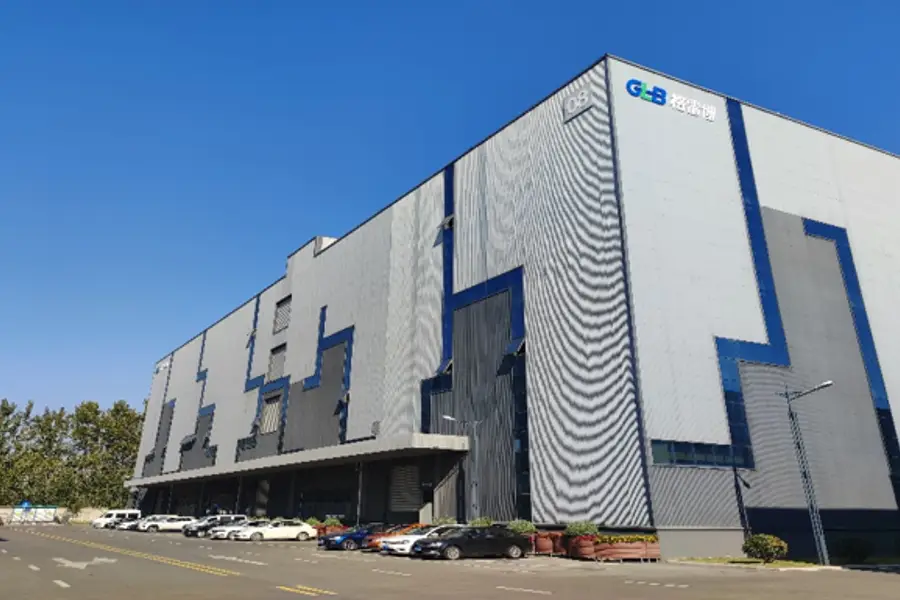
The provider of automotive electronics and power systems has hitched a ride on the success of its main customer, but runs the risk of overreliance
Key Takeaways:
- GLB is looking to list in Hong Kong, joining a growing number of firms in the EV supply chain to seek independent financing
- But nearly 90% of GLB revenue last year came from Geely-related groups
By Lee Shih Ta
China’s supply chain for electric vehicles is powering a fleet of stock market listings, as companies that once operated behind the scenes step into the equity spotlight.
Locked in a price war, automakers have sought to lower costs by getting more involved in the array of technologies incorporated into new energy vehicles, from batteries to chips and cockpit systems.
Several businesses incubated by leading car makers have begun to raise capital independently or pursue public listings, including auto tech firm Ecarx (ECX.US), premium EV brand Zeekr (ZK.US) and CaoCao (2643.HK), a ride-hailing platform, in the Geely (0175.HK) ecosystem. Some independent providers achieved rapid growth by burrowing more deeply into automotive supply chains. One of those, GLB Intelligent Power Technologies Co. Ltd., has now filed for a Hong Kong IPO.
The maker of control and power systems for smart cars traces its roots to 2010, with early investment from the likes of GAC Capital, Orient Securities and Sequoia Capital. It entered Geely’s supply chain in 2019 and expanded gradually from there, boasting 40 design wins from 10 automakers, with its products deployed in 16 vehicle models across 12 brands.
Its growth rate has been striking, accelerating off the back of its relationship with Geely, one of China’s top EV makers.
According to the prospectus, GLB revenue rose more than 11-fold over a three-year period, from 314.1 million yuan ($46 million) in 2023 to 737.9 million yuan in 2024 and reaching 3.63 billion yuan in 2025. Over the same timeframe, gross margin went from negative 6.8% to positive 7.2%. The company still posted a net loss of 288.1 million yuan in 2025, although it landed in the black for the first time on an adjusted basis, with a net profit of 36.5 million yuan.
After joining Geely’s supply chain, GLB evolved from being a component supplier into a provider of integrated power-domain systems, serving Geely Galaxy and Lynk & Co, a Geely joint venture with Volvo.
The GLB earnings reveal a growing dependence, with most of its explosive growth driven by the rise in Geely’s EV sales. Revenue from Geely-related groups jumped from 190.9 million yuan in 2023 to 556.4 million yuan in 2024 and surged to 3.16 billion yuan in 2025, accounting for 60.8%, 75.4% and 87.2% of total turnover. Including other companies associated with Geely founder Li Shufu, the proportion climbed to 90% in 2025.
Deeply entwined
The equity links have also been tightening. Taizhou Xili, a Geely-affiliated investment platform, holds about a 4% stake in GLB, while Qianjiang Motorcycle (000913.SZ), which is controlled by Li Shufu, owns around 13%. Together, the two shareholders control close to one fifth of GLB.
The relationship has allowed GLB to benefit from Geely’s growth, but it also creates dependency risks. Despite the revenue ramp-up in 2025, GLB’s gross margin was only 7.2%, well below that of some established suppliers. Any future shift in Geely’s sourcing strategy, the introduction of competing suppliers or greater in-house development could hurt GLB’s performance.
Looking ahead, GLB is aiming to extend its expertise in automotive electronics to other sectors such as data centers and humanoid robots, through AI computing and electronic drive systems. However, neither business had generated any revenue by the end of 2025.
GLB’s market still appears to have substantial room to grow, according to industry data. Research cited in the prospectus projected the global market for power-domain solutions for new energy vehicles would expand from 197.7 billion yuan in 2025 to 486 billion yuan by 2030, representing a compound annual growth rate of 19.7%. But competition is equally intense. BYD (1211.HK; 002594.SZ) continues to develop its own drive systems, and third-party suppliers such as Inovance Automotive (301656.SZ) and Desay SV (002920.SZ) are also aggressively expanding. Compared with GLB, suppliers such as Inovance generally have more diversified customer bases, with less reliance on a single automaker.
If Geely succeeds in achieving its target of selling 6.5 million vehicles globally by 2030, with new energy models accounting for 75% of the total, GLB could continue to reap the benefits. But investors, concerned about the risks involved in tailgating Geely, will be looking to see whether GLB can broaden out its customer base and evolve into a fully platform-based enterprise.
To subscribe to Bamboo Works weekly free newsletter, click here
Related Articles

RELATED ARTICLES
-
The next big EV idea for investors? Bethel bets on the intelligent chassis
 603596.SHG
 - Booming electricity demand feeds KeLiang’s niche in power grid simulation
-
Lotus profit metrics improve, but road ahead still looks tough
LOT.US
-
Anker swims beyond its signature chargers with ‘shallow sea’ approach
300866.SHE