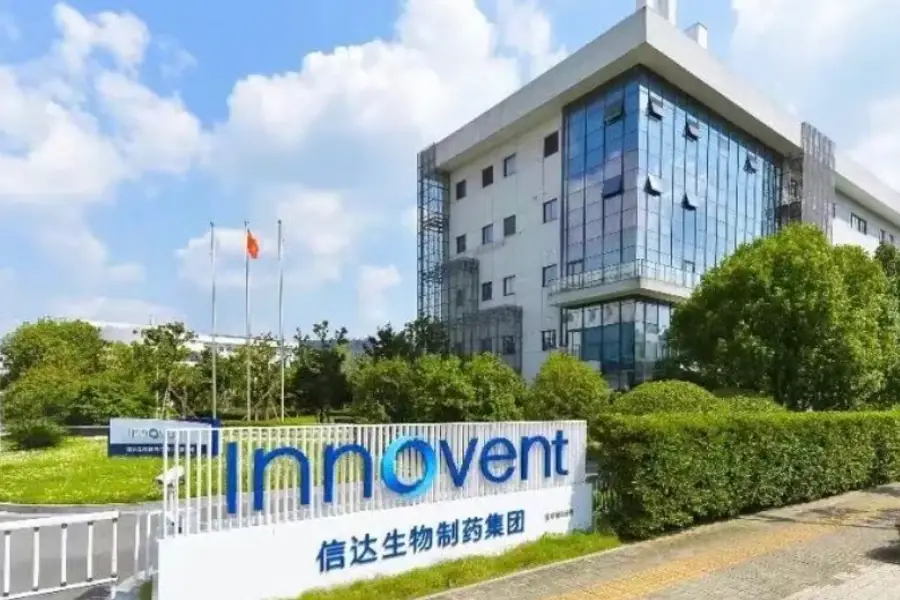
The Chinese biotech has added a major Pfizer collaboration to its growing roster of global deals, this time with a tighter commercial and profit-sharing partnership
Key Takeaways:
- Co-commercialization deals like this are becoming a new pathway for Chinese drugmakers to realize their global ambitions
- Innovent is already riding a wave of earnings momentum, with revenues from existing products jumping more than 50% in the first quarter
By Molly Wen
Deal by deal, Innovent Biologics Inc. (1801.HK) is helping to write a new playbook for relationships between Chinese biotechs and Big Pharma, just as the trend for teaming up on new drugs is coming under closer scrutiny.
China’s drug sector has been buffeted in recent months by the risk of tighter restrictions on its international partnerships, after U.S. lawmakers voiced concerns about China’s increasing role in pharmaceutical supply chains and new drug pipelines.
Nevertheless, Innovent came out this month with another blockbuster contract to develop next-generation cancer drugs, adding to its web of cooperation arrangements with some of the top names in the global pharmaceutical business.
The Chinese biotech announced on May 29 it had agreed a global strategic collaboration with Pfizer Inc. (PFE.US) worth up to $10.5 billion. The news sent Innovent’s shares surging 11.36% on the day of the release and helped to lift the broader novel drug sector out of a months-long torpor.
The agreement covers 12 early-stage and new oncology research programs, including eight early-stage assets originated by Innovent and four discovery programs proposed by Pfizer. Leveraging its expertise in drug discovery and early testing, Innovent will advance all 12 programs through Phase One studies, after which Pfizer will take global responsibility for developing the drugs.
Pfizer agreed to pay Innovent $650 million upfront, with up to $9.85 billion more in milestone payments linked to progress in developing the drugs and getting them cleared for sale, for a total maximum value of $10.5 billion. In addition, Innovent stands to gain double-digit percentages of royalties on sales of each licensed product that gains approval.
The hybrid nature of the deal, with a more deeply integrated model of collaboratively developing and commercializing the assets, sets it apart from conventional licensing-out transactions.
Four key programs in the set will follow a co-commercialization (Co-Co) model, with the companies working together to make the drugs available for sale after clinical trials. The assets will be co-developed, sharing the costs, and then taken forward commercially on a joint basis in the United States and Europe, splitting the profits. Innovent will retain rights in Greater China. Another four programs grant Pfizer exclusive rights outside Greater China, while the remaining four provide Pfizer with exclusive global rights.
The tiered structure suggests that the partnership goes beyond a simple deal to monetize assets. Aside from the cash-flow boost from the upfront portion, Innovent will share profits in key overseas markets that could translate into substantial long-term income streams.
The Chinese company can also leverage Pfizer’s R&D and business infrastructure to accelerate the progress of its early-stage pipeline. Notably, the Pfizer deal marks Innovent’s second Co-Co agreement within a year, after it partnered with Japan’s Takeda Pharmaceutical (4502.T) last October over a cancer immunotherapy drug. The two parties agreed to jointly develop the bispecific antibody IBI363 globally and co-commercialize it in the U.S. market while sharing profits.
The biopharma industry has been innovating in its business structures as well as its drug design. Aside from license deals, it has come up with NewCo structures that spin off specific drugs into separate corporate entities to fast-track development. Now the Co-Co model, which enables biotechs to retain a bigger share of long-term value, is emerging as a new pathway for leading Chinese drugmakers to seek global expansion. Hengrui Pharmaceuticals (1276.HK; 600276.SH) has also joined Bristol Myers Squibb (BMY.US) in a strategic collaboration with a potential value of up to US$15.2 billion that incorporates a Co-Co framework. Under the agreement, the two companies will jointly advance 13 early-stage programs spanning oncology, hematology and immunology. Hengrui not only retains co-development rights for selected projects but may also work alongside its partner to commercialize products in the future.
Inflection point
Even as it has struck a series of major deals, Innovent has also delivered strong sales from its own products. That suggests its frequent overseas partnerships are not a forced sale of early-stage assets under funding pressure, but rather a strategic choice made from a position of strength. In 2025, Innovent posted its first full-year profit under International Financial Reporting Standards (IFRS), with net profit of 814 million yuan ($120 million). Total revenue rose 38.4% year on year to 13.04 billion yuan, while product revenue grew 44.6% to 11.90 billion yuan, marking a new stage of self-generated growth.
The earnings momentum has carried into 2026. In the first quarter, product revenue rose more than 50% to 3.8 billion yuan from the same period a year earlier, driven by the twin engines of cancer drugs and obesity treatments. Oncology sales were lifted by the rapid uptake of five therapies based on tyrosine kinase inhibitors that were included in China’s medical coverage program. Its broader portfolio, including Xinermei (mazdutide) and two drugs to lower cholesterol, also made solid contributions.
In recent years, Innovent has continued to expand its global footprint through multiple outbound licensing deals. The total potential value of its deals has exceeded $30 billion over the past year, while its core pipeline is moving more quickly into global multi-center clinical trials. Investors clearly have high hopes for Innovent’s future growth. The company currently trades at about 158 times earnings, more than double the 67 times for BeiGene Ltd. (6160.HK; 688235.SH), another leading Chinese drugmaker with global ambitions.
The $10.5 billion deal marks a key step in Innovent’s overseas expansion. But to maintain its elevated valuation, the company may need to go on to deliver commercial success and healthy profits in U.S. and European markets.
To subscribe to Bamboo Works weekly free newsletter, click here
Related Articles
RELATED ARTICLES