Tiandi Hexing woos investors with cybersecurity creds
The company has filed for a Hong Kong IPO, providing an entry for investors into China’s complex realm of industrial cybersecurity
Key Takeaways:
- Tiandi Hexing has applied to list in Hong Kong, reporting 20% revenue growth and continued losses in the first nine months of last year
- The industrial cybersecurity firm’s shareholders include leading miner Zijin and financial and medical conglomerate Fosun
By Bai Xin Rui
Nobody wants to have their systems hacked, even as such attacks pose a growing menace by robbing companies of personal data and even crippling corporate computer systems and entire markets. But Beijing Tiandi Hexing Technology Co. Ltd. has found a comfortable place in just that space, positioned as an expert on industrial cybersecurity. Now, the company is taking its crime-busting expertise to the capital markets, with its submission for a Hong Kong IPO last week.
Tiandi Hexing was established in August 2007 by current Chairman Wang Xiaodong, whose cybersecurity expertise comes through two decades of work in power automation and telecommunications – two areas where security is of particular importance. The company’s backers over several funding rounds come from a variety of backgrounds, including leading gold and copper producer Zijin Miningand financial and medical conglomerate Fosun. As is often the case with private Chinese companies, Wang Xiaodong is Tiandi Hexing’s largest shareholder, with nearly 22% of its stock before the listing.
The company’s services are in growing demand lately, as major security incidents caused by hackers have become increasingly common across a range of industrial sectors worldwide. Some of those include a recent worm attack on a U.S. nuclear power plant and a cyberattack on another U.S. nuclear facility, just to name a few. Such incidents expose vulnerabilities in companies’ industrial systems, worrying governments that fear attacks on such critical infrastructure could endanger national security. That’s been a boon for a rising group of security specialists whose job is to protect companies and fix their vulnerabilities before attacks occur.
Industrial cybersecurity refers to the application of systematic risk management methodologies, technical control measures, and layered defense strategies to combat cyberattacks. Its core objective is preventing threats and cyberattacks on a company’s or organization’s information technology (IT) and operational technology (OT) assets — including its networks, systems, data, applications and equipment.
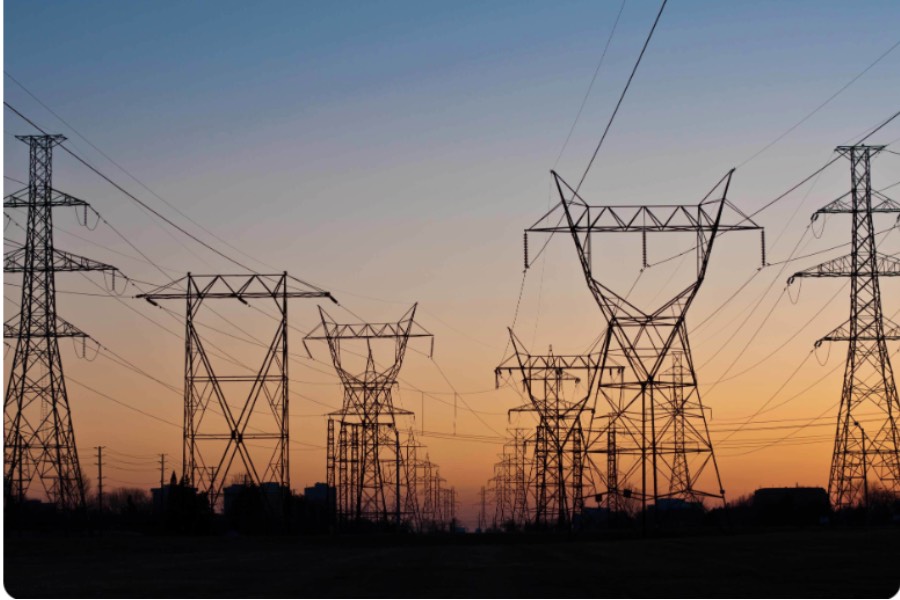
Industrial control systems that industrial cybersecurity firms help to protect often form the core of critical infrastructure such as energy and power grids. For this reason, many countries have incorporated such systems into their national strategic security frameworks.
Big attention to the need for industrial cybersecurity is providing a boost to the market, leading to rapid growth. The China market for such services more than doubled from just 4.1 billion yuan ($590 million) in 2020 to 9.6 billion yuan by 2024, growing at an annual rate of 24.2%, according to third-party research in Tiandi Hexing’s listing document. Growing demand for services to stop increasingly sophisticated hacker attacks is expected to keep the market in China humming, projected to reach 29.4 billion yuan by 2029, equivalent to 25% growth from 2024 to 2029.
Leader in a fragmented market
Tiandi Hexing was China’s largest industrial cybersecurity enterprise in 2024, commanding 6.7% of the market. But that relatively small amount underscores that no company in China currently dominates the fragmented market. While Tiandi Hexing is the current leader, its share is only marginally higher than the second and third players, with 6.6% and 6.2% of the market.
According to its listing document, Tiandi Hexing’s revenue rose by 22.2% year-on-year to 439 million yuan in the first nine months of last year. It attributed the gains to expansion of its product lines, including covering more industries.
The company’s primary revenue streams come from providing integrated solution services, hardware and software sales, and providing technical services. Integrated solutions services was the company’s biggest money-spinner, accounting for 58.3% of its revenue in the first nine months of last year. The segment achieved a gross profit margin of 72.3%. Its gross profit totaled 185 million yuan, or 86.7% of the company’s total gross profit of 213 million yuan – far higher than its revenue contribution.
Despite its high margins and healthy revenue growth, Tiandi Hexing failed to turn a profit during the period covered in its listing document. The company lost 94.67 million yuan in the first nine months of 2025, though that marked a 7.9% narrowing year-on-year. The ongoing big losses are partly the result of growing expenses, including a 57% surge in administrative spending in the first nine months of last year.
While its sector stands to thrive on growing demand for cybersecurity services, it’s also important to note that Tiandi Hexin’s business is somewhat seasonal in terms of revenue recognition. The fourth quarter every year typically accounts for the majority of its income, as clients typically plan and purchase services during the year and square up their bills in the final months.
Backup energy storage acquisition
One potential source for future expansion lies in the company’s newly acquired subsidiary, Yantai Haibo Electrical Equipment, a specialist in backup energy storage power solutions, encompassing power automation equipment, complete power supply systems, and high-capacity lithium battery packs. Leveraging battery management system (BMS) technology, Yantai Haibo improves battery packaging structures to develop solutions for specialized scenarios such as data centers, marine vessels, and mining operations.
As power-hungry data centers multiply to support a growing number of AI-backed applications, securing such facilities from external threats will take on growing importance, providing a new growth opportunity for Tiandi Hexing’s business.
The company’s move to the Hong Kong capital market will give investors an important new choice from a sector whose current options are scarce. The small number of publicly traded players includes Venustech Group (002439.SZ), listed in Shenzhen, which was expected to become profitable last year after losing money in 2024. Its profit is expected to grow further still, more than tripling from a forecast 50 million yuan in 2025 to 160 million yuan this year. But even with such gains, its projected 2026 price-to-earnings (P/E) ratio still exceeds 100 times, indicating the company is quite richly valued.
Despite the current euphoria towards new Hong Kong listings, especially tech stocks, Tiandi Hexing could have trouble scoring big gains on its trading debut if it tries to value itself similarly high. At the end of the day, competition remains intense in its industry, and the company has yet to show a path to sustained profitability.
To subscribe to Bamboo Works weekly free newsletter, click here
Related Articles