Lingzhu AI secures angel funding led by investor in TikTok predecessor
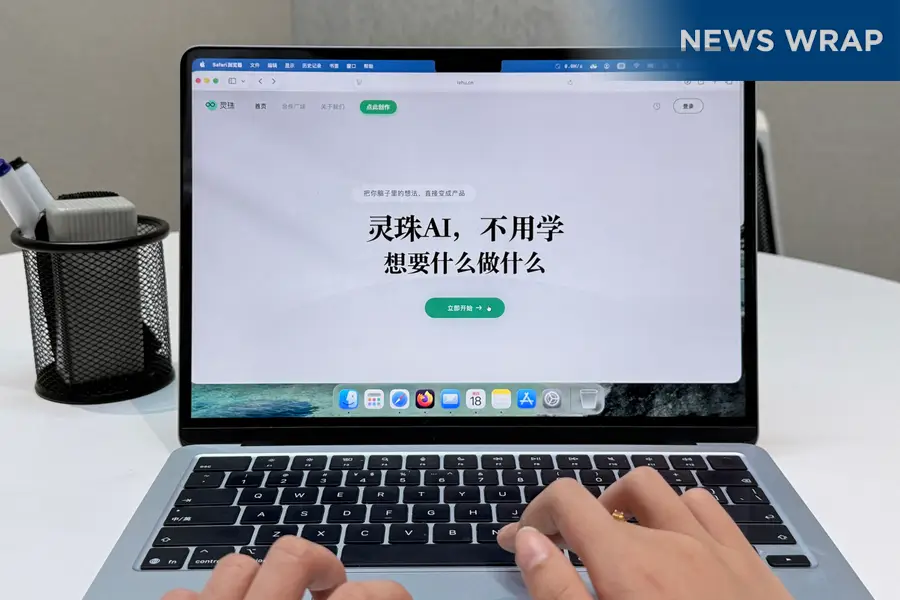
The AI creation platform said it will use the new funds to improve its products and infrastructure, and to expand its team and use cases
By Teri Yu
Lingzhu AI, a Chinese startup aiming to build a “zero-threshold” AI creation platform, announced that it has completed its angel funding round led by Wei Haijun, a prominent investor known for identifying and backing Musical.ly, a key predecessor of ByteDance’s TikTok, during his tenure as head of investments at Cheetah Mobile.
Lingzhu did not disclose the funding amount, but the deal comes just two months after its Lingzhu AI platform began its first closed beta testing. The company is positioning itself as an AI creation platform for everyone, allowing non-technical users to transform ideas into functional products using natural language. The company said it will use the new funds to improve its product and infrastructure, expand industry-specific use cases, and grow its team.
Wei’s investment marks an important vote of confidence in the company, reflecting its potential to evolve into an AI era equivalent to TikTok. Lingzhu says its core proposition is straightforward, asking users to describe what they want — from a simple game to a business tool. Its platform then automatically handles everything, from requirement analysis to code generation and deployment. It also recently launched a “modding” feature that allows users to directly customize existing applications on the platform. The company says multiple domestic large language models are used to deliver finished products.
Lingzhu is betting that lowering the barrier to software creation could expand the developer market by orders of magnitude, similar to how TikTok and Douyin expanded video content creation beyond professionals. Just as short-video platforms redistributed creative power, Lingzhu is attempting to shift the ability to build applications from engineers and coders to everyday users.
Since launching its beta version on April 20, the platform has quickly surpassed 5 billion daily token usages, according to the company. Lingzhu says 83.7% of users can build their first application within five minutes, and that non-technical users, including students and teachers, are outperforming programmers in successful app generation rates.
Lingzhu was developed by Shanghai-based Linggangu Intelligent Technology and incubated by Genora Science, led by Chen Danian, a veteran entrepreneur best known as a co-founder of early gaming leader Shanda Interactive. The company points out its founding team has extensive experience operating large-scale consumer apps, which will help it navigate the challenges of user growth and retention.
If its platform continues to gain momentum, Lingzhu said the model could mark a meaningful shift in how software is produced and consumed. Rather than relying on a limited pool of developers, application creation could become a high-frequency, user-driven activity, with implications for industries ranging from education and healthcare to small business services.
The category is heating up globally, with recent moves and financings including Cursor, Astrocade, Lovable and Aippy, and major bets on AI coding tools, signaling investor conviction that it’s becoming a core application layer and not just a niche.
Unlike many AI startups targeting global markets first, Lingzhu is focused on China. The company says the real opportunity is not just the country’s roughly 9.4 million programmers, but the far larger population of idea-rich non-coders, covering most of the country’s 1.4 billion people who can imagine products but cannot build them.
The Bamboo Works offers a wide-ranging mix of coverage on U.S.- and Hong Kong-listed Chinese companies, including some sponsored content. For additional queries, including questions on individual articles, please contact us by clicking here.
To subscribe to Bamboo Works free weekly newsletter, click here