A new chapter begins: Chinese players take center stage in MLCC arena
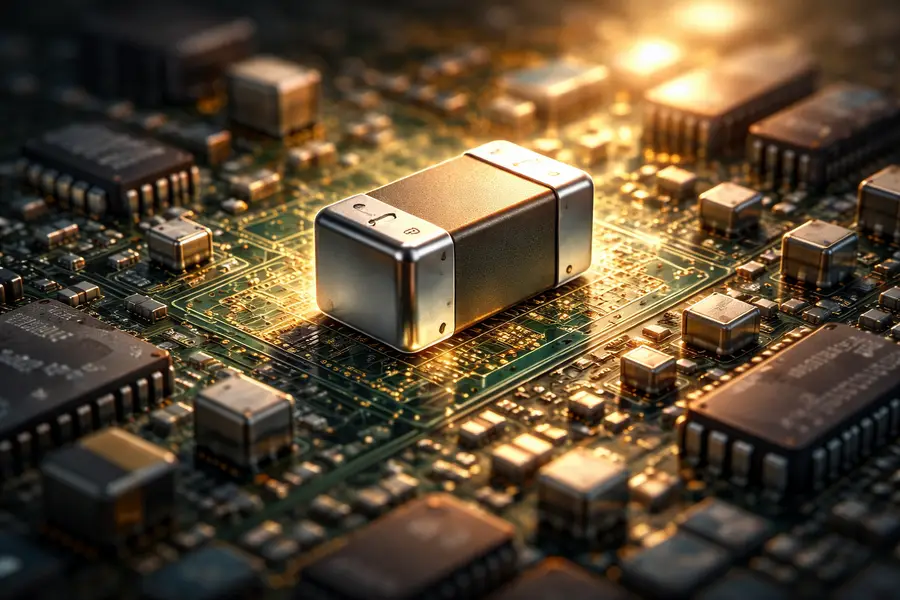
Booming AI demand is driving a structural shift in the multi-layer ceramic capacitor industry, with Chinese manufacturers moving upmarket to challenge the global supply chain
By CLS Marketwatch
Multi-layer ceramic capacitors (MLCC) have long served as a cornerstone component of the electronics industry due to their massive usage and widespread applications. The sector has endured a prolonged downturn over the past two years. But the market has shown signs of recovery since the second half of last year, with spot prices rebounding, capacity utilization rates improving, and orders increasing. This resurgence essentially stems from the explosive growth of AI computing infrastructure, which has opened up fresh opportunities in the high-end market. In this context, Chinese MLCC manufacturers are entering a golden era where they are transitioning from followers to pioneers.
MLCC market turns corner
After a two-year downturn, the MLCC industry finally reached a critical turning point in the second half of 2025. Starting in October, spot prices began to rebound. The uptick covered a wide range of specifications, with spot prices for premium MLCCs rising by 10% to 15% and by 5% to 8% for mid- to low-specification products. For example, the 0402 model’s price has jumped over 10% compared to November 2025. Similarly, common models such as 0603 and 0402 have also seen price hikes of 10% to 15%.
Meanwhile, a rapid rebound in capacity utilization by manufacturers is another key indicator of market recovery. Leading manufacturer Fenghua Advanced Technology (000636. SZ) has seen its capacity utilization climb back to a high level of 80% to 90%. Such high rates are the result of strong demand, with a renowned mid- to high-end MLCC manufacturer in Hunan reporting order backlogs stretching over six months.
The current recovery is most evident in the spot market. Since major manufacturers usually enter into long-term agreements with downstream clients, many companies, including Fenghuaand Chaozhou Three-Circle (300408. SZ), have yet to formally announce price hikes. Nevertheless, the possibility that Japanese manufacturer Murata Manufacturing (6981.T) may soon raise prices due to its current short supply of high-end products means Chinese domestic manufacturers may be preparing to follow suit with their own adjustments. As such, the higher price trend is set to extend further into the contract market.
Recovery follows dual logic paths
Notably, no single factor is driving this recovery cycle, which has resulted in a distinct “dual-track” revival pattern across the higher- and lower-end markets.
Price hikes in the high-end market are primarily the result of booming demand. As AI moves from cloud computing to edge devices, demand for high-performance MLCCs in end-use applications such as AI servers, autonomous vehicles, robots, and smart glasses is growing exponentially. Data reveals that a single Nvidia GB300 server uses approximately 30,000 MLCCs – 30 times the quantity used in a typical smartphone and three times that of a single automobile. Such massive demand has pushed Japanese and Korean makers of high-end products to operate at nearly full capacity, with even some mainstream products experiencing tight supply.
Strong demand related to AI data centers is expected to keep propping up demand for advanced MLCCs. What’s more, emerging devices like lightweight smart glasses are also making extensive use of miniature MLCCs, with each piece requiring 150 to 200 units, further boosting the high-end market. Fueled by such robust demand, Chinese manufacturers of AI computing-related products could see year-on-year order increases of more than 50%.
Unlike the demand-driven premium market, rising prices for mid- to low-end MLCCs is more the result of cost pressures and supply-side self-adjustment. Since late 2024, prices of metals essential for MLCC production, such as tin, nickel, copper, and silver, have been climbing steadily, raising manufacturing costs. In the face of these inflationary pressures, previously assertive major downstream clients in sectors like home appliances have begun to accept modest price bumps of around 5% to 8%.
During the downturn of the past two years, prices for mid- to low-end MLCC products remained persistently below their costs, prompting many manufacturers to halt production to stem losses. Before 2025, most stakeholders could only return to profitability through proactive supply contraction and price negotiations. Critically, we should note that since lower-end manufacturing cannot be reallocated to higher-end production, redundant capacity cannot be repurposed. Therefore, price increases will not occur due to higher-end capacity crowding out lower-end capacity; instead, the future market is likely to become even more segmented.
Local producers ride AI wave to high-end
Immense opportunities brought by this AI-led wave is causing Chinese MLCC manufacturers to accelerate their move into the premium market. The global MLCC supply chain has long been dominated by overseas players, with the top five global suppliers collectively holding over 80% of the market.
Responding to the new boom, numerous domestic enterprises have already initiated forward-looking deployments. Fenghua and Three-Circle Group are two examples, directing capital raised through public offerings toward high-end capacitor projects since 2021. As of now, the first phase of Fenghua’s project has reached its planned capacity, while capacity at the third phase continues to ramp up and is delivering products to clients on a batch-by-batch basis. High-end MLCCs now account for over 30% of the firm’s profits. Likewise, Three-Circle’s MLCC products now cover various models required for AI servers.
At the same time, Chinese manufacturers are accelerating their efforts to catch up with international standards in product R&D. Viiyong Electronic Technology achieved full coverage of automotive-grade MLCCs by 2025, and the second phase of its smart factory is scheduled to commence production in 2026, with annual capacity projected to exceed 900 billion units. Suzhou Gyz Electronic’s (688260.SH) high-capacitance MLCCs have also completed full-performance testing and IEC international standard certification, officially entering mass production. These show that Chinese manufacturers are striving for technological breakthroughs to fill gaps left by Japanese and Korean firms in certain segments of the high-end market.
The big story is that China’s MLCC sector has started a new era of structural growth spurred by demand for AI computing power. The premium market is benefiting from ongoing expansion of AI infrastructure, with demand steadily growing. Meanwhile, the lower-end market has emerged from its price trough through negotiation and supply optimization. In this industrywide transformation, Chinese manufacturers are positioning themselves to become dominant players in the high-end market through forward-looking capacity planning and technological breakthroughs. Looking ahead, this crucial foundational component of the electronics industry is gaining new economic significance in the computing power era.
CLS Marketwatch provides insights and analysis on China’s industries. You can contact the author at liujingyi@cls.cn
To subscribe to Bamboo Works weekly free newsletter, click here
Related Articles