Dongshan Precision targets AI optics with Hong Kong listing
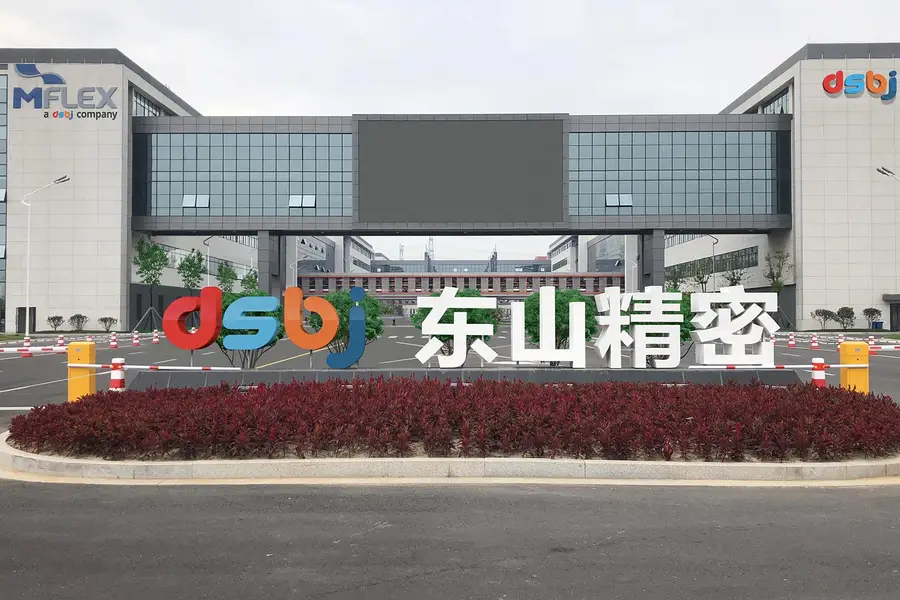
The maker of printed circuit boards is raising fresh cash from capital markets to fund an acquisition-led push into optical transceivers and chips for AI data centers
Key Takeaways:
- Dongshan Precision is aiming to raise around $1.35 billion to scale up its new business after buying an optical module maker last year
- In its consolidated first-half earnings, revenue rose around 64% and net profit jumped 290%
By Lee Shih Ta
The rise of AI data centers is changing the product mix for a leading Chinese provider of electronic circuitry, marking another transformation for a business that started out four decades ago in the sheet metal industry.
The story of Suzhou Dongshan Precision Manufacturing Co. Ltd. (2384.HK; 002384.SZ) is one of evolution and acquisitions to respond to changing technologies. In its latest shift, the company is turning from a focus on printed circuit boards (PCBs) for consumer electronics to providing optical transceivers for AI data delivery.
To that end, the company is looking to raise about HK$10.67 billion ($1.35 billion) on the Hong Kong stock market with a global offering launched on Oct. 20 and cleared by regulators to start trading later this month.
The company said the proceeds would be spent on upgrading and expanding its manufacturing facilities for high-speed optical chips and the modules used in data centers to convert electrical signals into light pulses for fiber-optic transmission.
The business started out in steel processing back in 1980 and was formally established as Dongshan Precision in Suzhou in 1998, according to the corporate information pack. Over time, the company moved into the electronics industry, with the 2016 acquisition of a U.S. maker of flexible circuit boards (FCBs) and the purchase two years later of the China-based operations of Multek focusing on rigid boards.
The acquisitions put the Chinese company on track to become a global leader in PCBs. Dongshan Precision ranked second globally in the market for flexible boards by revenue in 2025 with a 24.5% share and was the world’s third-largest PCB supplier with a 4.2% share. But greater scale has come at the cost of higher debt, leaving investors keen to see to see if the strategy can drive faster growth and higher margins.
New departures
Last year the buying spree broadened with the purchase of automotive parts supplier GMD, expanding Dongshan Precision’s vehicle electronics business and client base into Europe, and the acquisition of optical solutions firm Source Photonics.
The foothold was gained in the high-speed communications sector just as demand from AI data centers was ramping up. Dongshan Precision noted that leading manufacturers had placed major orders for 2027, mostly for transceivers with transmission speeds of 800 gigabits per second but with gradually rising interest in 1.6 terabit products. The company offers optical modules from 10G to 1.6T and is developing products of 3.2T and above. Whether orders translate into actual shipments will still depend on supply chain capability and production capacity.
The optical products have begun to change the revenue mix. They accounted for 3.6% of group revenue in 2025, surging to 19.2% in the first half of 2026. The segment’s gross margin of 39.2% was well above the group’s overall level of 19.4% in the period. With its printed boards and optical products, the company can serve multiple needs of AI data centers, but the extent and value of potential synergies remain to be tested.
Accounting impact
The expanding scale was reflected in Dongshan Precision’s first-half results, when revenue rose 63.95% to 27.80 billion yuan ($4.16 billion) and net profit rocketed 290% to 2.96 billion yuan. Gross margin rose from 13.1% to 19.4% over the same period. As both Source Photonics and GMD were acquired in the second half of 2025, some of the earnings growth derived from consolidating businesses with differing base periods and cannot be fully attributed to organic expansion.
Funding pressure has also become a factor in assessing the success of its transformation. Borrowings and lease liabilities totaled about 23.96 billion yuan at the end of June 2026, rising to about 25.40 billion yuan by the end of August. Net cash outflow from investing activities was about 5.37 billion yuan in the first half. Cash flows from the new businesses will be critical to determining the company’s ability to control its debt and keep expanding.
With AI-focused products emerging as new growth drivers, Dongshan Precision’s Shenzhen shares had risen about 78% year to date through Oct. 8 but talk of possible U.S. restrictions on Chinese optical modules has unsettled investors.
The blow came from a Morgan Stanley research report that said U.S. policymakers could introduce phased restrictions starting with 3.2T optical modules. It also discussed a possible exemption for products with a proportion of U.S.-sourced materials above 65%. If such restrictions take effect, Chinese manufacturers may have to adjust their supply chains, raising costs and affecting their ability to sell into the United States.
The report triggered a daily limit-down drop in Dongshan Precision’s mainland shares on Oct. 8, with lingering losses on policy risk concerns. On Oct. 16, the stock closed at 122.67 yuan, about 19% below its Oct. 8 level. Those shares currently trade at a price-to-earnings ratio of about 62.7 times, well above the 38.6 times and 32.6 times for peers Zhongji Innolight (300308.SZ) and Eoptolink Technology (300502.SZ).
Dongshan Precision began its global offering on Oct. 20, with pricing that some may find appealing. The maximum offer price of HK$93.8 per share is equivalent to about 80.3 yuan, a discount of 34% to the A-share close of 122.15 yuan on the previous day. If the newly acquired businesses succeed in contributing to earnings, they could create some upside for the stock.
To subscribe to Bamboo Works weekly free newsletter, click here
Related Articles

RELATED ARTICLES
-
Shareholders greet shape-shifting Impro Precision’s fundraising with skepticism
 1286.HK
-
Dongshan Precision launches $1.3 billion Hong Kong IPO
2384.HK002384.SHE
-
PCB leader Dynamic Electronics holds the line on prices – to its detriment
603175.SHG
- ESWIN Computing powers up its RISC-V growth story for Hong Kong investors
- Who needs humanoids? Direct Drive Tech bets on simpler household robots
-
Dtech’s soaring profit on AI demand fails to tool up Hong Kong investors
1377.HK301377.SHE
-
Optical communications leader Eoptolink plans Hong Kong listing
300502.SHE