LDRobot chases European opening with low-cost acquisition
The company plans to buy a garden equipment maker for a bargain price, aiming to expand its own lawnmower sales by leveraging the German company’s channels
Key Takeaways:
- LDRobot plans to acquire Germany’s Sabo for up to 6 million euros, aiming to tap the company for its brand, and distribution and service networks
- A growing focus on smart lawnmowers is driving a structural change in LDRobot’s revenue mix, but brand building and product development expenses are rising
By Lee Shih Ta
A 1 million euro ($1.12 million) price tag for a 94-year-old German garden equipment maker looks like quite the bargain. But for Shenzhen LDRobot Co. Ltd. (1236.HK), acquiring the European company is just the beginning. To leverage the legacy brand and boost its own smart lawnmower business in Europe, it must first reinvigorate the German company with a cash infusion. And as many Chinese companies have discovered in the past, such legacy Western brands are often past the point of reinvigoration even after getting new funds.
LDRobot announced last week that it intends to acquire the entire equity of Germany’s Sabo-Maschinenfabrik GmbH for a total investment of up to 6 million euros, including the purchase price plus a capital infusion. One of Sabo’s top attractions is its network of over 1,400 specialized retailers across Europe, as well as its accompanying after-sales service network and local supply chain.
Founded in 2017, LDRobot makes visual perception products, algorithm modules and finished smart robots. For a machine to move autonomously, it must first know where it is and be able to perceive and respond to its environment. LDRobot’s sensors and algorithm modules help such robots to “see” their environment to navigate the world around them.
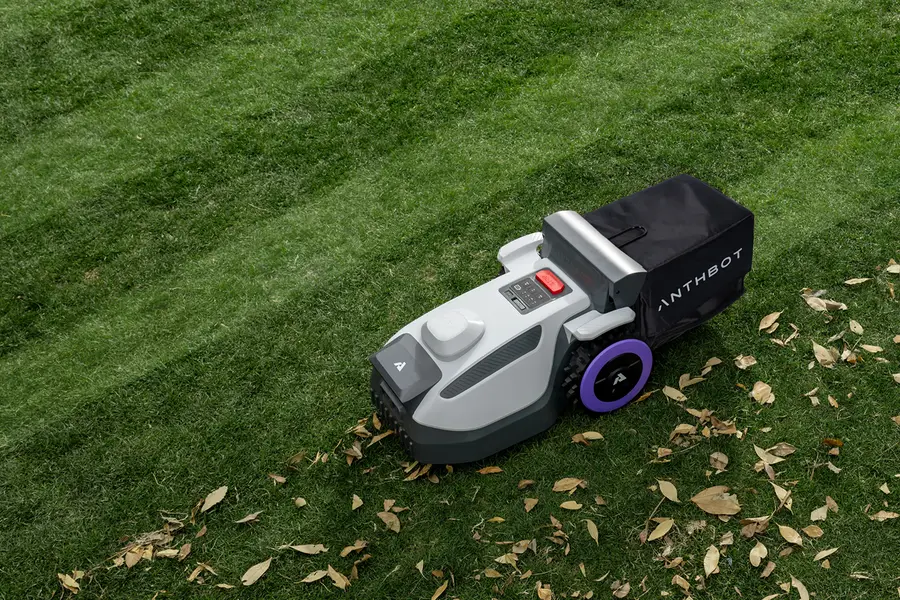
LDRobot traditionally sold perception products to makers of finished products like robots. But later it began using the technology in its own Anthbot line of smart lawnmowers, extending its business from supplying “eyes” for machines to selling the entire machine. Its lawnmowers are sold over third-party platforms such as Amazon, its own websites, as well as authorized stores and retailers. All the lawnmowers are assembled by third-party manufacturers, while LDRobot focuses on product development and brand management.
Its move into a finished consumer products has also altered the company’s operational requirements. In addition to its original business of supplying components to enterprises, which focuses on bulk selling and building customer relationships, the company has had to develop a more consumer-focused skillset that includes brand building, as well as after-sales service capabilities. And just because a product can mow lawns on its own doesn’t mean that the brand can break into new markets just as autonomously.
The company’s latest financials show just how important the lawnmower business has become. In the first half of this year, LDRobot’s revenue rose 35.2% year-over-year to 523 million yuan ($78 million). Much of that muscle came from lawnmower sales, which surged 159.1% to 201 million yuan, rising from 20.1% of total revenue to 38.4%. Over the same period, revenue from visual perception products was basically flat, rising slightly from 307 million yuan to 309 million yuan. Its fully assembled product business is currently the company’s main growth driver, while its original operation has begun to plateau.
Buying a brand, but acquiring channels
Founded in 1932, Sabo makes and sells garden tools such as gasoline and battery-powered lawnmowers and leaf blowers, serving both residential and commercial customers. Its specialized retailers are both points for sales and after-sales service, which is exactly the overseas capability that LDRobot hopes to build as it moves into the global marketplace.
LDRobot said it plans to leverage Sabo’s network to introduce smart lawnmowers, aiming to achieve synergies in R&D, procurement, manufacturing and services. From a business logic perspective, that’s the same as using acquisitions to quickly expand your sales channels, while also increasing the legacy brand’s sales by boosting its portfolio using cutting-edge smart products.
But Sabo’s large retail network is just a figure, and it remains to be seen if stores will be willing to introduce these new high-tech products and how well they might sell. LDRobot already has its own offline sales and service capabilities, meaning Sabo’s value will lie in its ability to expand that coverage and service. Then there’s also the integration question, since these two companies come from very different cultural backgrounds.
There’s also the issue of stabilizing Sabo’s ship. According to the announcement, the German company’s revenue last year stood at 18.24 million euros, down about 19.3% from 22.6 million euros in 2024. But that decline may have owed to a greater focus on quality sales over quantity, as the company swung back to a profit of 1.14 million euros from a 947,000 euro loss over that time.
LDRobot said the revenue decline owed to a lack of product innovation and intelligence, and pointed out that Sabo’s existing liabilities and tight operating cash flows necessitated a new capital infusion. The agreement requires LDRobot to provide 1.5 million euros in working capital to Sabo on the signing date, and up to 2.75 million euros before the deal closes.
LDRobot itself has yet to find profits, reporting its net loss expanding to 42.1 million yuan in the first half of this year from 13.78 million yuan a year earlier. Its sales and marketing expenses grew 124.1% to 81 million yuan over that period, while R&D costs increased 48.5% to 75.7 million yuan. That shows the rapid growth in lawnmower sales is also bringing higher marketing and product development costs. Whether purchasing more sales channels through the Sabo acquisition can help to lower those costs as a percent of the company’s revenue remains to be seen.
What’s more, the transaction could also face some political headwinds. The German government recently blocked Chinese shipping giant Cosco’s acquisition of the German logistics firm Zippel on Oct. 7 due to security concerns. While gardening equipment is quite a different story, it’s still possible the government might intervene or veto this sale on security grounds in the current climate of geopolitical tensions.
LDRobot’s stock surged as much as 20% the day after the announcement, but ultimately gave all of that back and more to close down 1.14% at HK$26.10. That put the stock 56.5% below its closing price on its first trading day in May.
LDRobot currently trades at a price-to-sales (P/S) ratio of about 8.3 times, which is far higher than the 1.2 times for Ninebot (689009.SH), which is also developing smart lawnmowers. That seems to show that the market is more optimistic about LDRobot. Its rapidly growing lawnmower sales, coupled with Sabo’s European channels, could be grounds for cautious optimism about the company’s overseas growth prospects. But LDRobot’s own lack of profits, combined with the capital infusion it will need to provide for Sabo, mean its short-term profitability and overall valuation could remain under pressure.
To subscribe to Bamboo Works free weekly newsletter, click here
Related Articles

RELATED ARTICLES
-
Chinese AI lawnmowers gain ground in Europe
-
Easy Smart’s meteoric AI surge masks its low-tech roots
2442.HK
- Fairland’s ‘smart pools’ swim closer to IPO with CSRC application
-
BRIEF: LDRobot shares double in Hong Kong trading debut
1236.HK
-
RLX casts smoke screen with new European acquisition, overseas revenue blip
RLX.US
- ESWIN Computing powers up its RISC-V growth story for Hong Kong investors
- Starved for better profits, Fubei chases IPO to fill its funding bowl