SICC returns to growth and profits. But China’s SiC industry faces a tougher test
The silicon carbide substrate maker has built a leading position in a strategic semiconductor market, but now faces the harder task of turning the technology into a sustainable business
Key Takeaways
- SICC has returned to revenue growth after a difficult period, but a return to profitability remains uncertain as price pressure continues across the silicon carbide industry
- China has made significant progress in building a domestic SiC supply chain, but companies now face a tougher challenge of surviving an industry shakeout
By Hu Minghe
For much of the past few years, silicon carbide (SiC) was one of China’s hottest semiconductor stories. It represented two ambitions at once: supplying the next generation of electric vehicles (EV), while also helping China reduce its reliance on foreign suppliers for a critical semiconductor material.
For years, high-end SiC substrates were largely controlled by overseas suppliers, creating challenges for China’s semiconductor industry as it sought to build its own supply chain. To address that, Beijing began promoting the development of SiC substrate companies.
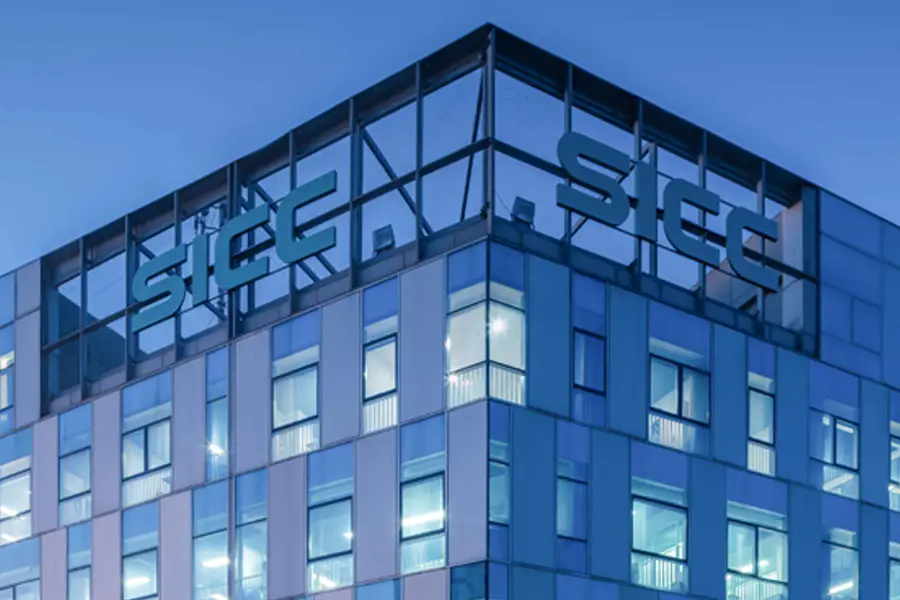
One of those was SICC Co. Ltd. (2631.HK; 688234.SH), better known in China as Tianyue Advanced, which has become one of China’s industry leaders. But its latest financial results, released last week, highlight a bigger challenge: China has built up a large industry, yet turning its capacity into profitable businesses remains difficult.
SICC reported revenue of 914 million yuan ($127 million) in the first half of 2026, up 15.1% year-on-year. But it swung to a net loss of 58.6 million yuan from a profit of 10.9 million yuan a year earlier. The results showed big sequential improvement, as stronger sales returned the company to the black in the second quarter after it lost 60.5 million yuan in the first.
Despite the improvement, investors remained cautious. SICC’s Hong Kong-listed shares fell about 5% last Thursday after the earnings announcement, and have lost nearly a quarter of their value over the last five trading days. That suggests concerns remain about profitability, as pricing pressure remains despite stabilizing sales.
The latest results mark a reversal from the slowdown that emerged before SICC’s Hong Kong listing last August, when oversupply in its two major end markets, EVs and solar equipment, began weighing on growth and pricing. The company is now selling more products again, but the industry environment remains challenging.
SICC’s advantage has been its relatively long history and ability to move up the technology ladder. Founded in 2010, the company started with smaller, 2-inch substrates before moving into higher-yield 4-inch, 6-inch and 8-inch products. It has also developed the most cutting-edge 12-inch SiC substrates, although those products have yet to enter mass production.
That progress has helped SICC become one of the leading players in the global SiC substrate market. According to a March report by Japan’s Fuji Keizai, SICC ranked first globally in conductive SiC substrates in 2025 with 27.6% of the market, while its share of the 8-inch segment reached 51.3%. That position gives SICC an advantage over smaller competitors, but hasn’t insulated it from industry cycles.
From breakthrough to industry shakeout
The rise of SiC was closely linked to the growth of EVs. Tesla’s early adoption of SiC technology helped accelerate interest in the material, encouraging automakers and semiconductor companies worldwide to explore its use in power systems. Chinese companies followed quickly, hoping to build domestic supply chains for a strategically important part of the EV industry.
That enthusiasm triggered a wave of investment in China, as manufacturers rushed to build new capacity. But demand didn’t grow quickly enough to absorb all the new supply, resulting in overcapacity that pushed prices lower and squeezed profits. SICC was typical of the group, reporting increased sales volume last year but declining overall revenue due to falling prices.
The industry shakeout has also affected global players like Wolfspeed (WOLF.US), once regarded as a leading SiC supplier, which filed for Chapter 11 bankruptcy protection last year, after years of heavy investment in new capacity. The company later emerged from restructuring in September after cutting billions of dollars of debt.
The same challenge applies to the newer Chinese companies. TianKe Heda Semiconductor, another major producer, is pursuing its third IPO attempt on the Shanghai Stock Exchange. Like SICC, TianKe Heda has strong technology capabilities but is operating in a market where falling prices have made profitability difficult. The company’s gross margin fell to negative 20.06% in 2025, showing it was spending far more to make each substrate than it could sell them for.
By comparison, SICC’s gross margin in the first half of this year stood at a far healthier 22.86%, showing its production costs were still well below the prices it was charging for its substrates.
TianKe Heda’s IPO journey highlights a broader challenge facing China’s SiC industry: technological progress has moved faster than the industry’s ability to generate sustainable profits.
Market expectations have also become more demanding. SICC’s Shanghai-listed shares have experienced sharp swings, falling to 61.79 yuan last September before rising to a record 188.88 yuan in June this year, only to later retreat to around 110 yuan in late August. The volatility reflects a broader shift in investor attitudes towards the growing number of semiconductor companies available to them. They are increasingly looking beyond technology breakthroughs and expectation of strong state support, and asking whether companies can turn those advances into sustainable earnings.
Search for the next growth engine
To better utilize its capacity, the industry is now looking beyond EVs for new sources of demand. AI infrastructure has emerged as one potential opportunity. As AI data centers become more power-intensive, the industry is looking at SiC as a possible solution for improving electricity conversion efficiency inside increasingly demanding computing infrastructure.
SiC could play a role in future applications such as high-voltage direct current systems and other advanced power conversion technologies.
Major semiconductor companies are already positioning themselves for that trend. Infineon (IFX.DE), one of the world’s largest power semiconductor manufacturers, has highlighted AI infrastructure as a growth area for its power business, while other industry players are exploring SiC applications beyond EVs.
However, AI is unlikely to immediately absorb the excess capacity created during the EV boom. Electric vehicles remain the largest source of SiC demand, and higher-voltage EV platforms will continue to be the most important driver for the market in the near term.
The next stage of competition will not simply be about who can produce the most wafers. It will be about who can deliver reliable products, win customer certifications and control costs. SICC has already shown that Chinese companies can compete in a semiconductor market once dominated by overseas suppliers. The next test will be whether China’s recently minted field of SiC substrate makers can survive the boom-bust cycles the semiconductor industry is famous for to become sustainable businesses.
To subscribe to Bamboo Works weekly free newsletter, click here
Related Articles

RELATED ARTICLES