Shein pushes for higher valuation ahead of Hong Kong IPO launch
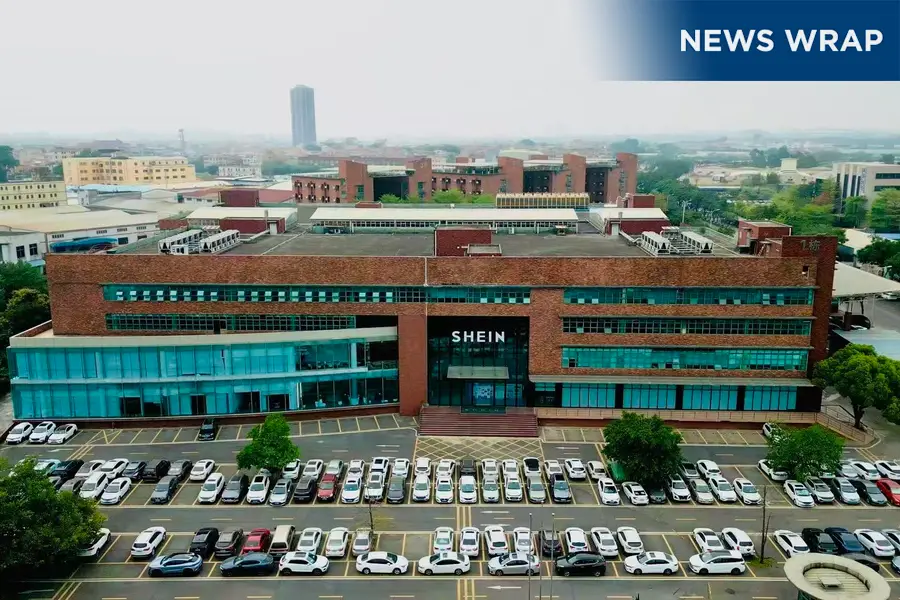
The $35 billion to $40 billion the online fashion retailer is seeking is relatively modest compared with its global peers
By Teri Yu
Online fashion and lifestyle company Shein Global Holdings Ltd. is rumored to be targeting a valuation of $35 billion to $40 billion as it gets set to launch its Hong Kong IPO as soon as Aug. 19, according to a Reuters report.
Shein has built one of the world’s largest online fashion platforms by combining low prices, a vast assortment of products and rapid product turnover. But such a model has been harder to value, often viewed through the lens of ultra-fast fashion, leaving investors to question whether it deserves the kind of valuation awarded to established global apparel leaders.
The company, which serves customers across about 160 markets, has positioned itself as a global fashion business, with its diversified international customer base and broad product offerings set it apart from conventional fast-fashion peers.
A valuation of $35 billion to $40 billion would value Shein at roughly 14.6 to 19.4 times 2025 earnings, below the 25 times forward price-to-earnings (P/E) multiple for Zara owner Inditex (ITX.MC) and 20 times for H&M (HM-B.ST). Supporters of that range argue that Shein’s business has historically expanded faster than either rival, while its digitally coordinated supply chain is more efficient than conventional retailers.
Shein’s active-customer base rose to 273 million in 2025 from 186 million in 2023, representing 21.2% annual growth. Its revenue rose to $41.8 billion in 2025 from $32.1 billion in 2023, while its operating profit increased 76.7% to $1.71 billion last year from $966 million in 2024. The company’s operating margin rose to 4.1% in 2025 from 2.5% in 2024, helped by lower sales costs and a greater contribution from higher-margin service income.
Shein’s pitch centers on its “large-scale automated test and reorder,” or LATR model, which uses data-led demand forecasting, small initial production batches and digitally connected suppliers to identify winners before production is scaled up. The model is designed to solve a long-standing retail challenge: offering a wide selection of products and rapid design turnover without building up large unsold stock.
Shein’s inventory days stand at about 36 to 38 days, compared with 71 for Inditex, 114 for Fast Retailing and 164 for Adidas. Such lower inventory requirements can improve cash conversion and reduce the markdown risk that has historically weighed on fashion retailers.
The company had more than 2 million apparel styles at the end of 2025 and added about 4,700 products a day, underscoring the scale and responsiveness of its supply-chain network. Its total orders reached 1.09 billion in the 12 months to March 31, 2026.
Shein’s service income rose to 14.3% of revenue in the first quarter of 2026 from 2.7% in 2023, while non-apparel categories accounted for 38.6% of revenue, up from 31.2%.
Its Xcelerator program, upgraded in October 2025, offers partner brands access to Shein’s supply-chain tools. Leveraging the successful rollout of Shein’s Xcelerator brand incubation initiative, British fashion label Missguided, following its acquisition by Shein, posted over $210 million in annual revenue in 2025. Shein believes the company has big growth potential.
According to Morgan Stanley, Shein’s net profit is expected to grow about 12% annually between 2025 and 2028, compared with 9% for Inditex and 4% for H&M. With a stated commitment to distribute at least 50% of its profits as dividends after the listing, Shein argues it offers investors a combination of growth, cash returns and a platform model that could extend beyond its own brands.
The Bamboo Works offers a wide-ranging mix of coverage on U.S.- and Hong Kong-listed Chinese companies, including some sponsored content. For additional queries, including questions on individual articles, please contact us by clicking here
To subscribe to Bamboo Works free weekly newsletter, click here
Related Articles

Han’s CNC revenue doubles in first nine months on booming demand from AI
Longsys profit leaps in first nine months
Transsion stumbles out of the gate after weak pricing
RELATED ARTICLES
-
Shein passes listing hearing, advancing Hong Kong IPO

- Shifting identities: Shein’s acquisition and Canadian Solar’s return to North America
- Shein’s Hong Kong IPO cleared by China’s securities regulator
- BRIEF: Shein to acquire U.S. peer Everlane for $100 million
- GoNature treks to Hong Kong in search of investor dollars
- From scarcity to execution: China’s AI valuation reset
- Luxury e-commerce ‘gondolier’ BMax paddles towards Hong Kong IPO