Global brands use overseas, emotional connections to navigate cutthroat China F&B market
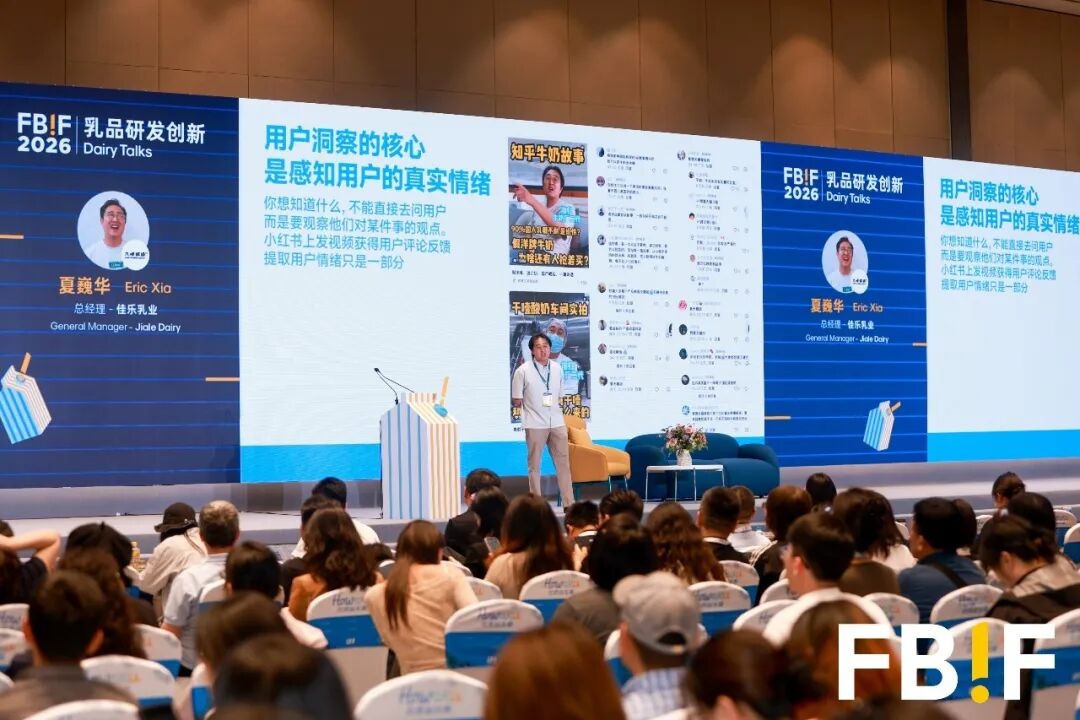
As China’s economy enters a new phase of slower growth, food and beverage brands are taking a more differentiated approach to reaching Chinese consumers
Key Takeaways:
- Foreign food and beverage companies are realizing that Chinese consumers prioritize health and emotional comfort over simple low prices
- Overseas students and global travelers remain a vital, organic pipeline for introducing foreign brands into the China market
By Doug Young and Brent Li
China’s food and beverage market is massive, but it’s also becoming starkly unforgiving as consumer caution grows and competition intensifies. For multinationals and local players alike, the formula for survival has shifted away from simple expansion, and increasingly relies on ruthless re-invention and hyper-localization, according to industry insiders speaking at the Food & Beverage Innovation Forum 2026, which featured 53,000 attendees, 650 exhibitors and more than 160 speakers last month in Hangzhou.
As China’s economy enters a new phase of slower growth, the standard playbook of flooding shelves with cheap consumer goods is losing its edge. Gary Hsi Chu, chairman of yogurt giant Yoplait Ltd., cautioned executives that navigating the current dairy sector requires a willingness to upend legacy revenue streams. Companies must never fear disrupting or cannibalizing their own core business, Chu noted.
Contrary to the widespread narrative of a massive downgrade by increasingly cautious consumers, Chu argued that people are not simply looking for the cheapest products. Instead, they are willing to pay a premium for healthier products. He pointed out that excessive competition is often the symptom of a deeper corporate failure — a lack of understanding of real consumer needs that results in undifferentiated products.
Eric Xia, general manager of Jiale Dairy, reinforced the need for focus over a one-size-fits-all approach. He noted that corporate R&D is often paralyzed by trying to chase every fleeting trend. Instead of reacting to every request, Xia said, companies must filter out the noise and only manufacture products with distinctive characteristics, using consumers’ actual emotional reactions as a gage of demand.
This sentiment echoes across the beverage sector, where functional demands are increasingly overshadowed by the experience that people get when consuming a product. Chris Chen, retail general manager at Peet’s Coffee, offered a sober assessment of China’s highly competitive coffee market. Amid fierce price wars, the brand has focused on doing “difficult but correct” things, he said. Over the past three years, the U.S.-based coffee chain has pushed into more than 20 markets across China, pursuing a localized strategy with specialty outposts like the Xi’an Metropolitan store and a ski-friendly Songhua Lake Snow House store. By maintaining a small-batch roasting model, the company is attempting to sell a lifestyle rather than just caffeine.
Tapping a diaspora
While some global brands meticulously plan their China entry, others are discovering that their best point of entry comes via word of mouth from everyday travelers. Pavel Kislyakov, general manager of North Asia at German chocolatier Storck, highlighted an unconventional backdoor into the world’s second-largest economy. Interestingly, the company’s Knoppers brand first entered China through overseas Chinese students purchasing products abroad and bringing them home, Kislyakov said.
He emphasized that this is an important way that some foreign brands enter China. Chinese outbound travelers regularly rank among the largest global tourist groups. As these travelers continue to broaden their world understanding, they increasingly seek the same high-quality products they discover abroad back home in China. Storck is now using this same organic momentum to introduce its Merci chocolate line, hoping the product’s association with gratitude will resonate.
But getting a product on the shelf isn’t the final hurdle. In an era of fractured attention spans, brand equity is practically nonexistent unless heavily managed. Donna Li, head of data insight and analytics at Kraft Heinz China (KHC.US), argued that brands need to constantly earn their loyalty. To bridge the cultural gap, the company localized its approach with campaigns like “Ketchup Meets Chinese Cuisine,” which brings a traditionally Western condiment closer to Chinese consumers.
Tom Zhang, an associate partner at Prophet, added that the baseline for maintaining relevance has grown far more complex than it once was. Brands must continuously evolve to address many needs, deliver strong value-for-money propositions, provide emotional comfort, and activate deep interaction. This focus on emotional comfort is an emerging frontier in a high-stress market, suggesting that today’s winning products are ones offering consumers a psychological respite.
Even local retail heavyweights are restructuring their supply chains to meet these nuanced expectations. Paul She, chief merchandising officer at grocery store operator Yonghui (601933.SH), detailed a transformation shifting away from short-term, price-driven logic toward long-term quality evaluation. Meanwhile, Jonathan Shen, a vice president at online grocer Dingdong (DDL.US), explained how fresh produce is merely a high-frequency entry point to build user trust, allowing the platform to pivot into more individualized private-label products.
The shift away from one-size-fits-all to more personalized experiences is forcing an overhaul in product development. Sean Fu, a director at IDEO, warned that the industry’s reliance on data-driven incremental innovation rarely opens new markets anymore. Pointing to a co-creation project with instant noodle giant Master Kong (0322.HK), Fu explained that true breakthroughs start by understanding real human needs. Rather than just upgrading instant noodles, Master Kong has redesigned its packaging with wooden chopsticks and a rounded lid to deliver a ritualistic “freshly cooked” experience.
Ultimately, simply having a globally recognized logo isn’t sufficient anymore. The new reality is clear — companies aren’t just selling calories. They’re fighting to align with the shifting lifestyle and emotional needs of the modern Chinese consumer.
Doug Young is an editor at Bamboo Works.
You can contact him at dougyoung@thebambooworks.com
To subscribe to Bamboo Works weekly free newsletter, click here
Related Articles