Sunny & Sandy joins queue of toymakers aiming to emulate Pop Mart
With revenue growth of 134% in the first nine months of 2025, the company’s Hong Kong IPO could raise over $100 million
Key Takeaways:
- Sunny & Sandy has filed to list in Hong Kong, reporting its sales volume more than tripled last year after an exclusive licensing deal for toys based on the blockbuster “Ne Zha 2”
- The toymaker’s integrated injection molding process and a new robot-operated “lights out” factory could give it an edge over rivals as it looks for the next big hit
By Edith Terry
Since Labubu took the world by storm last year, everyone on China’s toy scene has been trying to cast itself as the next Pop Mart, creator of the toy sensation. Pop Mart certainly didn’t start out that way at the time of its 2020 IPO. But its shares have risen manyfold since then, giving it a market value of HK$255 billion ($32.6 billion) – more than five times that for the older-school Mattel (MAT.US), owner of the Barbie franchise.
The latest player with Pop Mart-style aspirations could be Sunny & Sandy (Hunan) Group Ltd. a formerly obscure toymaker from the city of Xiangtan in Central China’s Hunan province, which filed an application for its own Hong Kong IPO last week.
Sunny & Sandy has some big backers, including Goldman Sachs and CICC as joint IPO sponsors, and investors including Hillhouse and Aurora Management. And with its latest funding round valuing the company at 4 billion yuan ($574 million), an IPO offering 20% of its shares could raise $100 million or more.
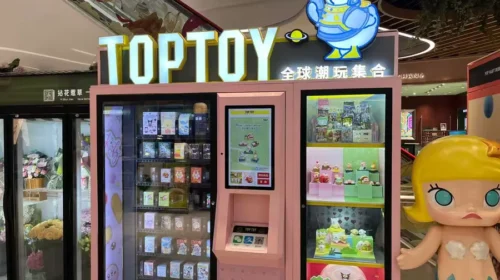
Unlike Pop Mart (9992.HK), which cultivated Labubu dolls on its own, Sunny & Sandy gets most of the intellectual property (IP) behind its toys through third-party licensing deals. Like just about everyone else, it says it’s also considering developing its own IP, which is typically a far more profitable business model but require extensive marketing and a bit of luck to gain traction. Yet another Pop Mart wannabe already in the Hong Kong IPO queue is retailer Miniso’s (MNSO.US; 9896.HK) Top Toy unit.
Sunny & Sandy comes with some impressive metrics. It has recorded triple-digit year-on-year revenue growth over the last two years, including a 134% jump to 386.5 million yuan ($55.4 million) in the first nine months of last year. Its gross margin has risen steadily from 16.9% in 2023 to 35.3% in the first nine months of last year, helping the company to record its first-ever profit in 2025.
When founder Yang Jie, armed with a bachelor’s degree in business English, named his new company after the English names of himself and his daughter in 2015, the current rage for collectible dolls was still a long way off. Yang got his start manufacturing plastic premium giveaways and cereal prizes for Fortune 500 companies, using a factory in Xiangtan. By 2017, Sunny & Sandy was using an innovative injection molding process to make 1 million units annually, and was doing five times that just five years later.
But it wasn’t until 2022 that Yang struck it big, by selling its toys for just 9.9 yuan and less under licensing deals for Paramount’s SpongeBob SquarePants, and with Sanrio, owner of the Hello Kitty franchise. It has sold over 3.5 million SpongeBob toys through last September, while Sanrio product sales have totaled nearly 20 million units over that time.
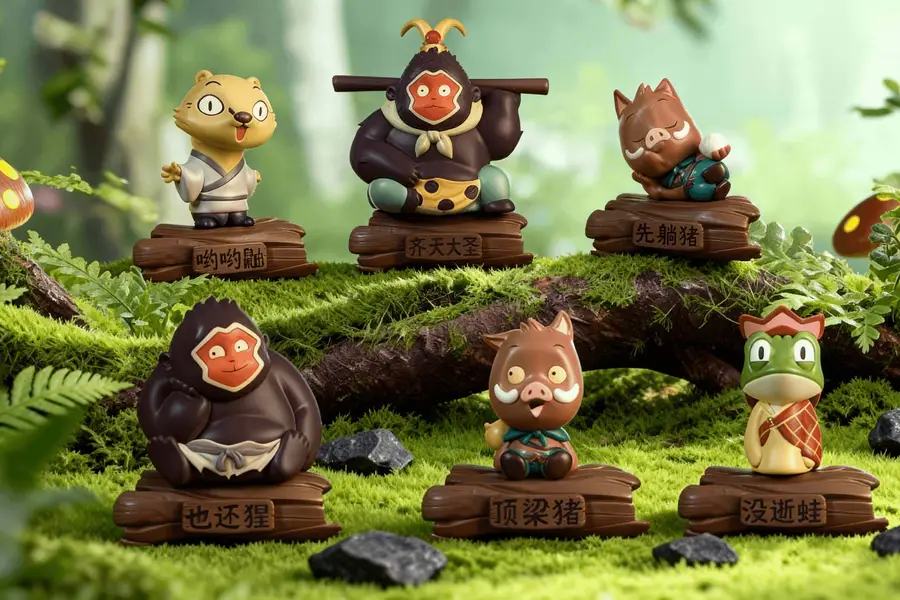
But the company’s biggest coup – which has underpinned its recent revenue explosion – came in September 2024, when it became the exclusive licensee for 3D plastic merchandise based on “Ne Zha 2”, the blockbuster that last year became China’s and the world’s highest-grossing animated movie of all time.
Booming sales
According to the prospectus, the collaboration with “Ne Zha 2” owner Enlight Media was for 12 months. That was enough to boost the company’s sales volume nearly fourfold, from 16.4 million units for its IP toy products in the first nine months of 2024 to 58.1 million units in the same period in 2025. That license has likely expired by now, but the company is hoping for a new hit from its 13- to 16-month worldwide license to design and sell FIFA World Cup 2026 mascot-themed figurines across 60 countries and regions.
Sunny & Sandy believe that its competitive edge lies in technology that allows it to deliver products in record time – an important ability in the fast-moving world of popular toys. After receiving the material library from “Ne Zha 2,” it needed just three months to complete product design, mold development, mass production and delivery for toys based on the movie.
Sunny & Sandy said it was able to achieve such rapid turnaround as “the only IP toy company in the world that applies patented multi-color and multi-material injection-molding technologies.”
This was a breakthrough from the traditional approach it previously used, which involved labor intensive manual assembly and spray painting of plastic figurines. Its yield rates are higher as a result, in excess of 99.5%, compared to industry averages of 90% to 95%, while defect rates are also low, according to the prospectus.
Its ability to fully automate production has also been a factor in being able to offer its toys at rock bottom prices. Its products carry a recommended retail price of 9.9 yuan or less per unit, which has enabled it to expand quickly into price-sensitive lower-tier markets. It says it is China’s leader in mass market three-dimensional IP toys priced at or below 20 yuan, citing independent research in its prospectus. It has relationships with 13 retailers covering over 32,000 points of sale.
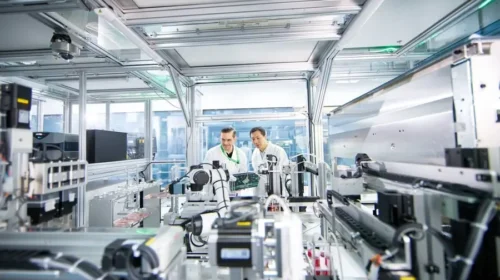
Scale is Sunny & Sandy’s other strong suit. Its five existing factories can produce 1 million units per day. Its latest facility in Guangdong province, which opened in December, is a ‘lights out’ factory that uses robots to manufacture around-the-clock and has a designed capacity of 95.4 million units annually with plans to expand to 200 million units. A sixth factory in Gansu province will have a design capacity of 112.9 million units.
With so much going in its favor, what could possibly go wrong? First, lightning rarely strikes twice. There’s no guarantee the company will find new IPs to replace the runaway success of Ne Zha 2. The company has quite a few irons in the fire, including rights for “Nobody,” another popular animation fantasy film, and “Dasheng Rises,” the sequel to a wildly popular 2015 animation based on the classic novel “Journey to the West.” But chances are slim that any of those can come close to matching the huge success of Ne Zha 2.
The rapid increase in scale also has its downside. The company’s inventory ballooned from 33.5 million yuan in 2023 to 125.7 million yuan in the first nine months of 2025, which creates pressure to sell products at a discount or write them off if they fail to sell quickly in such a fast-moving market.
The company also moved into the black in the first nine months of last year, recording a profit of 43 million yuan for the period versus a 12 million yuan loss a year earlier. But it will need to show it can stay profitable, which could be no easy feat as competition remains fierce in China’s increasingly crowded pop toybox.
To subscribe to Bamboo Works weekly free newsletter, click here
Related Articles
RELATED ARTICLES
-
Will Top Toy knock Pop Mart off its throne?
- Here Group challenges Labubu with Wakuku
-
Sunny Optical, Goertek forge ‘Optical Alliance’ in bet on AI glasses
2382.HK
- K-pop returns to China, but asks Chinese fans ‘Will you still love me?’
- Mounting challenges take the fun out of Playmates Toys
-
China’s fading box office delivers rare profit-booster for Imax China
1970.HK
-
Helmed by new chairman, Best Mart 360 navigates changing Hong Kong landscape
2360.HK