Jiumaojiu ladles up hotpot investment to boost overseas expansion
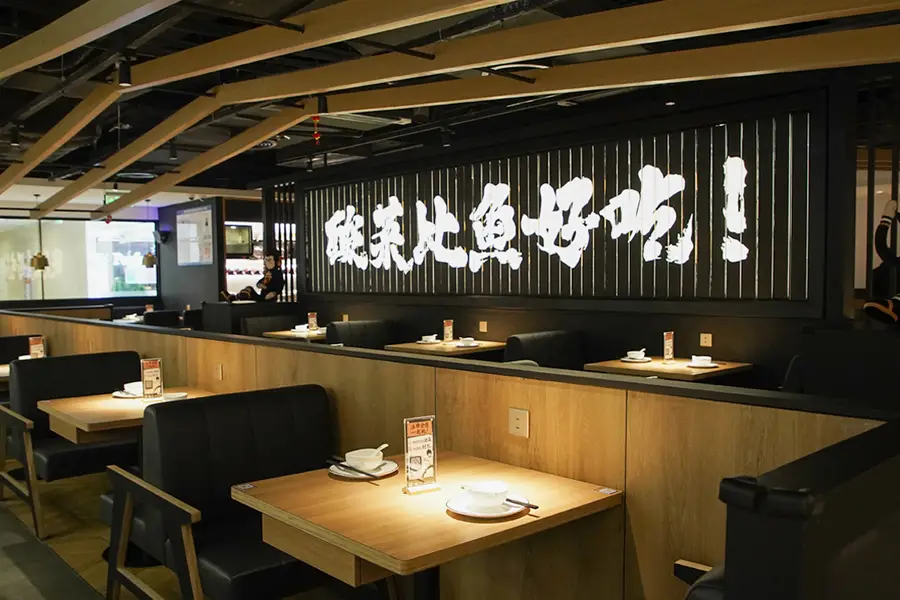
The restaurant operator will pay $43 million for new and existing shares of Big Way Group, boosting its stake to 49% of the North American hotpot chain
Key Takeaways:
- Jiumaojiu’s investment in a North American hotpot chain will roughly double its overseas store count to around 50
- The company and its peers are increasingly looking abroad to diversify beyond a Chinese restaurant market plagued by rampant competition and growing consumer caution
By Doug Young
If you can’t stand the heat, get out of the kitchen. That adage has become a growing mantra lately for Chinese consumer brands, which are increasingly looking overseas for relief from their overheated home China market plagued by cutthroat competition and consumer caution. The trend is particularly acute in the restaurant industry, where “poor man’s meals” have become the flavor of the day, as Chinese eateries battle to see who can offer the lowest prices.
Seeking relief from that domestic maelstrom, former highflyer Jiumaojiu International Holdings Ltd. (9922.HK) announced a major new overseas investment this week that will give it 49% ownership of a small but growing North American chain serving hotpots, one of China’s favorite dining formats. The deal will see Jiumaojiu, whose signature “sauerkraut fish” is a variation on hotpots, pay $43 million for its investment in Big Way Group Inc., operator of the Big Way Hot Pot chain, according to its Dec. 29 announcement.
The deal will see Jiumaojiu pay $15 million for stock from existing shareholders, plus another $28 million for newly issued shares. Jiumaojiu previously purchased 10% of Big Way’s stock last July, and the latest purchase will lift its total ownership to 49%. But the company’s voting rights at Big Way will be markedly lower, at just 10.8%, showing Big Way’s owners, husband and wife Yao Xinzhong and Luo Xiaofang, will remain squarely in control of the company.
Big Way currently operates 21 Big Way Hot Pot restaurants in Vancouver, Toronto and California, a tiny fraction of the 686 stores operated by Jiumaojiu at the end of last September. But Big Way also appears to be entering a period of high profit growth, with its profit jumping to $984,000 in 2024 from $210,000 in 2023.
Jiumaojiu’s minority shareholder status means it won’t consolidate Big Way into its own results, which perhaps partly explains why investors weren’t too excited about the announcement. Jiumaojiu’s stock fell 2.8% the day after the announcement, though it gained all of that back in the next two trading days. The back-and-forth reaction probably owes at least partly to the fact that many traders are currently on vacation. Accordingly, we wouldn’t be surprised to see some modest upside for the stock in the next few weeks as the market digests the news.
The bottom line is that Jiumaojiu and most of its competitors are struggling in China, though Jiumaojiu is doing worse than most. Analysts are quite bearish on the company, with 12 out of 23 polled by Yahoo Finance – or more than half – rating the company a “hold” or a “sell.” By comparison, 26 out of 32 rate hotpot chain Haidilao (6862.HK) a “buy” or “strong buy.”
Jiumaojiu was, in many ways, a “one hit wonder,” skyrocketing to fame on sauerkraut fish that was the signature dish at its Tai Er chain. But consumers eventually tired of the dish, and the problem worsened when many discovered that the fish was prepared offsite in central kitchens. To counter that, Jiumaojiu last March launched a new campaign, which is showing some early positive results, to freshly kill and prepare each fish to order in its restaurants.
Better business overseas
The bottom line for both Jiumaojiu and its peers is that overseas outlets often perform far better than their domestic restaurants. Haidilao nicely illustrates the trend, since it breaks out its overseas operations in its separately listed Super Hi International (2658.HK; HDL.US) unit. Super Hi’s 107 restaurants at the end of last September averaged 4.0 times table turnover daily in last year’s third quarter, compared with 3.8 for Haidilao in the first half of last year. Moreover, Super Hi’s third-quarter gross margin of 34.3% was considerably higher than the 27.8% for Haidilao in the first half of last year.
Recognizing the better potential for overseas stores, Jiumaojiu began expanding abroad in 2021. The company currently operates Tai Er restaurants in Canada, Indonesia, Malaysia, Singapore, Thailand and the U.S., and also has one outlet from its Lai Mei Li brand in Singapore. It didn’t specify how many overseas outlets it had in its latest midyear and annual reports. But the figure appears to be about two dozen, based on the company’s various international websites, with around half of those in Malaysia and Singapore.
Thus, the addition of Big Way would roughly double its overseas store count, and also provide a second brand and dining format to boost its global presence. Jiumaojiu pointed out that as a North American brand, Big Way has completely localized its operations in the U.S. and Canada. Having established that base, the brand has entered an expansion phase, leveraging its experience that has allowed it to attract a broad base of non-Chinese customers, it said.
Jiumaojiu said it can bring its own expertise to help Big Way in its next growth phase. “The group possesses systematic expertise in standardized chain restaurant operations, store model replication, management system establishment, and organizational and talent development,” it said.
The partnership does look relatively promising due to the synergies that will leverage Big Way’s localization with Jiumaojiu’s expertise as a major chain operator. The two sides already have some experience working together since Jiumaojiu made its original 10% investment last July. If the partnership continues to proceed smoothly, we wouldn’t be surprised to see Jiumaojiu make a bid to buy control of Big Way, or possibly buy out the company entirely.
Jiumaojiu could certainly use the lift that a bigger global operation would provide. The company’s revenue and profit fell 10% and 16% in the first half of last year, respectively, as most of its major metrics sagged and it continued to close underperforming stores.
The company’s stock was once a highflyer, rising as high as HK$38.40 in the early days after its 2020 IPO. But those days are a distant memory now, with the shares last closing at HK$1.79 on Dec. 31 – down more than 95% from their all-time high. That drop has left the company underwater in valuation terms, trailing nearly all of its major rivals with a price-to-sales (P/S) ratio of just 0.39. By comparison, Haidilao and Super Hi trade at multiples of 1.65 and 1.2, respectively, while newly listed noodle specialist Xiao Noodles (2408.HK) trades at 2.18.
To subscribe to Bamboo Works weekly free newsletter, click here
Related Articles

RELATED ARTICLES
-
Freshly prepared ‘sauerkraut fish’: Jiumaojiu’s salvation or a new sinkhole?
 9922.HK
 - Banu cooks up strong growth with cheaper eats, 24-hour stores
- Xiao Noodles tempts Hong Kong investors with ‘cheap eats’ story
- Is serving too fast a sin? The Chinese paradox of pre-made foods
- JD.com sets up Hong Kong bridgehead as real-time retail battle moves overseas
-
Mens clothier HLA seeks to cast off stagnation with overseas expansion
600398.SHG
-
Noah finds second life in overseas voyage
6686.HKNOAH.US