Dairy firms chase protein boom, but profits remain elusive
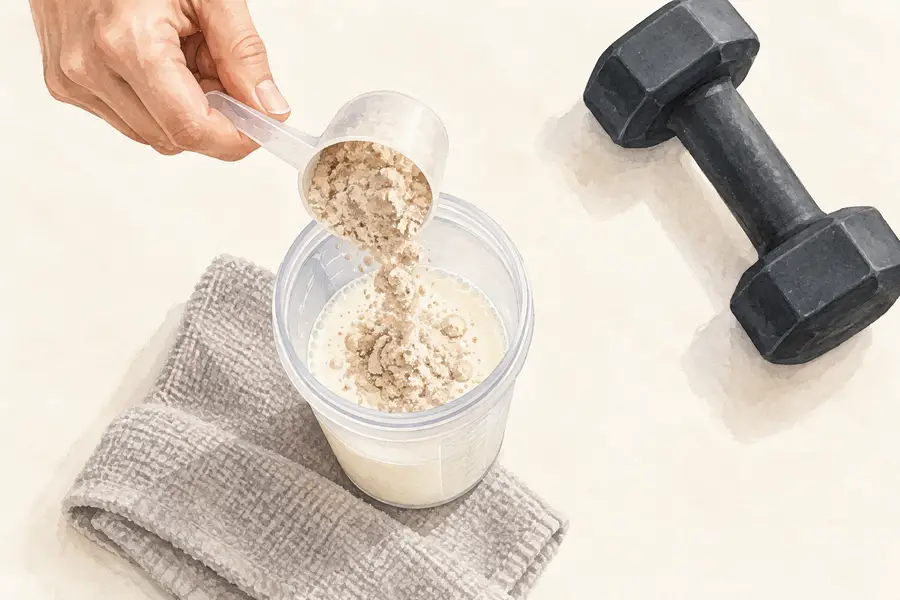
Sports nutrition has opened a new market for dairy firms, but repeat purchases and processing capacity will determine profitability
By Lee Shih Ta
From marathon running to muscle building, the global sports boom is spreading beyond footwear and apparel into nutrition. Consumers are paying more attention to what they eat and drink before and after exercise, as well as what they wear and how they train. Protein drinks, energy supplements and functional nutritional products are emerging as new markets that food companies and sportswear brands are keen to enter.
China already has a substantial base of people who exercise. The General Administration of Sport of China’s 2025 National Fitness Survey found that 38.52% of residents age 7 and above exercised regularly, up about 1.3 percentage points from 2020. Average spending on sports among people aged 19 to 59 reached 2,428 yuan ($362.75) per person. Exercise is increasingly becoming a routine activity on which people spend both time and money.
Running offers a concentrated setting for these products. The China Athletics Association’s 2025 China Marathon Blue Book recorded 594 marathon events during the year, with about 4.54 million combined entries in full and half marathons. These figures count entries, not individual runners, but they point to a big market for training and race-day nutrition.
Milk contains whey protein and casein, ingredients also used in sports nutrition products. This gives dairy companies an opportunity to extend their milk supply and processing capabilities into protein supplements. Their offerings can range from everyday milk to convenient protein drinks for before or after training, reaching runners, gym-goers and other consumers with specific nutritional needs.
Chinese media, citing industry data, reported that large-scale dairy processors produced about 29.5 million tons of dairy products in 2025, down 1.1% year-on-year. Liquid milk still accounted for more than 90% of total output. With the industry so heavily weighted toward milk, processors need to find more uses for their raw milk if they want to expand revenue.
From dairy farms to the starting line
That’s the backdrop behind Mengniu Dairy’s (2319.HK) latest moves. Maction, its sports nutrition brand, recently completed a Series A+ funding of nearly 100 million yuan, with Citic Agriculture Industry Fund, Li Ning and Viva Goods among the investors. The funding was reported in September, offering a new example of growing ties between the dairy and sportswear industries.
Maction’s products include liquid protein, energy gels and liquid salt supplements, targeting serious athletes and people who train regularly. Li Ning said the partnership would help it better understand sports consumers. Sports apparel and nutritional products serve many of the same customers, giving the two companies a closer understanding of athletes’ training and race-day needs.
Mengniu is also expanding its ingredients business. In April, it began mass production of products including lactoferrin, D90 demineralized whey powder and cheese. In June, it launched MnmpX, a dairy ingredients brand aimed at customers in the food, functional nutrition and sports nutrition sectors. From selling supplements directly to supplying ingredients to other companies, Mengniu is seeking new revenue sources.
Rising prices for some dairy-based supplements have also drawn market attention. Yicai reported in June that the price of high-purity whey protein isolate WPI90 had doubled, while whey protein concentrate WPC80 had nearly doubled. The average import price of whey products into China rose 17%. These figures cover different products and measures, so they shouldn’t be treated as the same price indicator. They also show that increases were concentrated in specific categories, and not every whey product has become a high-value business.
Profitability still in the wings
The cheese business already offers more tangible evidence of demand and profit potential. Milkground Food Tech (600882.SH), a Mengniu subsidiary, last week reported revenue of 4.87 billion yuan ($727 million) for the first nine months of this year, up 22.97% year-on-year. Its net profit of 212 million yuan was up 20.37%, while its adjusted net profit, which excludes non-recurring items, rose 28.15% to 153 million yuan. The company said new natural cheese products continued to come to market, while revenue from both retail and corporate customers grew by more than 20%.
The results suggest there’s demand and profit potential for developing more uses for milk. Milkground attributed the rising profit to a growing contribution from its core cheese business and greater supply-chain efficiency. But cheese alone can’t prove that sports protein products will succeed: the customers, costs and sales channels are different.
Mengniu’s segment figures illustrate the gap between sales growth and stronger returns. In the first half of this year, its external revenue from cheese rose 32.6% to 3.15 billion yuan, but the segment’s pretax profit edged down from about 229 million yuan to 227 million yuan. Calculated as a percentage of revenue, profit from the segment fell from about 9.7% to 7.2%. Higher sales have yet to translate into a larger share of profit relative to revenue.
Advanced processing also depends on making use of the whole milk supply. Overseas, whey production is often integrated with cheese processing, while China’s market is still developing in that regard. After extracting high-value proteins, processors also need stable buyers for remaining parts for the economics of processing to work.
Whether consumers will keep buying is another key question. In a 2025 survey by Shangpu Consulting Group, 58% of respondents said they chose domestic protein powder brands, compared with 42% who chose imported brands. iResearch estimates, using 2023 data, that dietary supplement penetration in China is below 30%, compared with more than 50% in the U.S. That estimate covers dietary supplements as a whole, not protein powder or sports nutritional products specifically.
The supply chain also needs further development. China imported 432,600 tons of whey products in the first eight months of 2026. Those serve a range of uses and cannot be equated directly with demand for sports nutrition ingredients. Overseas dairy industries often developed cheese processing alongside whey utilization, while China’s processing base remains comparatively limited in that way. Whether the protein boom can deliver sustained growth will ultimately depend on products becoming part of consumers’ everyday diets, generating repeat purchases and producing actual profits, rather than being a fleeting flash in the pan.
Lee Shih Ta is an editor at Bamboo Works.
You can contact him at shihtalee@thebambooworks.com
To subscribe to Bamboo Works weekly free newsletter, click here
Related Articles

RELATED ARTICLES
-
Modern Dairy squeezes profits from tough milk market
 1117.HK
 - H&H profit rebounds sharply in first half on strengthening sales
- ESWIN Computing powers up its RISC-V growth story for Hong Kong investors
-
CSPC Innovation pursues Hong Kong IPO as parent profits shrink
300765.SHE
- Asia’s probiotic leader looks for nourishment from Hong Kong IPO
-
Restructuring hits Want Want’s bottom line, as top line ekes out growth
0151.HK
-
Longsys launches Hong Kong IPO as profits boom
9976.HK301308.SHE