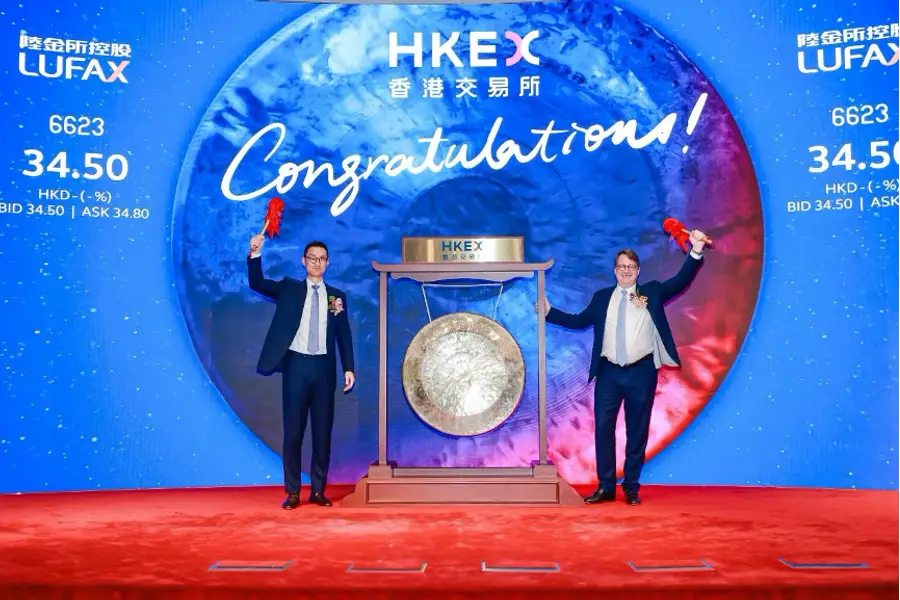
Four directors at the Ping An-backed online loan facilitator, including its CFO, resigned as it races to resolve its prolonged Hong Kong trading suspension
Key Takeaways:
- Four Lufax board members associated with controlling shareholder Ping An resigned, as the company appointed one new independent director
- The move may be aimed at improving governance as a deadline to meet requirements for a trading resumption of its Hong Kong-listed shares passed this week
By Warren Yang
Just when it looked like a prolonged drama surrounding embattled fintech lender Lufax Holding Ltd. (LU.US; 6623.HK) might be wrapping up, the action has only intensified.
Last Friday, the company announced the departure of nearly half of its board, with the resignation of four of the nine members, including CFO Xi Tongzhuan. All four cited “personal work arrangements” and affirmed they had no disagreements with the board.
Despite its attempt to keep the mass exodus low-key, such a large, abrupt shakeup, including a C-suite executive’s departure, never looks normal. Without an official explanation, investors can only look at the evidence to try to figure out the meaning behind the latest turbulence at the Ping An-backed online loan facilitator. The timing is especially poignant as the company struggles to emerge from an accounting scandal dating back more than a year, and is now at a crucial juncture when its Hong Kong listing status is in danger.
Also strikingly, Lufax shareholders formally voted to re-elect those four members just a month ago. Now, Lufax needs to search for a new CFO. In the interim, an internal finance team will assume CFO duties, while CEO Ji Xiang will handle liaison with the Hong Kong Stock Exchange. All four departing board members hailed from Ping An, which owned 73% of Lufax’s shares at the end of last year, according to its latest annual report.
Lufax filled only one of the four vacant seats by bringing in Wai Kin Chim, a veteran banker with four decades of international experience in risk management and internal controls, as a new independent non-executive director. So, the company’s board has not only shrunk in size but is mostly composed of independent directors, with CEO Ji as the sole executive member. Ji himself is also quite new to Lufax. He first joined the company as a co-CEO only last October and was elevated to the top position in April.
The board shakeup seems aimed at improving governance as Lufax takes steps to shake free from its painful accounting scandal and avoid a delisting of its shares in Hong Kong. Lufax’s New York-listed stock gained about 5% in two days after announcing the board overhaul. That indicates investors think the latest changes are a step in the right direction.
The company has faced intense scrutiny since January 2025, when it removed its former auditor, PricewaterhouseCoopers (PwC), after the accounting firm raised questions about undisclosed related-party transactions and internal control deficiencies. Subsequent internal reviews forced Lufax to restate its financials for 2022 and 2023, revealing serious serial overstatements of its profit.
The saga resulted in a delay of the company’s publication of its annual results for 2024, triggering a trading suspension for its Hong Kong-listed shares in January last year. Its New York-listed stock avoided a similar halt, and the company has regained full compliance with the U.S. bourse since completing its necessary filings with the Securities and Exchange Commission.
But resuming trade in Hong Kong has proven far more onerous. Beyond clearing its missing filings for 2024 and 2025, Lufax must also satisfy strict trading resumption conditions, including independent forensic reviews and internal control overhauls. The clock is ticking for the company, since Hong Kong listing rules give it just 18 months from the suspension to meet the resumption requirements. Its shares were suspended on Jan. 28 last year, meaning that window technically closed on Monday this week.
A Hong Kong company filing last Friday contained an update on efforts to meet the trading resumption requirements, including a more detailed description of the board overhaul and operational data for the second quarter of this year. But it did not specify when the company’s Hong Kong shares might resume trading.
CFO vacuum
Satisfying Hong Kong’s stringent regulatory demands appears to be the main driver behind Lufax’s board reshuffle, including the addition of directors specializing in internal controls, audit oversight and risk management. Prior to Chim’s appointment, the company added accounting and audit veterans to its board.
It all seems sensible, but the CFO departure can also complicate things for Lufax as it leaves an immediate leadership vacuum at a time when the Hong Kong bourse is probably looking for proof of management stability and financial integrity.
Beyond governance headaches, Lufax’s core loan facilitation business faces an equally vexing challenge from a rapidly cooling Chinese economy. Once famous as a peer-to-peer (P2P) lending powerhouse, Lufax has spent recent years restructuring its business model toward facilitating loans between institutional lenders and small and micro-businesses.
But that sector has come under severe pressure lately. Small business owners in China are grappling with sluggish consumer demand, property market drags and margin compression. In response, Lufax is strategically pivoting toward lower-risk borrowers, but that’s a more limited pool that is targeted by many other lenders these days as well.
Reflecting all of that, the company said that 95.7% of its outstanding balance, excluding its consumer finance business, bore risk at the end of June, up sharply from 84% a year earlier. But the company’s loan delinquency rates were down in the second quarter from a year earlier as it became more conservative, with its outstanding loan balance shrinking by 13.5% year-on-year to 167.3 billion yuan ($24.7 billion).
Despite the two-day rally after the board shakeup, Lufax shares are still down more than 40% this year and trade at a depressed price-to-sales (P/S) ratio of 0.35. Among other Chinese loan facilitators, FinVolution (FINV.US) fetches a P/S ratio of 0.64, better than Lufax’s but nothing to brag about.
Such low valuations reflect general investor disdain toward lenders in China as they bear the brunt of the country’s economic weakness. On top of that, Lufax urgently needs to convince Hong Kong authorities that it has completed its internal cleanup and has truly reformed to keep its place on the city’s exchange.
A failure to do that could trigger deeper U.S. regulatory scrutiny over whether the company meets listing standards to keep trading in New York. One thing that seems certain is investors will be reluctant to buy its New York stock as long as the shares remain suspended in Hong Kong. Either way, the stock is likely to face more downward pressure for the foreseeable future.
That raises the question for Ping An of whether it’s worth keeping Lufax listed at all. Tellingly, it took its OneConnect financial services unit private last year.
To subscribe to Bamboo Works weekly free newsletter, click here
Related Articles

RELATED ARTICLES
-
DPC Dash gobbles up Domino’s global leader board
-
Yiren, Qfin swept up in latest fintech lending crackdown
YRD.US3660.HKQFIN.US
-
Wealth divide: Banks in China’s poorer regions bear brunt of margin squeeze
2139.HK1916.HK
-
Kinwong runs hot on AI boom, cold on plunging margins
603228.SHG
-
Struggling Shimao looks on as creditors move in on its trophy Hong Kong hotel
0813.HK