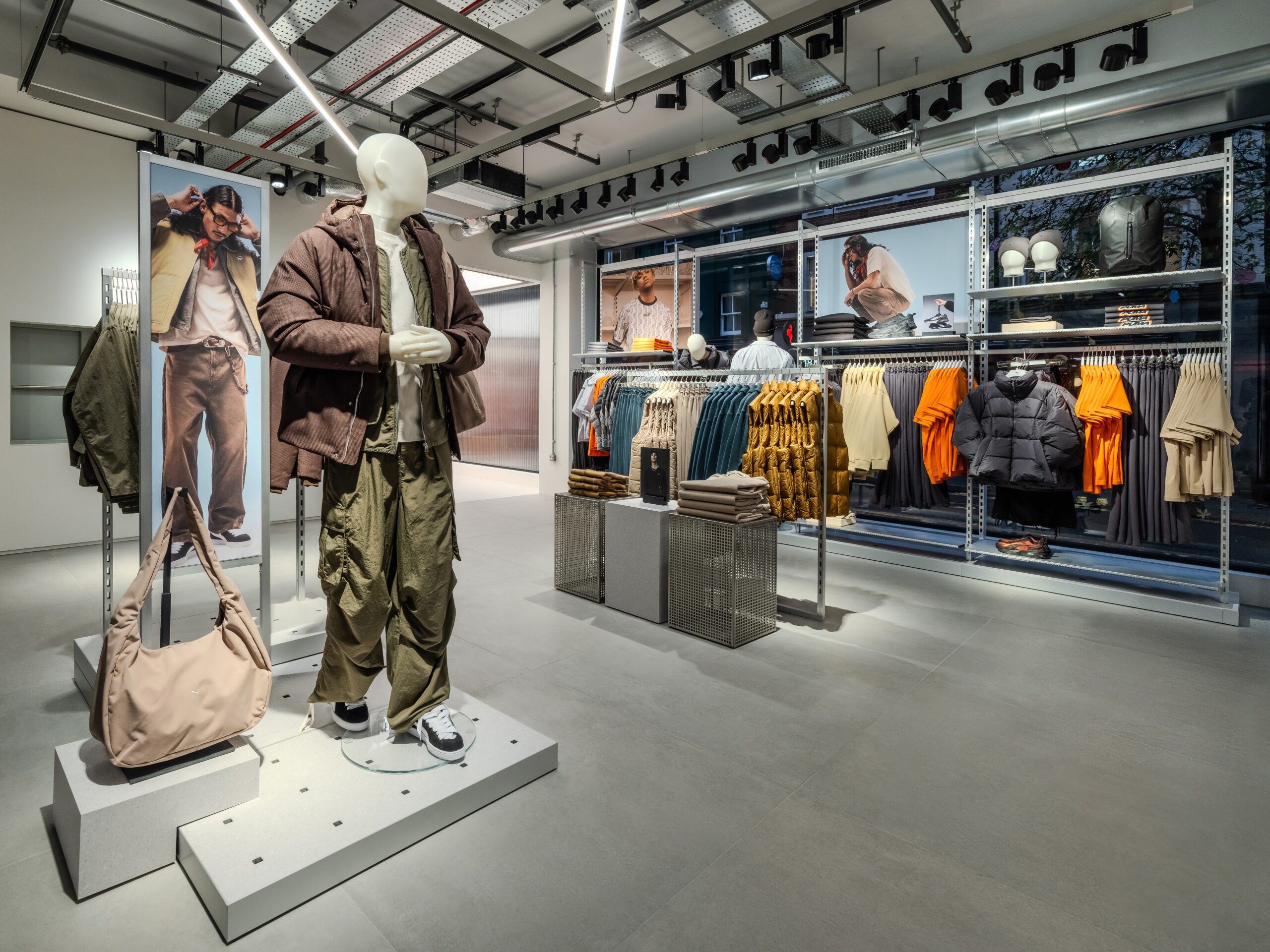
China’s leading sportswear brand has reportedly offered to buy 29% of the German brand, which, if successful, could give a big boost to its global aspirations
Key Takeaways:
- Anta has reportedly offered to buy the 29% of Puma held by France’s Pinault family, the German sports brand’s top shareholder
- A deal would add to Anta’s growing portfolio of global brands, but still could face hurdles over valuation and regulatory scrutiny
By Warren Yang
As it reportedly takes aim at Puma SE (PUM.DE), Anta Sports Products Ltd. (2020.HK) is turning to the familiar playbook of Chinese companies seeking to go global by chasing major players with global footprints. The move seems logical, but history has also shown it’s fraught with uncertainty at many levels – from financing and regulatory hurdles, to operating a major foreign company in unfamiliar terrain.
The sportswear maker has offered to buy the 29% of Puma held by Artemis, an investment vehicle of France’s Pinault family and the German brand’s top shareholder, Reuters reported last Friday, citing unnamed sources. Anta has already secured financing for the deal, the report added.
Anta’s interest in Puma, which was first reported as early as last November, isn’t so surprising. For starters, the company has a well-documented history of expanding its portfolio of brands through acquisitions and partnerships under a “multi-brand, multi-category” strategy. That means it’s no stranger to dealmaking.
Its latest acquisition saw it buy another German company, outdoor brand Jack Wolfskin for $290 million last year. And in 2019, the company also led a group that purchased Amer Sports (AS.US), whose brands include Wilson and Arc’teryx, in a deal that valued the Finnish company at 4.6 billion euros ($5.36 billion). Before those, some of Anta’s biggest deals involved bringing overseas brands to China under licensing deals.
Becoming Puma’s largest shareholder would turbocharge Anta’s global aspirations by giving it access to another major brand with a worldwide presence, making it the clear leader in the going-global race among Chinese sportswear brands. On Monday, Japanese brokerage Nomura reiterated its “buy” rating on Anta, giving a vote of confidence for a potential Puma deal.
All that said, though, any excitement around an Anta-Puma deal may be premature as there are a range of hurdles. Valuations are typically a major point of contention, and any deal could face regulatory scrutiny even if the two sides reach an agreement. Reuters noted that there hasn’t been progress since Anta made its offer a few weeks ago.
Anta earns the bulk of its revenue in China, driven by its namesake brand and the South Korean-owned Fila. The two accounted for 81% of Anta’s total revenue of 38.5 billion yuan ($5.5 billion) in the first half of last year, even after sales of all of the company’s other brands surged more than 60% year-on-year. Anta acquired Fila’s operations in China, Hong Kong and Macao in 2009.
Anta’s results don’t include Amer, though the Finnish company’s impact on Anta is “still huge when off-balance sheet items are considered,” China Galaxy International wrote in a 2018 report after that deal was first disclosed.
Global contender
The Puma stake would advance Anta’s global aspirations by providing significant further exposure to a global market that would insulate it from domestic economic cycles, including China’s current downturn characterized by growing consumer caution.
Puma is truly international, with operations in more than 120 countries and some 22,000 employees worldwide. For Anta, which is also looking to carve out a global presence on its own, with a plan to open 1,000 stores in Southeast Asia in the next three years, acquiring control of Puma is not merely about planting its flag globally. The company could also gain instant institutional knowledge for running an international business and established retailer relationships that otherwise would take decades to build organically.
Puma, facing intense competition from global powerhouses like Nike (NKE.US) and Adidas (ADS.DE), as well as from emerging brands like On Running and Hola and Chinese players like Anta, has been struggling financially, with its revenue growth stalling and profit sinking. Last year, Puma initiated a “strategic reset” that included layoffs under new CEO Arthur Hoeld, who took over last July after hailing from Adidas.
For Anta or any other Puma suitors, the German brand’s current difficulties could present an opportunity to acquire it at a bargain price. Puma’s shares have lost more than 40% of their value in the past five years to give the company a price-to-sales (P/S) ratio of just 0.4 times.
But then, Artemis probably will try to squeeze as much as possible from a buyer. According to the Reuters report, Artemis expects any offer for its stake to exceed 40 euros per share, which would represent a major premium of more than 70% over the German company’s current stock price. At that valuation, 29% of Puma would cost more than 1.6 billion euros, and it’s not clear if Anta is willing to pay such a big premium.
Financial factors aside, Artemis may be reluctant to cede control over a homegrown brand with a long history like Puma to a Chinese company. Even if Artemis ultimately strikes a deal with Anta, it may not go down well with European regulators due to geopolitical frictions. Or Artemis may simply want to wait and see if Hoeld can turn around Puma.
Yet Anta’s value proposition can go beyond its monetary offer. For one, Anta, equipped with deep knowledge of China and abundant resources in the market, can help Puma regain ground in the country, where it has been facing falling sales. Anta has a proven track record of executing such a strategy with Fila, which it transformed from a struggling also-ran into a premium lifestyle powerhouse in China. Investors seem to be focusing on the positives, with Puma shares jumping immediately after the Reuters report came out.
Anta’s stock, on the other hand, sank, but that’s a typical response to a major acquisition plan, reflecting investor concerns about the financial burden and, in this case, the big premium that Artemis is reportedly seeking. Anta shares trade at a price-to-earnings (P/E) ratio of about 14, slightly lower than 16 for top rival Li Ning (2331.HK), which has also reportedly considered a bid for Puma, according to reports in November. But those are well above the 9 for both Xtep International (1368.HK) and 361 Degrees (1361.HK), two smaller domestic rivals.
In the game of sportswear, organic growth can be a marathon, so Anta’s acquisition-driven expansion makes sense and has worked fairly well so far. An acquisition of the controlling Puma stake could add significantly to Anta’s global footprint, helping it bridge the gap between its domestic dominance and global aspirations in a single, bold leap. But that doesn’t mean that it will be an easy leap.
To subscribe to Bamboo Works weekly free newsletter, click here
Related Articles

Can Longcheer buy its way to the top of the AI rack?
Two auto giants hitch wagons to combat harsh industry winter