Will persistence pay off as Wanbang recharges its IPO bid?
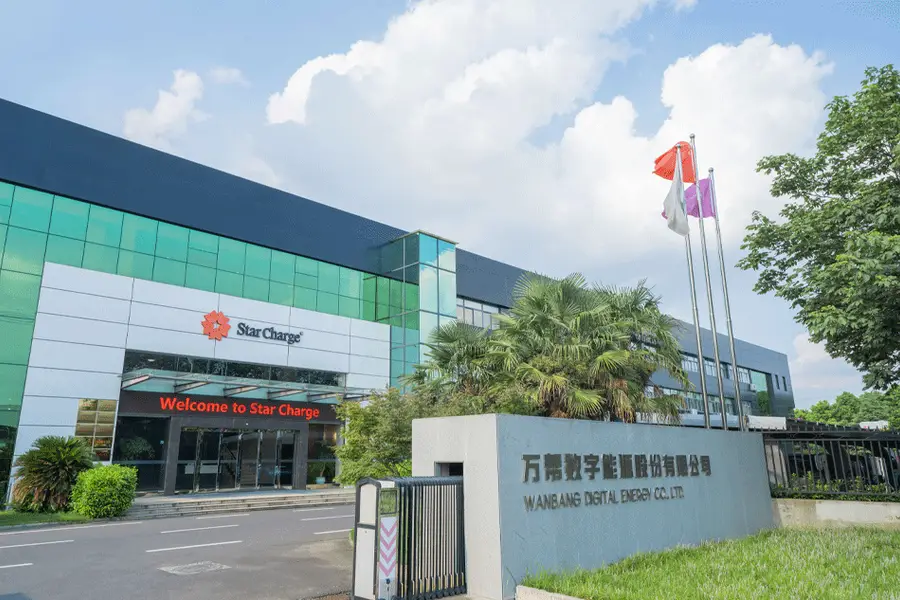
The provider of smart charging equipment is making a fourth listing attempt, seeking to expand its business while battling falling margins and volatile cash flow
Key Takeaway:
- The company built a strong position in the electric vehicle charging business but has sought to diversify into other energy solutions such as storage systems and microgrids
- While revenues have grown steadily, gross margins have been slipping
By Lee Shih Ta
After a few false starts, a leading Chinese provider of charging equipment for electric vehicles is setting a course once again for the Hong Kong equity market.
The listing journey has been far from smooth for Wanbang Digital Energy Co. Ltd., despite investor enthusiasm for new energy vehicles and related industries over recent years.
Its latest application marks a fourth attempt to go public, after two unsuccessful applications in mainland China and an earlier lapsed filing in Hong Kong.
In making its pitch to investors, Wanbang can point to a pioneering role in the charging business and an established presence in the current market under the Starcharge brand.
The company was founded back in 2014, when China’s new energy vehicles still relied heavily on subsidies. Charging standards had yet to be unified, equipment quality varied widely, and automakers insisted on strict standards for safety and reliability. Wanbang focused its efforts on developing charging systems for public and commercial use that could meet international supplier standards, along with related control systems.
The strategy provided room for growth. According to its listing application, Wanbang was among the first Chinese companies in the sector to obtain global certifications as an original equipment manufacturer, and entered into partnerships with multiple international automakers. As the electric car market started to expand rapidly, Wanbang went on to become the world’s biggest supplier of smart charging equipment by output and revenue in 2024, with annual sales exceeding 470,000 units sold in around 70 countries and regions worldwide.
Change of gears
However, the increased scale has had its drawbacks. Intelligent charging equipment remains, at its core, a manufacturing enterprise. The technological threshold may be higher than for residential chargers, allowing Wanbang to supply its systems to major automakers, but the business model still depends on one-off sales, where price competition is intense and gross margins are vulnerable to pressure.
As a result, Wanbang has actively shifted towards microgrid systems and large-scale energy storage, seeking to evolve from an equipment supplier into an integrated provider of smart energy solutions spanning generation, grid, load and storage.
The strategy shift has started to show up in its earnings. In 2023, intelligent charging equipment and related services accounted for 92.4% of total revenue but by the first nine months of 2025, the share had fallen to 71.1%. Over the same period, revenue from microgrids – localized systems that generate, store and distribute power – rose from 7.6% to 19.8%, while large-scale energy storage began to contribute close to 10% of total revenue starting in 2024.
That said, expanding the business footprint has carried a cost. While revenue has continued to grow, annual profits have slipped. For the nine months ended September 2025, revenue rose 23% to 3.07 billion yuan ($430 million), a faster rate than the 20.4% growth in 2024. Gross margin, however, fell further from 29.2% in 2024 to 24.6% in the first nine months of last year.
Net profit tumbled 32.4% in 2024 to 320 million yuan, with net margin narrowing to 8% from 14.2% in 2023. Although net profit rebounded to 304 million yuan in the first nine months of 2025, the 9.8% net margin remained well below the 2023 level. The trend underscores intensifying competition in the market for charging equipment, while microgrid and energy storage projects are still in the early stages of being scaled up.
Bumpy cash flow
Cash flow also testifies to inherent business volatility. Net cash from operating activities reached 1.15 billion yuan in 2023 but fell sharply to 272 million yuan in 2024. In the first nine months of 2025, operating cash flow rebounded to 1.04 billion yuan from only 68 million yuan in the same period of 2024. The swings were largely the result of uneven delivery and settlement cycles for large-scale projects.
The balance sheet has also come under pressure. At the end of 2024, the company’s gearing ratio rose to 119.4%, before easing to 96% by the first nine months of the following year, although the level remains elevated. Non-current liabilities expanded from 395 million yuan in 2023 to 1.96 billion yuan in the first nine months of last year, indicating a bigger reliance on medium- to long-term funding as the company works on transforming and expanding its business.
According to the listing documents, Wanbang had welcomed investment and business partners prior to its IPO bid, including China International Capital Corporation and the French energy multinational Schneider Electric (SU.PA). Wanbang has entered the European market through a joint venture with Schneider, suggesting that its expansion plans have received a degree of endorsement from both industrial and financial capital.
The company noted in the application that some of the IPO proceeds would be spent on scaling up its operations and service centers in Africa, the Middle East, Southeast Asia and the Americas, as well driving technological R&D.
Mature markets such as Europe pose higher barriers to entry that can protect major players against competition, but they also come with higher costs for compliance and sales, as well as longer payback periods. In practice, Wanbang’s revenue share from overseas operations has declined rather than risen in recent years, falling from 25.2% in 2023 to 18.6% in the first nine months of last year, partly due to exchange rate effects.
Wanbang is not lacking in industry status and capital support. The challenge lies in converting its scale and credentials into stable profits and cash flow. New energy infrastructure continues to offer long-term potential, but the question is whether that growth can support the company’s rising capital costs. That is perhaps the key answer that Wanbang needs to provide to investors after multiple IPO attempts.
To subscribe to Bamboo Works weekly free newsletter, click here
Related Articles
RELATED ARTICLES
-
Guoxia Tech banks on AI for energy storage boost
- Zhida seeks to recharge its finances with another IPO bid
-
Eve Energy powers toward Hong Kong IPO, undeterred by price wars
300014.SHE
-
Sungrow powers up to meet soaring demand from AI data centers
300274.SHE
- NEWS WRAP: Hithium likely to continue Hong Kong IPO process after initial application
- Nasdaq gets tough on small Chinese IPOs, as an AI-fueled energy storage boom takes off
- BRIEF: Hithium files updated Hong Kong IPO application as revenue soars