Low margins, losses dog Ringpai as it eyes Hong Kong IPO
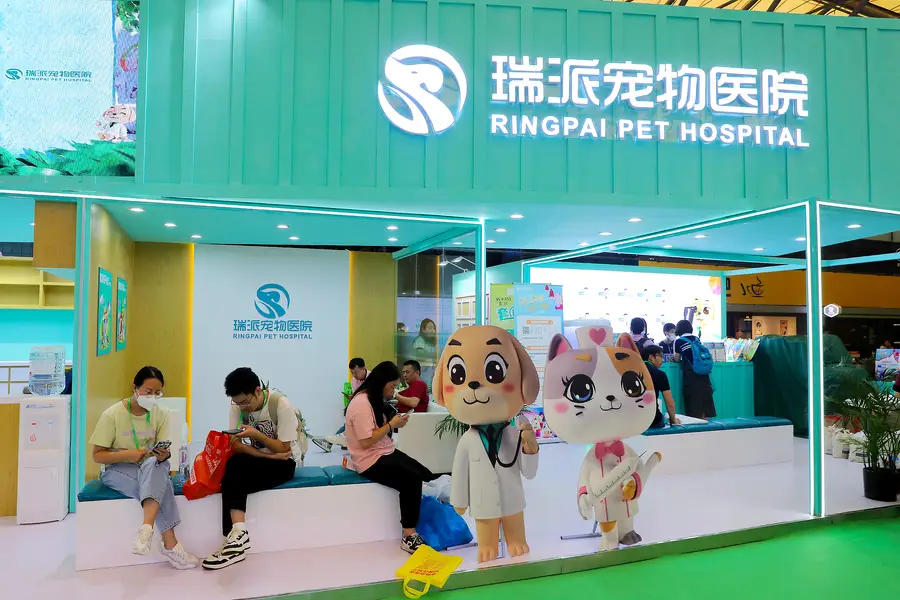
The company hopes to become Hong Kong’s first publicly listed pet hospital chain, hoping investors will overlook its weak performance metrics
Key Takeaways:
- Ringpai has filed to list in Hong Kong, reporting cumulative losses of 450 million yuan over the past three years
- The pet hospital operator continued to bleed red ink in the first half of this year, reporting a loss attributable to ordinary shareholders of 28.42 million yuan
By Lau Chi Hang
Pet ownership has surged as a lifestyle choice among increasingly affluent Chinese in the last two decades, fueling early investor enthusiasm about the sector’s big potential. But the reality has been far less to bark about, with most pet-oriented businesses offering up options that often leave investors in the financial doghouse.
One of those is veterinary leader New Ruipeng, whose recent struggles included a failed attempt at a U.S. listing a couple of years ago. Now, Ruipeng’s biggest rival, Ringpai Veterinary Hospital Management Holdings Co. Ltd., is hoping to find its own home in the financial markets with its filing this month for an IPO in the hot Hong Kong market.
Ringpai founder Li Shoujun is certainly qualified for the job, graduating from Inner Mongolia Agricultural University in 1988 and earning a PhD in preventive veterinary medicine from China Agricultural University in 2005. He worked at Tianjin Fuyuan Food from 1988 to 1997, before striking out on his own between 1998 and 2001 to establish Ruipu (Tianjin) Biological Pharmaceutical and Ruipu (Baoding) Biological Pharmaceutical.
Leveraging his extensive background in animal health and growing business savvy, Li spotted an opportunity presented by China’s booming economy and rising wealth, which were fueling a new craving for pet ownership. Catering to that demand, he founded Ringpai in 2012, betting that pet healthcare would quickly become a big business.
Top-tier investors have agreed with Li’s vision. The company’s backers include the likes of Mars China, Goldman Sachs, Hao’s International and Yuexiu Capital, which have collectively pumped 2.1 billion yuan ($300 million) into Ringpai over four funding rounds.
Bolstered by that capital, Ringpai expanded rapidly to operate 548 pet hospitals across 70 cities in 28 Chinese provinces by the end of June this year. Within that network, 120 of its veterinary centers were self-built, while the big majority, 428, were acquired, as it emerged as a major consolidator in the fragmented sector.
Operational headwinds, persistent losses
While once a darling of private equity and venture capital, China’s pet sector has proven less investor friendly than many imagined. The situation has been especially tough for pet healthcare providers whose operations remain challenging.
Even the larger New Ruipeng, whose investors include the likes of Tencent, Hillhouse Capital, CICC, Boehringer Ingelheim and Snow Lake Capital, and which was once valued at nearly 30 billion yuan in 2020, has found itself struggling. New Ruipeng’s 2022 U.S. IPO filing revealed cumulative losses of 3.3 billion yuan from 2020 to September 2022, ultimately scuttling the listing as investors balked at the company’s high targeted valuation.
Compared with its larger rival, Ringpai’s main selling point is its status as China first pet healthcare player to report a profit in publicly available documents. But a closer look shows Ringpai lost money each year from 2022 to 2024, including a 65.04 million yuan loss last year. It finally swung into the black with a profit of 15.54 million yuan in the first half of this year. But that profit all went to non-controlling interests, and the company still reported a net loss of 28.42 million yuan attributable to equity shareholders of the company.
High labor and equipment costs
The bottom line is that profitability in China’s pet healthcare market remains elusive, and even breaking even is no easy feat. The core issue is high operating costs, which keep gross margins stubbornly low. Ringpai’s gross margins over the past three years varied between 21% and 22%, though the figure ticked up to 24.8% in the first half of this year.
Its high costs stem partly from high veterinarian salaries, acknowledged by Ringpai in its prospectus as necessary to attract and retain the best talent. Also making matters difficult is limited development of pet-specific pharmaceuticals in China, resulting in high drug costs due to reliance on expensive imports.
Establishing compliant pet hospitals that must meet stringent government conditions is also expensive, forcing operators to purchase pricey diagnostic and surgical equipment, involving both substantial upfront investment and ongoing maintenance costs.
Overly rosy projections?
Doubts also hover over the sector’s projected growth trajectory. Several years ago, major institutions forecast that China’s pet healthcare market would surge from 55 billion yuan in 2021 to 136 billion yuan by 2026, implying 20% annual growth over that time.
However, Ringpai’s IPO prospectus, citing more recent third-party market data, pegged the market at just 36.6 billion yuan for 2024, suggesting the actual market is falling far short of earlier bullish predictions.
Third-party data from Ringpai’s new listing document now projects the market will grow from 69.9 billion yuan in 2030 to 139.2 billion yuan in 2035, representing average annual growth of 14.8%. Yet, the earlier projections forecast the market would be worth more than 130 billion yuan by 2026 — a target that now appears to be at least another decade away.
Even the latest estimates should be viewed with caution, since such projections accompanying IPO filings often tend to lean towards optimism.
Compounding the numerous challenges Ringpai and its peers now face are frequent consumer complaints about high and non-standardized pet medical fees. Unlike human healthcare, there’s no national insurance reimbursement plan for pet care, nor are there any subsidies or special tax write-offs. As the economy slows and consumers grow more cautious, households may be increasingly reluctant to splurge on expensive pet care.
It just goes to show that while pets were made for pampering, investors are far from assured of such luxury when they put their money into the sector.
To subscribe to Bamboo Works weekly free newsletter, click here
Related Articles

RELATED ARTICLES
-
Pet tech boom lifts Dogness revenue, but investors aren’t biting
 DOGZ.US
 - IPO hopeful Distinct Healthcare targets the well-to-do market
-
Years of losses, thin profit margins leave 160 Health feeling down
2656.HK
-
Neglected Burning Rock charms investors with high margins, narrowing losses
BNR.US
-
Muyuan eyes global pig pen with Hong Kong IPO
002714.SHE
-
BlueFocus sets sights on Hong Kong IPO as revenue, margins slip
300058.SHE
- Declining revenues, widening losses remove polish from Hiducation IPO