Forest Cabin outpowers L’Occitane, global rivals with aggressive marketing
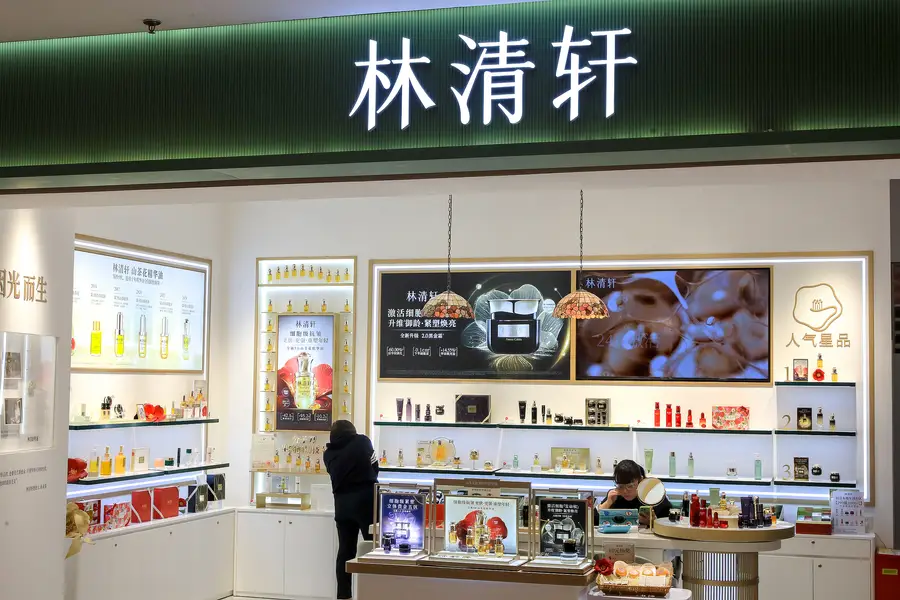
The 22-year-old skincare brand has filed for a Hong Kong IPO, boasting a higher gross margin than its larger European peer
Key Takeaways:
- Forest Cabin has filed for a Hong Kong listing, reporting an enviable gross margin of 82.5% last year
- The skincare brand’s profit and revenue both doubled in the first half of this year
By Lau Chi Hang
The pursuit of beauty often knows no bounds, which can translate to big money for cosmetics and skincare companies that can milk their products for fat margins if they find the right formula. One company that seems to have mastered that art is Shanghai Forest Cabin Cosmetics Group Co. Ltd., a Chinese skincare brand whose gross margins consistently exceed 80%. Now, the company is hoping to leverage those margins to attract investors as it pursues a Hong Kong IPO with the filing of its preliminary prospectus last week.
Forest Cabin’s skincare cabinet covers a wide range of products, from facial oils, creams, toners, lotions and serums, to masks, and sunscreens. Its flagship product, Camellia Essence Oil, has sold over 45 million bottles since its launch in 2014.
Brand leader
Forest Cabin’s story began in 2003 when founder Sun Laichun launched the brand with a focus on skincare. After several years, the company opened its first physical store in 2008. It established its own manufacturing facility three years later. Its flagship Camellia Essence Oil debuted not long afterwards, setting the company on a rapid growth track.
That growth has continued to the present, with the company’s revenue rising from 690 million yuan ($98 million) in 2022 to 1.21 billion yuan last year. Its bottom line has performed equally well, rising from a loss of 5.87 million yuan to a 187 million yuan profit over the same three-year period. Its growth accelerated this year, with revenue up 98% to 1.05 billion yuan in the first half of 2025, as its profit rose 110% to 182 million yuan.
One of the company’s most attractive features is its remarkably high gross margins, which have tracked generally upward from 81.2% in 2023 to 82.4% in the first half of this year. Notably, those figures all exceed the most recent figure of 78.3% for international skincare giant L’Occitane before its privatization last year.
But the lofty gross margins have yet to fully translate to the bottom line, with the company’s net profit margins at 15% last year and 17% in the first half of 2025. The big gap owes to Forest Cabin’s aggressive spending on marketing and promotions.
Beyond skin deep
Sun Laichun seems to have a strong grasp of the “premium” concept. That’s hugely important in the skincare industry, since establishing a brand as high-end can give a company very strong pricing power. Product efficacy is also paramount for premium status, though opinions vary on the benefits of Forest Cabin’s Camellia Essence Oil. Notably, the company’s R&D spending has been modest, ranging between just 20 million yuan and 30 million yuan annually over the past three years – a negligible sum relative to its revenue.
Conversely, the company’s spending on sales and distribution has risen steadily, reaching 689 million yuan last year and hitting 580 million yuan in the first half of this year alone. That spending is aimed mainly at building the brand’s image and narrative, making Camellia Essence Oil as much a lifestyle and attitude as a skincare product. Similar to the rituals of tea ceremonies and flower arranging, Forest Cabin wants its customers to believe its products deliver an immersive, transformative experience.
High-profile endorsements are central to its strategy, with big-name celebrities like Ma Yili, Yang Caiyu, Zeng Shunxi and Angela Zhang all serving as brand ambassadors. Sun Laichun has also personally taken to the front lines, frequently appearing in livestreams alongside his brother, Sun Fuchun.
Meantime, the company also has its bases covered among the younger crowd. Sun Fuchun’s son, using the moniker “Little Boss Sun,” promotes the company’s products on Douyin, China’s equivalent of TikTok. Their niece, Sun Ning, targets working mothers using her account on RedNote, another popular lifestyle site among young women. In effect, the Suns have mobilized the entire family to champion Forest Cabin’s products every day.
Courting controversy with Chanel
The company also attracted attention in a high-profile spat with international powerhouse Chanel. In 2022, Sun Laichun publicly accused Chanel of copying Forest Cabin with a new product, alleging Chanel poached key employees to challenge his company in the “red camellia” segment. He further criticized Chanel’s product for being made in China by a third party contract manufacturer, claiming it lacked Forest Cabin’s raw material advantages.
Chanel responded by saying camellia has been used in beauty products for centuries by numerous brands worldwide – implicitly rejecting Forest Cabin’s claim of exclusivity. Observers viewed the move as a calculated one by Forest Cabin, aimed at boosting its profile by trying to engage as an equal in a dispute with such a well-known, prestigious global brand.
Forest Cabin isn’t only challenging Chanel in the public opinion realm, but also on the price tag. In 2023, the company launched a perfume priced at 1,702 yuan, or about $240, making it more expensive than fragrances from Jo Malone, Chanel, and even Guerlain’s exclusive lines. While some netizens blasted the move, the company signaled its ambition to position its products alongside international luxury giants.
Sun Laichun’s aggressive marketing tactics often push boundaries. During one livestream, aiming to demonstrate that one of his products was made completely from natural ingredients, he opened up a bottle during the program and downed the entire contents.
Earlier this year, the company faced a 21,000 yuan fine from the market regulator in Beijing’s Chaoyang District for using terms like “anti-aging” in its promotions. Similarly, in 2021, it was fined 50,000 yuan by authorities in Shanghai’s Pudong district for claiming its products had skin-repairing functions.
Controversies and criticisms aside, Forest Cabin’s recent revenue and profit growth certainly seem to validate its aggressive strategy. Just how far this path will take it, and whether capital markets will embrace its story, remain to be seen.
To subscribe to Bamboo Works weekly free newsletter, click here
Related Articles

RELATED ARTICLES
-
Can Proya export its story to become a global makeup artist?
 603605.SHG
 -
From grocery giant to produce pauper: Can Sun Art turn the aisle?
6808.HK
-
From classroom crackdowns to shifting cabin crews, China adapts to new realities
601021.SHG
-
361 Degrees sprints ahead of retail rivals with stablecoin exploration
1361.HK
-
Baiyunshan serves up high dividend in lieu of vanilla results
0874.HK600332.SHG