Banu cooks up strong growth with cheaper eats, 24-hour stores
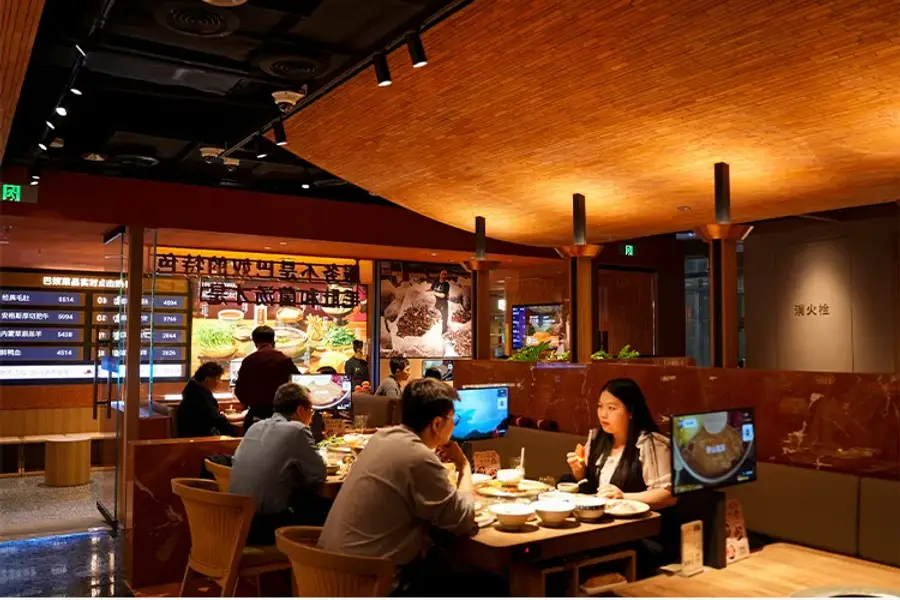
The premium hotpot chain has updated its Hong Kong IPO application, but could face headwinds due to recent investor preference for more cutting-edge companies
Key Takeaways:
- Banu has filed an updated prospectus to list in Hong Kong, showing it continued to post strong revenue and profit growth in the middle of this year
- The hotpot chain has sharply slowed its new store openings, even as it remains committed to doubling its network in the next three years
By Doug Young
The latest IPO prospectus from premium hotpot chain Banu International Holding Ltd. tells two different, and somewhat conflicting, stories.
On the one hand, the company is sticking by its aggressive plan to open 177 new restaurants over the next three years, the same figure it gave in its earlier filing in June that subsequently expired. That would more than double the 162 restaurants it had at the end of this September, according to its updated listing document filed on Wednesday.
But the reality seems quite different, as the company has become quite cautious with new restaurant openings lately. It actually closed a number of restaurants at the end of 2024 and start of this year, dropping its count to 145 at the end of March from 156 in September last year. The latest count of 162 shows it’s returned to a growth track, though the addition of 17 restaurants in the last nine months hardly looks too impressive.
Still, the company’s latest listing document shows it plans to open a net 52 new restaurants next year, climbing to 61 new openings in 2027 and 64 in 2028. Of course, 2028 is still a long way off, and the company’s plans will probably change by that time.
The story here, we believe, is that investors have become used to hearing strong growth stories from Chinese companies and want to keep hearing such stories, even if the reality on the ground doesn’t support such growth. That reality, for Banu and many of its peers, is that they are becoming more conservative in their expansion plans in the current slowing economy characterized by growing consumer conservatism.
But companies aren’t just sitting back and doing nothing while they wait for the economy to recover. In most cases, many are aggressively lowering their meal prices, mostly by rolling out new products for more value-conscious customers.
That shows up in Banu’s spending per customer, which has been falling steadily over the last two years, including a 2.8% drop to 138 yuan ($19.60) in the first nine months of this year from 142 yuan in the year-ago period, according to the latest listing document. Here, we should point out that decline is an improvement from the company’s last IPO filing, which showed average spending per customer dropped 5.3% year-on-year in the first quarter of this year.
Banu attributed the ongoing spending declines to “strategic adjustment of product mix and pricing since March 2024, which was implemented to attract a broader customer base and enhance our competitiveness amid evolving market trends.”
In addition to moving down the food chain by offering more affordable options, Banu is also getting creative in other ways. Notably, the company said it is making more of its stores open 24 hours, catering to a younger crowd that is one of its main customer groups and often likes to go out for their favorite dining option late at night and even in the wee morning hours.
Strong growth
Banu’s creative strategies to keep customers coming are paying off in the form of solid growth despite growing consumer caution. The company’s revenue rose 24.6% year-on-year in the first nine months of this year to 2.08 billion yuan from 1.67 billion yuan a year earlier. That rate was far faster than the 3.8% growth in its restaurant count over that period, showing its efforts to bring in more customers to existing restaurants were working.
That result was reflected in most of its other restaurant metrics, led by its 4.3% year-on-year same-store sales growth in the first nine months of the year. Like many of its peers, Banu only returned to growth for that metric this year after reporting a 9.9% decline in 2024 as China’s brief post-pandemic rebound fizzled.
Other metrics reflecting Banu’s success at driving more traffic to its restaurants include a rise in its table turnover rate to 3.6 times daily in the first nine months of this year from 3.1 a year earlier; a 30% rise in the number of customers served over that period; and a 5.9% increase in the average number of customers served each day per restaurant.
Banu is quite an old timer in hotpots, founded by entrepreneur Du Zhongbing back in 2001 in the city of Anyang of Central China’s Henan province. The company still remains focused on its home province, with 52 of its outlets, or about a third, currently located in Henan. Its focus on the higher end of the market, with signature products like its beef tripe and mushroom broth hotpots, is reflected in its average spending per customer that’s about 40% higher than the more mainstream Haidilao (6862.HK) hotpot chain.
Banu’s latest report also offers some insight into how the economic slowdown is affecting different segments of China’s consumer economy, showing that larger cities are holding up better than smaller ones.
The largest first- and second-tier cities, which account for 80% of the company’s revenue, both recorded strong revenue growth of 23% or higher in the first nine months of the year. By comparison, smaller third-tier and lower cities only grew 13%. First-tier cities were also the strongest in terms of same-store sales gains, reporting 15.9% growth in the first nine months of the year, compared with 2% or lower for second-tier and smaller cities.
Banu’s effective strategy also shows up in its improving restaurant margin, which rose to 24.3% in the first nine months of this year from 21.0% in all of 2024. On the bottom line, the company’s profit jumped 58% in the latest nine-month period to 156 million yuan from 98.5 million yuan a year earlier.
Quite a few restaurant chains have filed to list in the current hot Hong Kong IPO market, though only a few have made it to market. One of those, the lower-end Xiao Noodles (2408.HK) chain, hasn’t done too well. It sold shares for HK$7.04 for its IPO earlier this month, and has seen them drop steadily to their latest close of HK$4.88 – down about 30% from their listing price.
That doesn’t bode too well for Banu, which could command a market value of 3.3 billion yuan to 4.7 billion yuan if it can get similar multiples as Haidilao. We would generally applaud the company for its conservative store-opening strategy and aggressive steps to keep its business growing in a difficult economy. But its listing could face headwinds nonetheless if investors continue to show a stronger taste for more high-tech offerings.
To subscribe to Bamboo Works weekly free newsletter, click here
Related Articles
RELATED ARTICLES
-
Xiao Noodles tempts Hong Kong investors with ‘cheap eats’ story
- Yum China turns to new concepts, diversified markets in accelerated growth roadmap
-
Sichuan Teway spices up Hong Kong’s hot IPO market
603317.SHG
-
Freshly prepared ‘sauerkraut fish’: Jiumaojiu’s salvation or a new sinkhole?
9922.HK
- DPC Dash lights up Domino’s global leader board with push into small-town China
-
BRIEF: Anta to open 1,000 Southeast Asia stores in next three years
2020.HK