Jollibee dines close to home with Hong Kong selection for IPO spinoff
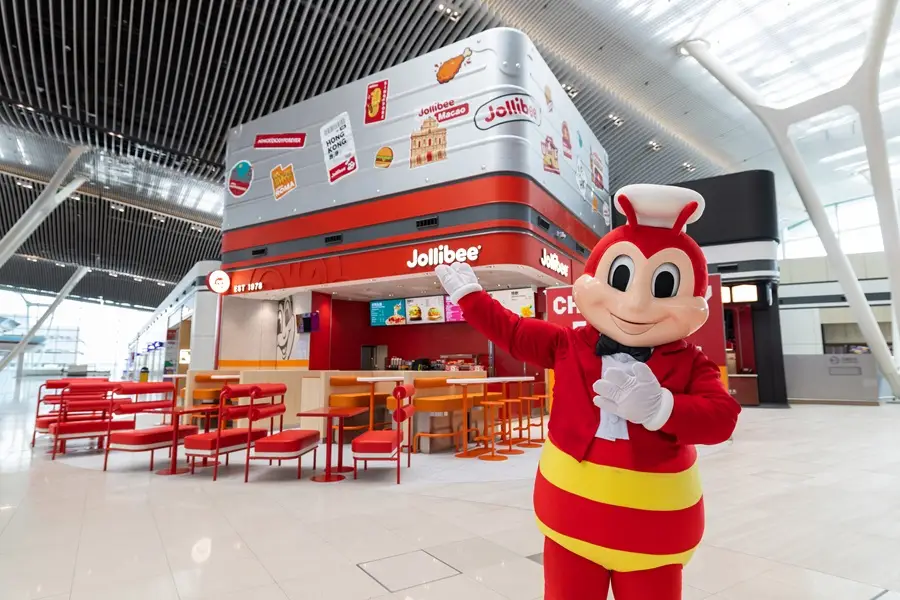
With 20 brands in 33 countries, the Philippine fast-food operator has abandoned earlier plans to list its international operation in New York in favor of its nearby neighbor
Key Takeaways:
- Jollibee calls Hong Kong “a natural market” for listing its international operation, reversing its previous commitment to a U.S. IPO
- The Hong Kong Stock Exchange’s recent reforms and access to Mainland Chinese investors helped to seal the deal
By Edith Terry
A regional fast-food giant unfamiliar to many is creating a buzz around its new plan to give Hong Kong investors a taste of its international operation.
When Jollibee Foods Corp. (JFC.PS) first announced its plans to separately list its international operation early this year, it said it was headed for Wall Street. But nine months later, the Philippine giant has reversed direction to declare the listing, which accounts for about 40% of its revenue, will be on the Hong Kong Stock Exchange, according to a filing last week with its home stock exchange in the Philippines.
The spinoff and separate listing would give global investors a taste of what’s arguably one of Asia’s most successful regional fast-food operators, with 20 brands in 33 countries. Its footprint of around 10,700 stores under various brands is one of the region’s largest. But that network has also shown signs of stumbling lately following Jolibee’s series of more than $1 billion in acquisitions over the last two decades.
The announcement described Hong Kong as “a natural market” for listing the global operation, to be called Jollibee Food Corp. International (JFCI), given the depth of the company’s presence and brand recognition across Asia. Jollibee added that Hong Kong as a listing venue is “best suited to JFCI’s business, geographic footprint, and investment profile.”
Jollibee has a current market cap of about $2.85 billion, meaning its international operation could be worth about 40% of that, or about $1.14 billion. By comparison, Yum China (YUMC.US; 9987.HK), which operates the KFC and Pizza Hut brands in China and has nearly 20,000 stores, is currently worth a much larger $14.5 billion.
Jollibee’s current shareholders have waxed hot and cold over the spinoff plan. The stock rose sharply on Jan. 6, at the time of the original announcement, only to later give back all the gains and more. Under the listing plan, the company’s current shareholders will receive shares in JFCI in proportion to their current holdings, with Jollibee Foods Corp. continuing to trade on the Philippine Stock Exchange.
Growing appeal of Hong Kong
Jollibee is one of a growing number of companies choosing Hong Kong for their listings over more traditional destinations like the U.S., as the city has taken a steady series of steps in recent year to become more company friendly. Among its latest steps, the exchange introduced a confidential filing system in July, as an alternative to the mandatory system of making all filings for new listings public. Since then, it has also temporarily waived its rule requiring companies to complete their IPOs within six months of making their first filings.
Those efforts are bearing fruit in attracting companies from around the region. Thai coconut water brand IFBH chose to list in Hong Kong in June 2025, abandoning earlier plans to list in Singapore. It has been joined this year by other Southeast Asian listings, including PT Merdeka Gold Resources Tbk, and BBSB International, a Malaysian construction company.
Jollibee hasn’t given a timetable for its Hong Kong listing, though it doesn’t seem to be in any hurry. One reason for that could be related to the company’s recent inner workings, which have all the markings of a typical family business. Jollibee founder and Chairman Tony Tan Caktiong, 73, runs the company with brother, Ernesto Tanmantiong, its president and CEO. Another brother, William Tan Untiong, is company secretary. Their sister’s husband, Antonio Chua Poe Eng, is also a director.
Just last year, Tony’s 45-year-old son, Carl Brian Tancaktiong, came back from a disappointing stint as chairman of Jollibee’s China operation, which has been struggling. He may need more time to work with the company’s relatively new CFO, Richard Chong Woo Shin, who has been tapped to run the international unit.
Shin, a Canadian, joined the company in 2022 after financial roles with a range of consumer brands, including aquaculture company Grobest, whiskey distiller Willam Grant & Sons, Ralph Lauren Asia Pacific and Bacardi Martini Asia Pacific.
Expansion through M&A
Jollibee may also be re-examining the speed of its rapid regional expansion, much of it through M&A. The company has closed 27 cross-border deals worth around $1.1 billion since 2000, including U.S. brands such as Denver-based Smashburger and Coffee Bean and Tea Leaf, as well as South Korea’s Compose Coffee, according to Bloomberg.
The spinoff will give investors a sharper picture of how all of these pieces in Jollibee’s offshore empire are doing. But the macro signs suggest there’s some overheating. Jollibee’s global revenue in 2025 was 305.1 billion Philippine pesos ($4.8 billion), up 13% over 2024, while its net income of nearly 11 billion pesos was flat. Its net income margin fell by 0.4 percentage points, from 4% in 2024 to 3.6% in 2025. The revenue growth continued this year, rising 9.9% in the first half to 162 billion pesos, even as its profit slipped into contraction with a 16.7% decline to 4.9 billion pesos.
As its net income declined, Jollibee reduced an earlier target for new stores additions in 2026. It now aims to open 1,000 to 1,100 new stores during the year, down from original plans for 1,200 and 1,300. It closed 207 stores in the first six months of 2026, and also cut its target for operating income growth to between 10% and 15%, down from an original 15% to 18%.
International analysts tend to attribute Jollibee’s success partly to its ability to tap the Philippine diaspora. But its real achievement outside its home market is its ability to cater to local tastes by adapting its signature Jollibee brand, as well as its other 19 brands, to each local market.
Jollibee was founded in 1975 by Tony Tan and his wife, Grace, who had both just graduated from the University of Santo Tomas with degrees in engineering. In their early 20s, they bought a Quezon City franchise operation of Magnolia Ice Cream, owned by Philippine conglomerate San Miguel Corp., for $7,000. Three years later, they dropped the Magnolia franchise and began selling “Yum Burger” hamburgers, before adding other options like fried chicken and spaghetti.
They won big in their home market. In 2024 the Jollibee brand controlled over 50% of the fast-food market in the Philippines, according to third-party research. But it also operates other brands as varied as Burger King, Panda Express and Tiong Bahru Coffee in the Philippines. By 2025, the company had 1,341 outlets in its home market under the Jollibee brand, ahead of 851 for McDonald’s (MCD.US) and 430 for KFC.
To subscribe to Bamboo Works weekly free newsletter, click here
Related Articles

RELATED ARTICLES
-
China’s shrinking ‘Chicken King’ scurries towards Hong Kong IPO
-
Longsys rides soaring memory wave to Hong Kong IPO
301308.SHE
-
China Travel Int’l spinoff spotlights its natural scenery and cultural tourism aspirations
0308.HK
- Starved for better profits, Fubei chases IPO to fill its funding bowl
-
Xtep races ahead on Southeast Asia running craze
1368.HK
- Juhui rides domestic catering boom to Hong Kong IPO
-
Confined to Hong Kong, Lung Fung lacks tonic for growth-hungry investors
2290.HK