INTERVIEW: DataCanvas empowers industries as AI utility provider
The infrastructure provider is aiming to deliver public-utility-style AI to core economic sectors underserved by traditional suppliers
By Lau Chi Hang
HONG KONG – AI models like Gemini, Qwen and ChatGPT attract all the headlines these days with their versatile large language models. But working in their shadows are hundreds of companies providing complex infrastructure to support the technology, which conducts trillions of tiny operations each day.
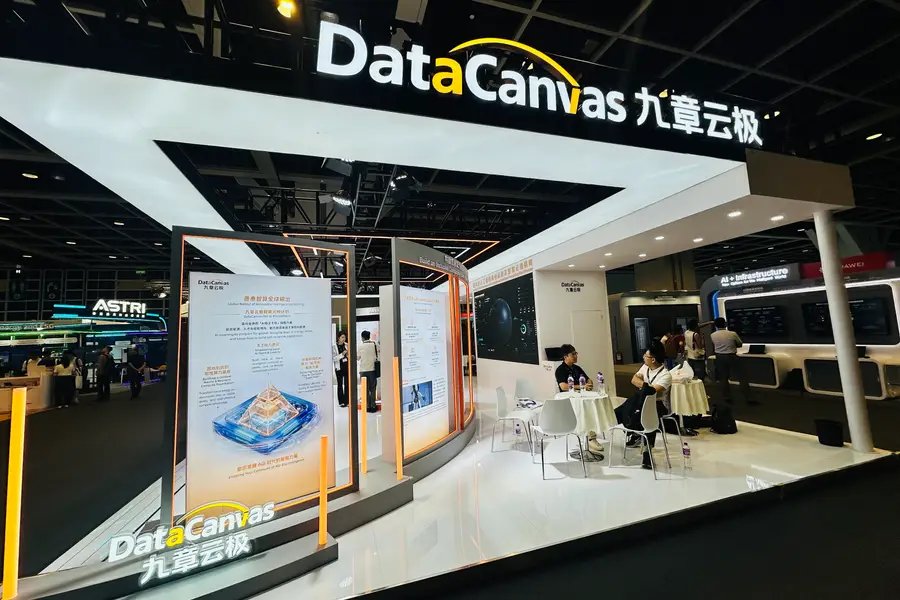
One such company, DataCanvas Co. Ltd., is positioning itself as a foundational computing utility, providing intelligent infrastructure and cloud solutions to deliver practical AI to a wider audience. Led by a founder with prior experience at Microsoft, the company uses a flexible business model that includes building actual infrastructure and providing hardware and design services to infrastructure builders.
One of its key focus areas caters to a growing number of companies building their own private “sovereign AI clouds” to better protect their data. Another helps traditional industries and other sectors take advantage of AI’s capabilities to build their own software infrastructure, something they never did in the past. Bamboo Works talked with Xu Jiang, head of international business, about those and other topics as the company rapidly expands at home and abroad.
Q: What’s your biggest competitive advantage compared with traditional cloud infrastructure providers?
A: Ultimately, the biggest difference is our underlying philosophy. If you see this business simply as renting computing resources, then naturally you’ll build a rental platform. But we don’t see it that way. We think of AI infrastructure as an electrical grid. Rather than charging customers for individual GPU (computing chips), we charge them according to DCUs (Data Computing Units, 1 DCU = 312 TFLOPS × 1 hour) consumed.
Two or three years ago we began telling customers: don’t think about renting GPU cards. Think instead about consuming standardized computing units. That philosophy shaped the design of our entire system, which is why we believe it’s naturally aligned with today’s token economy.
Q: How does your platform help the real economy while making AI computing resources more broadly accessible?
A: Before large language models became popular, if you talked about digital transformation for the real economy, the first thing people thought of was software as a service, or SaaS. But SaaS actually represents only a very small fraction of total economic activity. That’s where we see the real opportunity. Large AI models can reach industries that traditional SaaS never could.
Our goal is to serve industries that have historically been underserved by software. Many companies focus on sectors where SaaS is already well established. But many of the industries we’re targeting, heavy industry, manufacturing and other traditional sectors, have never really adopted SaaS, and in many cases they’ve barely used AI at all. If we can deliver AI to them as easily as electricity, simply giving them access to the tokens they need, that creates tremendous value.
Q: Looking ahead over the next 12 to 24 months, what will be the company’s strategic priorities, both at home and abroad?
A: From our perspective, there are two major opportunities. The first is that an increasing share of computing today is no longer driven by interactions between people and AI, but by interactions between machines themselves. The second is closely related to the first. Traditionally, people thought about computing as a nearby data center serving nearby users. But increasingly, the industry is beginning to resemble an electric power system — a network of power plants, generators and transmission grids.
So over the next 12 to 24 months, we have two primary objectives. First, we want to deploy a significant number of real-world projects at meaningful scale. Second, we want to put our methodology into practice — using the power grid concept to transform token delivery into what we call an “AI Factory,” working together with the AI computing centers and AI data centers that we are building. In other words, we want to build not only the data centers themselves, but also the equivalent of the electrical grid that connects them.
Q: How will the company differentiate itself in the global AI infrastructure market?
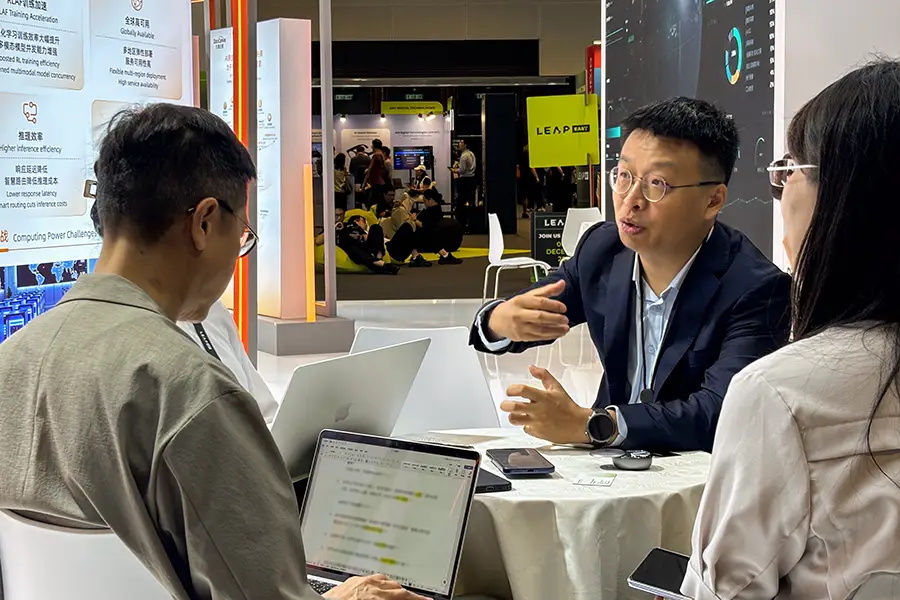
A: Our advantage is that, unlike some of the industry giants, we aren’t trying to push our own brand everywhere. Instead, we position ourselves primarily as a technology provider. We contribute the technology while partnering with local companies to handle operations. The basic idea is that AI increasingly involves national security and data security. Every country wants its most sensitive AI systems and data to remain under its own control. For example, no country would put its most sensitive national security data on a foreign-controlled public cloud. They need their own AI cloud.
Q: So your positioning overseas is really to help customers build private AI infrastructure?
A: That’s certainly one part of it. If we’re talking about how we work with overseas partners, building private AI clouds together is one important role we play. The second is that we don’t think of ourselves as a company that simply rents out computing hardware. Our greatest competitive advantage is still our experience building private-cloud infrastructure over the past decade in China.
Q: Will you rely on direct sales, channel partners, or joint ventures for your overseas operations?
A: Direct sales are not really an option for us for several reasons. So our preferred models are partnerships and joint ventures. In China, we built and operate our own cloud. Overseas, we help others build their own sovereign AI clouds. This allows local partners to solve many of the issues that would otherwise be difficult for us, from customer acquisition and regulatory compliance to compatibility with local requirements and relationships with local stakeholders. We believe that’s a much healthier model.
From the very beginning we’ve positioned ourselves as a pure technology provider. The challenge today isn’t simply finding customers — it’s finding the right partners. Once you’ve found the right partners, most of the other problems become much easier to solve.
Q: How does that affect your products and support systems overseas versus what you do in China?
A: There’s a very clear distinction between our domestic and international businesses. In China, we provide an integrated solution. We develop both the billing system and the underlying technical platform ourselves.
Overseas, however, we take a more modular approach. We provide the core platform, but we also expose well-defined APIs that allow local partners to build their own brands on top of our technology. Customer acquisition and branding are handled by the local partner.
Q: Looking ahead, which part of your overseas business do you expect to become your primary growth engine?
A: We divide the market into three levels. Level 1 is the consumer market – things like asking questions through ChatGPT and Gemini. We call those L1 tokens. Level 2 is the industry or domain level. These models are trained with specialized knowledge for particular industries. Level 3 is exploratory AI. Examples include protein folding, scientific simulation, materials research and other advanced scientific applications.
Our strategy is very clear. We have no intention of competing in the L1 market. Competition there is extremely intense. Much of the real activity in AI is happening behind the scenes. That’s where we believe the real economic value will be created. For that reason, we believe L2 and L3 tokens represent the most significant value-creation opportunity for the industry.
The Bamboo Works offers a wide-ranging mix of coverage on U.S.- and Hong Kong-listed Chinese companies, including some sponsored content. For additional queries, including questions on individual articles, please contact us by clicking here
To subscribe to Bamboo Works free weekly newsletter, click here
Related Articles