GigaDevice’s profit soars as celebrity founder sells down stake
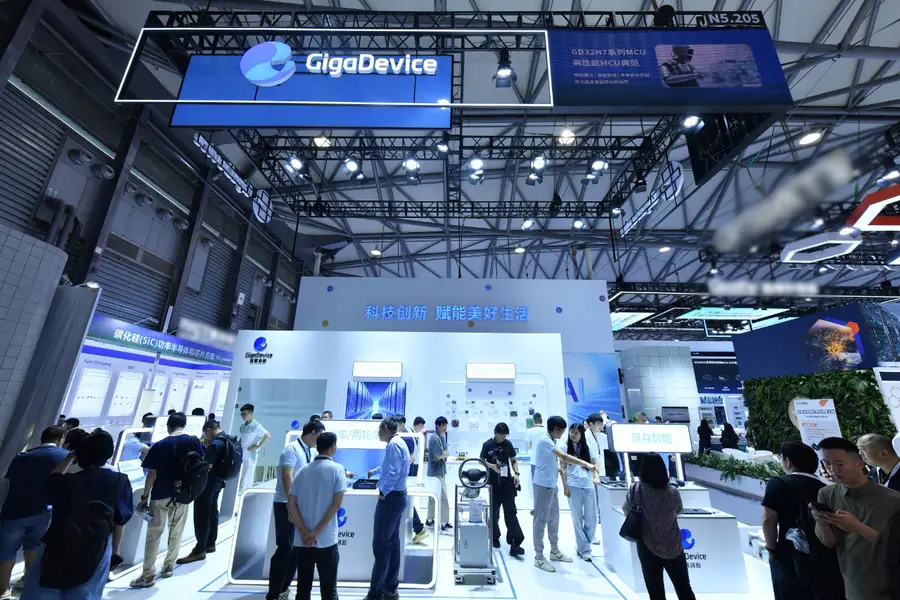
The memory chip maker’s stock has risen exponentially since its IPO in January as its profit soared in the first half of this year
Key Takeaways:
- GigaDevice said it expects to report its profit surged 11-fold year-over-year in the first half of 2026
- The memory chip maker’s founder and Chairman Zhu Yiming has reduced his shareholdings twice since the company’s January IPO
By Lau Chi Hang
A list of this year’s most prominent figures in Chinese financial circles will inevitably include Zhu Yiming, whose name is closely tied with two prominent companies in the hot memory chip sector. One of those, GigaDevice Semiconductor Inc. (3986.HK; 603986.SH), has been on a tear since its IPO in January, with its stock nearly quadrupling from its listing price just half a year later. That contrasts sharply with sluggishness for the broader Hong Kong stock market, making GigaDevice a star in the current climate.
That star power was on shining display last week, as GigaDevice said its profit rose manyfold in the first half of this year on soaring memory prices.
Zhu’s other major endeavor, leading DRAM memory maker ChangXin Memory Technologies, could soon become an even bigger star as it counts down to a listing on the STAR Market in Shanghai. ChangXin plans to raise 29.5 billion yuan ($4.35 billion) in that deal, which would make it the largest IPO on China’s domestic markets in Shanghai and Shenzhen so far this year. Such a listing could value the company at 1 trillion yuan or more.
Memory chip companies like GigaDevice and ChangXin have become capital market darlings lately, driven by strong demand for their products stemming from heavy computing power requirements of AI. And while GigaDevice’s post-IPO surge may seem a bit extreme, the company’s upside profit forecast last week does seem to justify the lofty stock price.
Selling on the news
GigaDevice said it expects to report its revenue reached 11.5 billion yuan in the first half of this year, up 177% year-on-year. But beyond that big gain, it was the company’s meteoric profit growth that excited investors. Specifically, it said it will report that its net profit for the six-month period hit 6.9 billion yuan, representing a massive 11-fold increase year-on-year.
The company credited the sharp profit rise to tight supplies of memory chips during the period, leading to both higher sales volumes and prices for its products. It added the rise was driven by demand from the industrial, consumer, and automotive sectors, as well as demand for its microcontrollers.
At least part of the rise was unrelated to its core chip business, involving an increase in the fair value of some of its securities investments. But even excluding such gains, GigaDevice still posted a profit of 4.85 billion yuan for the period, up nearly ninefold year-on-year.
GigaStock’s stock initially surged when trading began the day after the announcement. But then it reversed course and eventually closed down 20%, wiping out about HK$140 billion ($17.9 billion) in market value. That unexpected turn may have owed partly to profit taking as investors “sold on the news.” Some investors may have also been hoping for even better growth. Before the announcement, others may also have been following Zhu Yiming’s recent moves in terms of his company ownership.
Cashing out
GigaDevice founder and Chairman Zhu held 6.53% of the company’s stock when it listed on the Hong Kong Stock Exchange on Jan. 13 this year. The figure was a bit higher, but still relatively low, at 8.39% when adding in shares held by a related party, InfoGrid.
Then, on May 7, Zhu and InfoGrid made a surprise sale of 3.44 million shares, accounting for 0.49% of the company’s total share capital, reducing their combined stake to 7.9%. On May 26, Zhu and InfoGrid reduced their stake by another 6.33 million shares, representing 0.9% of the company’s total, dropping their stake further to 7%.
As Zhu’s stake dwindles, some may worry about his commitment to the company, especially as he focuses on ChangXin’s upcoming Shanghai listing. Adding to those concerns, GigaDevice warned investors late last month of risks related to the stock’s 125.6% gain between May 18 to June 29, noting there was the potential for a rapid price decline in the future.
“The memory chip industry has historically experienced cyclical fluctuations,” the company pointed out. “Currently, product prices are at historical highs, and the trend of continued sharp rises is unsustainable. Industry supply and demand will eventually move toward rebalancing.”
GigaDevice added that with changes in the macroeconomic environment, industry cycles and market supply-demand dynamics, the prices of its main products may see significant declines, leading to lower revenue growth and profitability.
The Esprit story: a cautionary tale
GigaDevice’s meteoric rise – and the potential for a future correction – brings to mind the story of Esprit Holdings, once a similar star on the Hong Kong Stock Exchange. Its Esprit clothing brand was hugely popular in the 1990s. Michael Ying started as Esprit’s Asia agent, and later acquired the company and became its chairman. The business grew rapidly after he listed it in Hong Kong in 1993. It became a constituent of the benchmark Hang Seng Index nine years later as its stock soared, giving it a market cap of more than HK$170 billion at its peak.
But rather than hold onto his stock, Ying repeatedly reduced his stake. Excited investors paid little attention at first, and even analysts defended his sales, attributing them to efforts to bring in institutional investors and claiming the company was still on solid footing. Ying reduced his holdings more than 20 times over several years, leaving him with almost no shares. Then the global financial crisis hit, and Esprit’s story began to unravel. Its business deteriorated steadily, and today its market cap stands at just HK$130 million – a tiny fraction of its peak.
History may not repeat itself quite so dramatically this time, but it can still provide some lessons. When a company’s stock price is extraordinarily high and major shareholders start to sell down their stakes, retail investors should take note. Even if GigaDevice’s stock regains its footing and starts to rise again, investors who sit on the sidelines for now will only miss an opportunity, not incur a loss. Conversely, chasing the stock at current levels that still look high could lead to substantial losses if the company’s growth slows and market sentiment reverses.
To subscribe to Bamboo Works weekly free newsletter, click here
Related Articles
RELATED ARTICLES
-
CXMT IPO tests China’s state-driven chip dream
-
Longsys rides soaring memory wave to Hong Kong IPO
301308.SHE
-
BRIEF: GigaDevice profit skyrockets sixfold in first quarter
3986.HK
- Could memory chip shortage imperil FIH Mobile’s return to the black?
-
Transsion rebounds, as its ‘Out of Africa’ story stumbles
688036.SHG