Kinwong runs hot on AI boom, cold on plunging margins
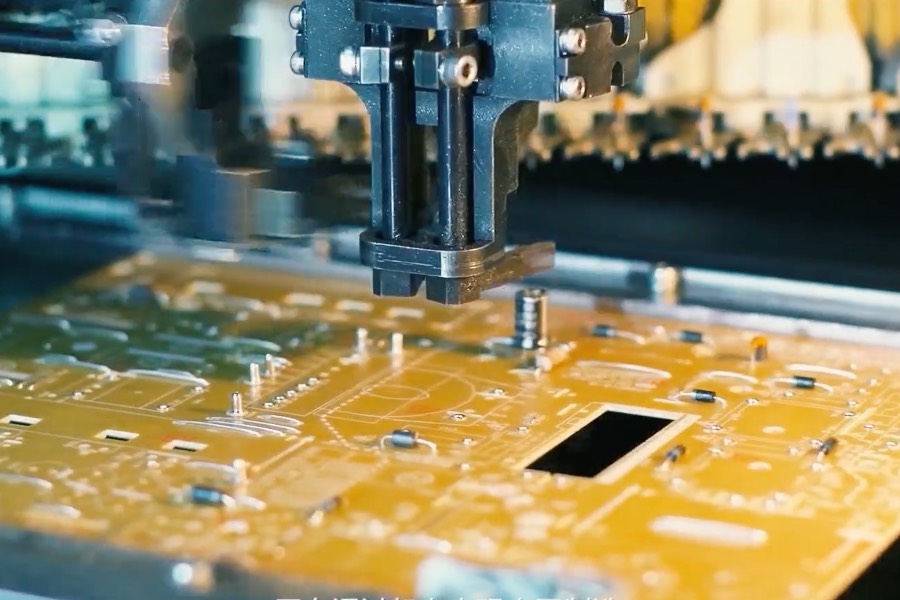
The PCB maker’s Hong Kong IPO looks aimed at tapping demand for AI concept stocks, even though related high-end products make up a relatively low proportion of its revenue
Key Takeaways:
- Kinwong has filed for a Hong Kong IPO, reporting its gross margin fell from 23.2% in 2023 to 18.7% in the first four months of this year
- The PCB maker’s revenue grew 18% in the first four months of this year, but its profit declined by 25%
By Cheng Shui Tong
The AI era has ushered in breakthrough growth for printed circuit board (PCB) makers, turning this formerly anonymous group into hot property on the Hong Kong Stock Exchange. The latest to jump on that gravy train is Shenzhen Kinwong Electronic Co. Ltd. (603228.SH), which filed its preliminary prospectus for a Hong Kong listing earlier this month.
The company is no slouch within its sector, ranking first among global automotive electronics PCB suppliers with 10.6% of the market, according to third-party market data in its listing document. Its standing is a bit lower among all PCB suppliers, but even in this group it ranks 11th worldwide and fifth among its Chinese peers, with 2.5% of the global market.
Automotive PCB leader
The PCB industry where Kinwong operates has become a highly speculative concept area in the current market thanks to strong demand from AI servers and other computing equipment. Still, its strong position in that market looks somewhat attractive for investors chasing such AI concept stocks.
The company has been growing steadily over the past three years both in terms of revenue and profit. Its revenue rose from 10.75 billion yuan ($1.58 billion) in 2023 to 15.31 billion yuan last year, while its profit climbed from 911 million yuan to 1.24 billion yuan. That formula changed slightly this year, however, as its profit began to retreat, even as its revenue kept growing. Its revenue rose 18% year-on-year to 5.34 billion yuan in the four months to April. But its profit slumped 25% to 317 million yuan, as the company blamed rising raw material prices.
In this case, the culprit behind those price increases is the copper that’s a key raw material for PCBs. The price of copper has risen about 40% over the last year to about $13,500. The company estimates that for every 10% increase in the price of copper, its gross margin will decline by 1.2 percentage points. Consequently, raw materials as a percentage of the company’s cost of sales have been creeping steadily upward, rising from 60.4% in 2023 to 62.9% in the first four months of 2026.
Slumping gross margin
As its cost of sales has grown, the biggest victim has been Kinwong’s gross margin. That figure dropped steadily from 23.2% in 2023 to 21.6% last year, and sank to just 18.7% in the first four months of 2026 as copper prices spiked. Within its portfolio, the company’s gross margin for PCB products was just 12.3% in the first four months of this year, down more than 4 percentage points year-on-year, hitting its overall gross profit margin.
Gross margins for its relatively high-end multilayer printed circuit boards (MLPCBs) and high-density PCBs (HDPCBs) have experienced even larger plunges. The former fell by nearly half from 18% in the first four months of 2025 to 9.7% in the same period this year, while the latter dropped from 19.9% to 12.2% over that time. MLPCBs, a relatively high-end product, accounted for 51.6% of the company’s total revenue in the first four months of 2026, while HDPCBs represented 7%.
As with many Chinese manufacturers, Kinwong also gets sharply higher margins for its products sold abroad than those in the ultra-competitive China market. Its gross margin for the Chinese market has historically lingered in the single digits, standing at a mere 8% in the first four months of this year. By comparison its overseas gross margin was 35.1% as recently as 2023, though even that figure nosedived to 17.8% in the first four months of this year.
Kinwong’s biggest business is PCBs for automotive electronics, which accounts for more than 40% of its revenue. That market was growing at a relatively brisk 8.4% from 2020 to 2025, though the rate is expected to slow to 6.2% between 2025 and 2030, according to its listing document.
Within the PCB universe, Kinwong’s margins not only look squeezed, but are also lower than its industry peers. Delton Technology (1989.HK; 001389.SZ), which went public in March and primarily makes high-speed and high-frequency high-end PCBs, had an overall gross margin of approximately 33% last year. Victory Giant (2476.HK; 300476.SZ), which listed in April and focuses on high-performance computing PCBs, boasted a similarly high gross margin of 34% last year. Meanwhile, the recently listed Circuit Fabology (9630.HK; 688630.SH), the world’s largest supplier of PCB direct imaging equipment, had a gross margin approaching 40%.
Like many of the other PCB makers to recently list in Hong Kong, Kinwong’s stock is already traded on China’s domestic A-share market, in this case listed in Shanghai since 2017. Success for the new Hong Kong listing will hinge on whether the city’s more international investor pool feels the stock is reasonably priced.
Discount required
Among Chinese PCB manufacturers making second listings in Hong Kong this year, nearly all have sold their Hong Kong shares at significant discounts to existing listings in Shanghai and Shenzhen. That strategy has provided significant upside for their Hong Kong shares, which have often logged big initial gains as investors narrowed the valuation gap with their Shanghai and Shenzhen counterparts.
Take Delton, for example, which discounted its Hong Kong shares by nearly half relative to its Shenzhen-listed stock. Since then, the Hong Kong stock has risen 128%, narrowing the gap to roughly 30% with the Shenzhen ticker. Victory Giant also offered its Hong Kong stock at a nearly 40% discount compared to its Shenzhen shares. That’s helped the Hong Kong stock log post-listing gains of about 40%, narrowing the discount to the Shenzhen shares to about 17%.
Similarly, Circuit Fabology, whose stock debuted last week, offered its Hong Kong shares at a hefty 60% discount compared to its Shanghai stock. That helped to trigger an 80% spike in its share price when the stock debuted, narrowing its discount to around 20% of the Shanghai shares.
Kinwong’s Shanghai listing currently values the company at about 70 billion yuan, with a price-to-earnings (P/E) ratio of about 55 times. That’s notably lower than the 92 times for Shennan Circuit (002916.SZ) and 68 for WUS Circuit (002463.SZ), both of which are listed in Shenzhen. That disparity owes primarily to higher profitability for these two companies compared with Kinwong. Accordingly, Kinwong’s may need to offer its own healthy discount compared to its Shenzhen-listed shares to ensure its Hong Kong gets a warm reception from investors.
To subscribe to Bamboo Works free weekly newsletter, click here
Related Articles

RELATED ARTICLES
-
PCB maker Kinwong Electronic’s Hong Kong IPO approved by CSRC
 603228.SHG
 -
Circuit Fabology etches a path to a Hong Kong IPO
688630.SHG
-
Han’s CNC etches out triple-digit growth on AI infrastructure boom
3200.HK301200.SHE
-
Kingboard rides AI boom with strong demand for conductive copper
1888.HK
-
Evergrande Property Services: Hot potato or hot property?
6666.HK
-
Dida’s carpool ride-sharing model runs low on fuel
2559.HK
-
Andre Juice’s PCB gambit: A sweet pivot or a sour distraction?
2218.HK605198.SHG