Move over, burger joints. Yuen Kee dishes up China-flavored fast-food IPO
The country’s largest dumpling chain has filed to list in Hong Kong, though it could face a tepid reception due to lack of investor interest in consumer companies
Key Takeaways:
- Yuen Kee has filed to list in Hong Kong, reporting its revenue growth slowed sharply in 2025 after a rapid buildup of its store network over the previous two years
- The company could find new growth opportunities in its frozen dumpling retail business, as well as overseas expansion
By Doug Young
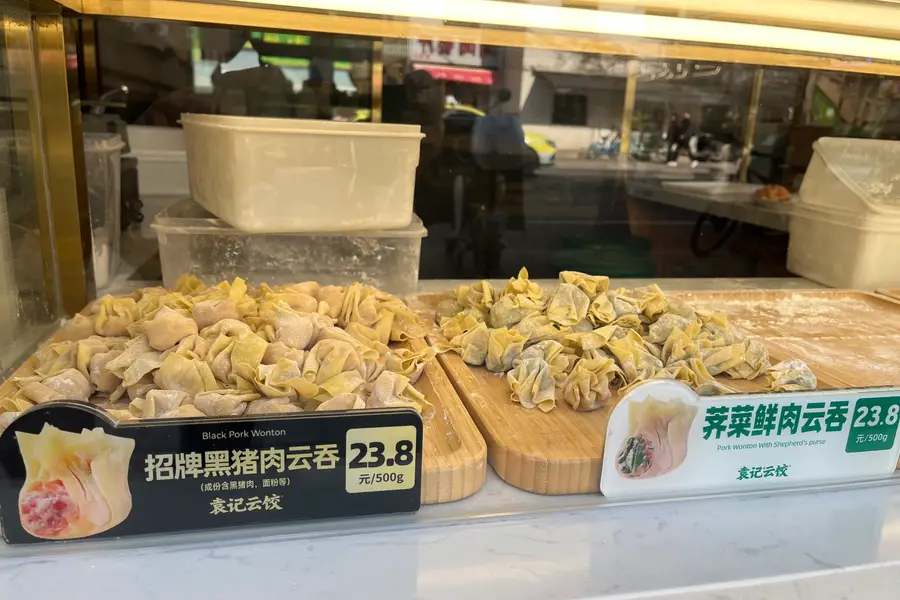
Foodies could soon have a chance to invest in what’s arguably China’s equivalent of the hamburger, at least in terms of popularity as a fast food. That’s our key takeaway from the filing on Monday for a Hong Kong IPO by Yuen Kee Food Group Co. Ltd., which bills itself as the king of Chinese dumplings, known locally as jiaozi.
Hamburgers may currently rule as the world’s favorite fast food, thanks to efforts by McDonald’s (MCD.US) and smaller chains like U.S. rival Burger King and Japan’s MOS Burger. But when it comes to history, the burger, with just a little more than a century of history, is light years behind Chinese dumplings.
Folklore says the quintessential Chinese fast food has a history dating back around 1,800 years when Zhang Zhongjian, a traditional doctor of Chinese medicine, invented the dumpling during the Han Dynasty to treat ailing residents during a trip to his hometown. Since then, the dish has become a sort of Chinese equivalent of hamburgers, at least in terms of ubiquity, both as an everyday staple and also a traditional item during festivals like the Chinese New Year and winter solstice.
Yuen Kee Food nicely wraps up all that history into a single package for investors, boasting status as China’s largest chain serving dumplings, as well as the closely related wonton. The company had 4,266 stores at the end of last September, making it the largest operator of a quick service restaurant (QSR) chain serving Chinese-style food last year, according to its prospectus. By comparison, the second largest operator had 3,076 stores at that time. But we should also note that industry leader, Yum China’s (YUMC.US; 9987.HK) KFC, had 12,640 stores at the end of last September, or nearly triple Yuen Kee’s total.
Yuen Kee’s financials look generally pretty good, including solid margins and profits, as well as a compelling overseas expansion story that’s in its early stages but looks set to accelerate. The only slight causes for concern include its slowing growth last year, as well as an uptick in its debt load due to a sudden surge in bank loans.
Despite its large footprint and legacy of making one of China’s oldest comfort foods, Yuen Kee’s own history is relatively short. The company was only founded in 2017 in the southern city of Foshan in Guangdong province. It quickly rose to 100 stores a year after its founding, and crossed the 1,000-store mark in 2021 using a franchise model that allowed it to expand quickly.
It experienced some of its biggest growth in 2023, when it expanded its store count by 58% to reach 3,141 by the end of that year. Since then, the growth rate has slowed sharply, to 26% in 2024 and just 7.9% year-on-year growth for the nine months through last September.
The company has conducted several funding rounds, though it has yet to attract any big-name investors. The lack of big names is also notable in its IPO application, which is being sponsored by second-tier names Huatai and GF Securities. The absence of big names underscores the relative lack of appetite for this type of traditional company in Hong Kong’s current hot IPO market, where investors are more interested in high-tech plays.
Slowing growth
The relative lack of appeal for restaurant operators is also reflected in the group’s valuation ratios, which could keep Yuen Kee below the $1 billion yuan threshold above which a company is considered a “unicorn.” Yum China currently trades at a price-to-sales (P/S) ratio of 1.53, and others like DPC Dash (1405.HK), operator of the Domino’s Pizza chain in China, and Xiao Noodles (2408.HK), which runs a popular fast food noodle chain, trade at similarly modest ratios between 1.7 and 2.1.
A valuation near the top of that range, at around 2, for its status as leader in one of China’s favorite local fast foods, would still only value Yuen Kee at around 5.3 billion yuan ($760 million), based on its forecast revenue for last year.
The company’s financials roughly parallel the expansion of its store footprint. Its revenue grew 26% in 2024, but then the rate sharply slowed to just 11% year-on-year to 1.98 billion yuan in the first nine months of 2025. The big majority of the company’s sales come from its restaurant business, which mostly involves selling dumpling fillings and skins to its franchisees from its network of five central factories and 24 warehouses across China.
While the restaurant business is slowing, one encouraging sign is coming from its smaller business of selling packaged frozen dumplings and wonton under its Yuen Kee Taste brand. That part of the business grew 46.4% year-on-year in the first nine months of last year to 52.4 million yuan, though it still only accounted for 2.6% of revenue.
Another encouraging sign is the company’s global expansion, which could be a future revenue booster. It opened its first overseas store outside Greater China in Singapore in 2024, and has expanded rapidly there to 10 stores. It also recently opened its first store in Thailand, and said it plans to use some of its IPO proceeds to expand in Southeast Asia over the short-term, and to other markets including East Asia, Europe and the U.S. over the medium- to long-term.
The company appears to be doing a good job of controlling costs, which has allowed it to maintain relatively sold gross margins at around 25%. That’s quite a bit better than the 17.1% for Yum China, though it’s far behind DPC Dash and Xiao Noodles, which both have gross margins of around 45%.
As we’ve already noted, another potential concern could be Yuen Kee’s gearing ratio, which jumped to 20.9% at the end of last September from 14.8% a year earlier. The company cites a rise in bank borrowings to 250 million yuan in the first nine months of last year from 95 million yuan a year earlier, though it doesn’t give a reason for the big jump. Here, we should also point out that even the 20.9% ratio is still well within the range of what’s considered healthy.
Probably Yuen Kee’s biggest concern should be the lack of appetite among Hong Kong investors for restaurant stocks these days. Xiao Noodles exemplifies that trend. Despite its similarly solid financials, Xiao’s shares have fallen nearly 40% since their IPO last month, prompting it to announce a share buyback plan last week.
To subscribe to Bamboo Works weekly free newsletter, click here
Related Articles