
The world’s largest pork producer could raise up to $1 billion in a blockbuster listing that would be one of the largest by a consumer company this year
Key Takeaways:
- Muyuan Foods has filed for a Hong Kong IPO, planning to use the proceeds to build a 3.2 billion yuan pig farm in Vietnam, its first outside China
- The hog farming company has also found new growth with recent moves into the slaughtering and meat processing businesses
By Edith Terry
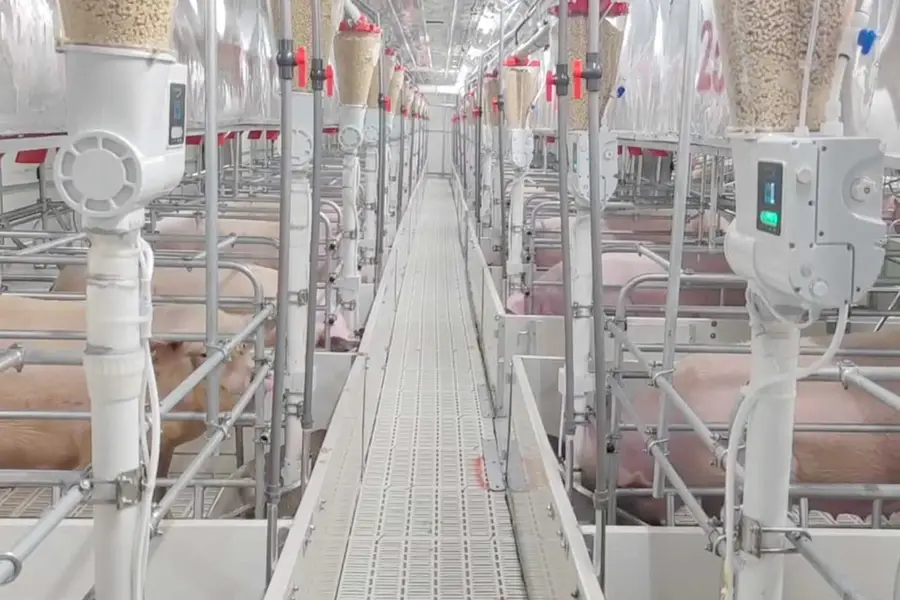
When husband and wife Qin Yinglin and Qian Ying set up their first pig farm in Neixiang, a small town in Central China’s Henan province, in 1995, they could hardly have imagined their tiny operation of 200 breeding sows and 2,000 piglets would one day become a company with 1,000 pig farms across China and 5.4% of the global hog farming market.
In the first nine months of this year, that company, Muyuan Foods Co. Ltd. (002714.SZ) sold 57.3 million hogs and 11.5 million piglets. Its integrated pork processing and feed industry complex in Neixiang alone can process up to 2.1 million hogs per year, in 21 individual six-story buildings, each with an annual production capacity of 100,000 hogs.
Muyuan is no stranger to the capital markets, having listed shares on the domestic-focused Shenzhen Stock Exchange in 2014. Now, the company is eyeing a second listing in more internationally focused Hong Kong that could raise up to $1 billion, backed by underwriting heavyweights Morgan Stanley, CITIC Securities and Goldman Sachs. The company plans to use the proceeds to develop its first complex outside China, in partnership with BAF Vietnam Agriculture, and to expand its China operation as well.
Muyuan’s Hong Kong filing last week marked its second application this year, after an earlier one in May lapsed. The company is racing to make a listing that would be one of the largest by a consumer company in Hong Kong’s hottest IPO market in years. Its listing could unseat WH Group (0288.HK), owner of the U.S.-based Smithfield (SFD.US) brand, as Hong Kong’s top hog in terms of market value.
Valuation issues were reportedly the main cause behind the delay after the initial filing, with brokerages offering significantly different forecasts for Muyuan’s 2025 profit. Figures varied widely, from Kaiyuan Securities’ prediction of a 16.4 billion yuan ($2.32 billion) profit for the year to Huaxin Securities’ 20.24 billion yuan. Those figures would give Muyuan a price to earnings (P/E) range of 14 to 16, double that of WH Group, which raised $522 million in January with its spinoff and separate U.S. listing for Smithfield.
Muyuan plans to use the IPO proceeds to reduce its exposure to China’s volatile hog market by expanding abroad, and also by moving into the downstream businesses of slaughtering and processing meat products.
Muyuan began the latter initiative in 2019 and has quickly built up the business. In the first three quarters of this year, the company’s slaughter sales volume across its 10 facilities was 21.44 million tons, up 134% year-on-year. Chief strategy officer Qin Jun said that capacity would be expanded gradually, with one to two new plants going into production annually.
The slaughtering and meat products businesses are still small but growing fast. Out of the company’s 137.9 billion yuan in total revenue last year, that part of the business reported revenue of 24.3 billion yuan, or about 18% of the total, with the rest coming from the hog raising business.
But the slaughtering and meat product businesses nearly doubled from 10 billion yuan in the first six months of 2024 to 19.3 billion yuan in the same period this year, growing to a quarter of total revenue for the period. The hog business grew by a slower 34% over that time.
Strong growth
Muyuan’s overall revenue grew 34% in the first half of the year to 76.5 billion yuan from 56.9 billion yuan a year earlier. While things at home still look relatively healthy, thanks to China’s status as the world’s largest pork consumer, Muyuan has also begun to explore the international market for new opportunities.
It established a subsidiary in Vietnam in September and is building a 3.2 billion yuan high-tech farming project in the country’s Tay Ninh province in partnership with BAF Vietnam. The company also signed a strategic cooperation agreement in August with Thailand’s Charoen Pokphand Foods (CPF.BK), one of Southeast Asia’s largest agricultural enterprises, to explore global cooperation in feed and slaughtering.
Muyuan’s Shenzhen-listed shares give it a current market cap of 270 billion yuan, or about $38 billion. That makes a $1 billion fundraising goal, which was reported by Bloomberg earlier this year, look reasonable in a hot Hong Kong IPO market that has seen eight deals raise HK$10 billion ($1.3 billion) or more through November, according to a recent report by Ernst & Young.
Investors may be slightly more skeptical. While Muyuan’s Shenzhen-listed shares are up nearly 30% from the beginning of the year, they are down about 20% from their mid-September peak. Shares of WH Group and two other peers, Wens Foodstuff (3000498.SZ) and New Hope Liuhe also performed well in the first half of the year, but have looked weaker since then. The shifting sentiment could owe partly to hog prices that are down about 30% year-over-year since the middle of this year due to high breeding sow inventories.
Muyuan’s latest performance metrics filed with the Shenzhen Stock Exchange seem to reflect the weak prices. The company’s revenue began to contract during the third quarter, falling 11.5% year-on-year to 35.3 billion yuan. Its net profit tumbled by an even larger 56% to 4.25 billion yuan, according to third-quarter data in the prospectus.
China is the world’s largest hog consuming country as well as the largest producer. Demand from the country totaled 58.2 million tons in 2024, or roughly half of the 115.2 million tons globally. The market is growing, albeit slowly, with pork consumption projected to grow by an average of 0.5% annually through 2033.
The biggest change in the industry has been a shift towards large-scale farming, which also leaves Muyuan with some potential upside as a consolidator. Such large-scale farms accounted for 70.1% of China’s industry in 2024, compared to 90% in the U.S. Economies of scale also give Muyuan greater flexibility to absorb swings in the volatile market over individual and small-scale farms that have traditionally dominated the industry.
But in the long run, Muyuan looks shrewd by trying to diversify beyond its home market, which, despite its status as the world’s largest, is quickly becoming overcrowded.
To subscribe to Bamboo Works weekly free newsletter, click here
Related Articles
Can Longcheer buy its way to the top of the AI rack?
Two auto giants hitch wagons to combat harsh industry winter


