Yixin cruises in sweet spot in China’s sputtering car market
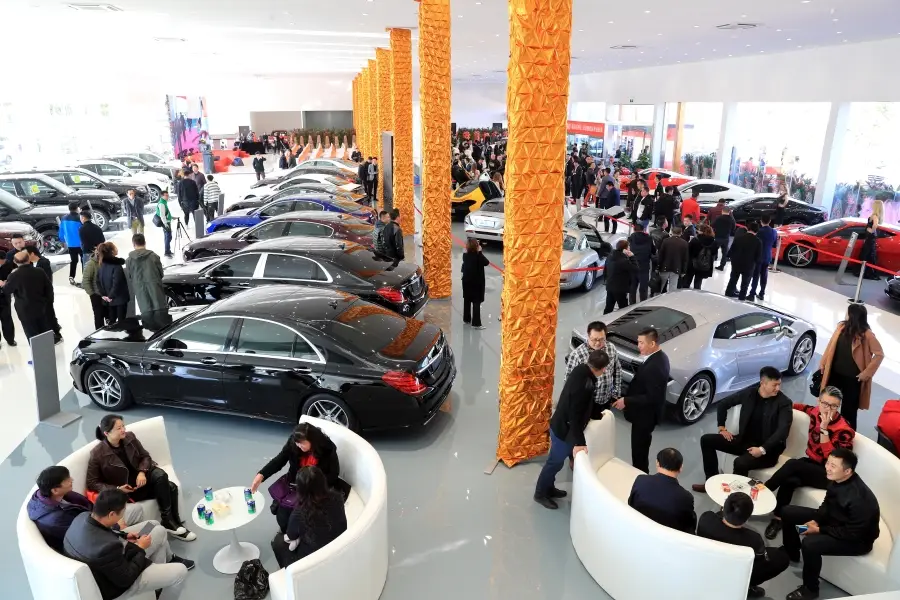
The online car loan facilitator processed nearly a quarter more transactions year-on-year in the third quarter, defying overall sluggishness in China’s auto market
Key Takeaways:
- Yixin handled 235,000 transactions in the third quarter, up 23% year-on-year, outpacing China’s overall growth in car sales during period
- The auto financier is shifting its focus to used electric vehicle loans as that part of the sector looks set to boom with the rapid uptake of EVs
By Warren Yang
No matter how rough the times, there’s often still a sweet spot where a savvy business can find profits. Yixin Group Ltd. (2858.HK) seems to have found such a place in China’s slowing auto market, even as most players suffer from tumbling revenue and evaporating profits.
In a business update released last Tuesday, the online car loan facilitator said it handled 235,000 transactions in the third quarter, up 23% year-on-year. In value terms, loans that Yixin helped dole out amounted to 21.2 billion yuan ($3 billion) for the quarter, up about 15% from a year ago.
While Yixin didn’t provide a third-quarter revenue figure, the company appears to be doing quite well in the grand scheme of things, considering the current weak state of China’s car market – and the country’s broader slowing economy.
Growth in auto sales in China has been weak for several years, primarily due to a prolonged economic slowdown that is making consumers reluctant to splurge on big-ticket items like vehicles. A price war triggered by intense competition and oversupply isn’t helping matters, as it encourages potential buyers to hold off on purchases in hopes of further price markdowns.
Sales of cars, including used ones, grew about 11% year-on-year in the third quarter. While that might look good in any developed economy, it’s a far cry from even faster expansion in the early 2000s. And the strong headline gain hides the fact that carmakers and dealers are offering big discounts to clear out their large inventories – hardly a sign of a healthy market.
This doesn’t mean there isn’t an opportunity for Yixin to grow. Its latest business update shows that it’s benefitting nicely from increasing demand for used electric vehicles (EVs). Beijing remains supportive of battery-powered cars, continuing to roll out new policies to stimulate sales of those environmentally friendly vehicles that now account for half of the country’s new vehicle sales. And with so many new EVs hitting the market, prices of pre-owned ones that are still in good condition drop quickly, offering good bargains for people looking for value.
Growing used car business
Yixin’s financing for used cars jumped by more than half in the third quarter to account for well over 50% of the total loans it facilitated during the three months. Particularly, loans for secondhand EVs grew to 23% of its used car business from 13% in the third quarter of 2024. The company says that rapid shift is intentional.
“This growth demonstrates the continued success of our proactive strategy to offer more precise risk pricing and bring in profitable used car products,” Yixin said in its report.
Yet translating transaction growth into similar gains in revenue or profit for Yixin hinges on a few other factors.
For starters, used cars are cheaper than new ones, which means loans for the former are typically smaller than the latter. This explains why the increase in value of Yixin’s transactions was smaller than growth in the number of transactions in the third quarter. So, Yixin likely earns less revenue from each used-car loan than ones for new vehicles, resulting in revenue growth that trails growth in the number of transactions.
That means revenue growth in the third quarter likely was far slower than the 20% rise in the number of transactions during the period.
On the more positive side, Yixin provides more payment guarantees for the loans it facilitates for used cars compared with new ones. So, the expansion of that part of the business brings in more fees for such services. But growth in this area also comes with some downside, as the company needs to book losses from loans it guarantees that ultimately sour, and those charges eat into its bottom line.
In its midyear report released in August, Yixin’s said its revenue expanded 22% year-on-year to 5.4 billion yuan in the first half of the year. But its credit impairment losses jumped by a larger 59%, eroding its gross profit. The company still managed to increase its net profit by 34% to 549 million yuan during the six months – an impressive feat as many other companies throughout the auto industry were reporting falling revenue and profits.
Business diversification
As loan facilitation comes with risks, Yixin is also diversifying its business. A key focus for the company is its software as a service (SaaS) platform that connects car makers, financial institutions and consumers. Financing handled over the platform more than doubled in value year-on-year in the third quarter after Yixin brought in two new financial institutions during the period. Artificial intelligence (AI) adoption is critical for the company, which is the case for many other digital-oriented businesses these days. For Yixin, in particular, the technology can boost efficiency and lower costs by streamlining the process of vetting loan applications.
In fact, SaaS services became Yixin’s biggest single revenue source in the first half of the year, with income from that segment surging 124% year-on-year to account for more than a third of total sales.
That said, general weakness in the Chinese economy, including the car market, will remain a drag on Yixin for the foreseeable future. New car sales in the country declined for a second straight month in November, though industry watchers said that was partly because year-earlier figures were inflated by government subsidy programs that are now being scaled back.
Investors have largely overlooked the auto sector’s woes and rewarded Yixin for its strong performance in the face of a challenging environment. The company’s shares have rallied since the release of the latest business update, and its stock now trades at a price-to-earnings (P/E) ratio of 16, much higher than the 3.6 for FinVolution (FINV.US) and 2.8 for Hong Kong-listed shares of Qfin (QFIN.US, 3660.HK), two other retail loan facilitators that don’t specialize in car financing.
Yixin’s current valuation indicates that investors appreciate its ability to power through the current economic environment with both steady profit and revenue growth. Its moves into used EV financing and SaaS both look like savvy steps to keep growing in such a difficult market, showing Yixin perhaps deserves that recognition.
To subscribe to Bamboo Works weekly free newsletter, click here
Related Articles
RELATED ARTICLES
-
Citic Securities in equity sweet spot as investors flock to Chinese stocks
 6030.HK600030.SHG
 -
Autohome deflated by plunging ad sales, car price wars
2518.HKATHM.US
-
Lufax deepens Ping An reliance, as it works towards trading resumption
6623.HKLU.US
- Qfin goes from fintech stud to dud as new regulations kick in
-
Linklogis deepens its blockchain bet to make supply chain finance great again
9959.HK
-
Huishang Bank’s double-speak: Talking up profits, while highlighting challenges
3698.HK
-
Afari tries to charm investors with AI story rife with question marks
601777.SHG