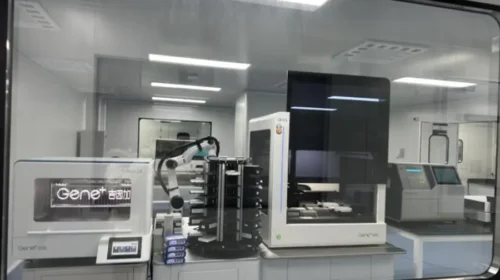
Robotics company Ubtech Robotics Corp. Ltd. (9880.HK) announced on Wednesday that it will acquire 43% of Shenzhen-listed Zhejiang Fenglong Electric Co. Ltd. (002931.SZ) for a total consideration of about 1.67 billion yuan ($237 million).
Ubtech said it will initially acquire about 30% of Fenglong Electric through a share transfer at 17.72 yuan per share. It will then launch a tender offer for an additional 13.02% at an offer price representing a discount of about 10% to the company’s last trading price before its suspension.
Upon completion, Fenglong Electric will become Ubtech’s first subsidiary listed on China’s domestic A-share market. Ubtech will consolidate Fenglong into its own financial results, and will appoint six of the company’s seven directors.
Founded in 2003, Fenglong Electric is primarily engaged in the sale of garden machinery, hydraulic control systems and automotive components, and has returned to profitability in recent years. Ubtech said the acquisition will strengthen its supply-chain integration, cost structure and mass-production capabilities, further consolidating its competitive position in the humanoid robotics industry.
Fenglong Electric shares were suspended on Dec. 18 and resumed trading on Thursday in Shenzhen. The stock jumped by the daily maximum 10.01% to 21.65 yuan when trading resumed, giving it a market capitalization of about 4.7 billion yuan.
By Lee Shih Ta
To subscribe to Bamboo Works weekly free newsletter, click here
Related Articles

BRIEF: Sanhua’s dual businesses drive strong profit growth
BRIEF: Nanhua Futures slumps in Hong Kong trading debut
RELATED ARTICLES
-
Hong Kong Robotics’ stock soars on robotics pivot, but does it have legs?
 0370.HK
 - BRIEF: Ubtech to raise $400 million in share placement at 11.4% discount
- Youibot jumps on IPO assembly line to seize on robot vogue
- BRIEF: Ubtech makes fifth share placement since IPO
- Aux Electric blows into Hong Kong with IPO application
-
Investors are tapped for more cash as iMotion’s ambitions take flight
1274.HK
- Dancing robot sensation Unitree boogeys towards IPO