Planter giant CSW extends roots to Hong Kong
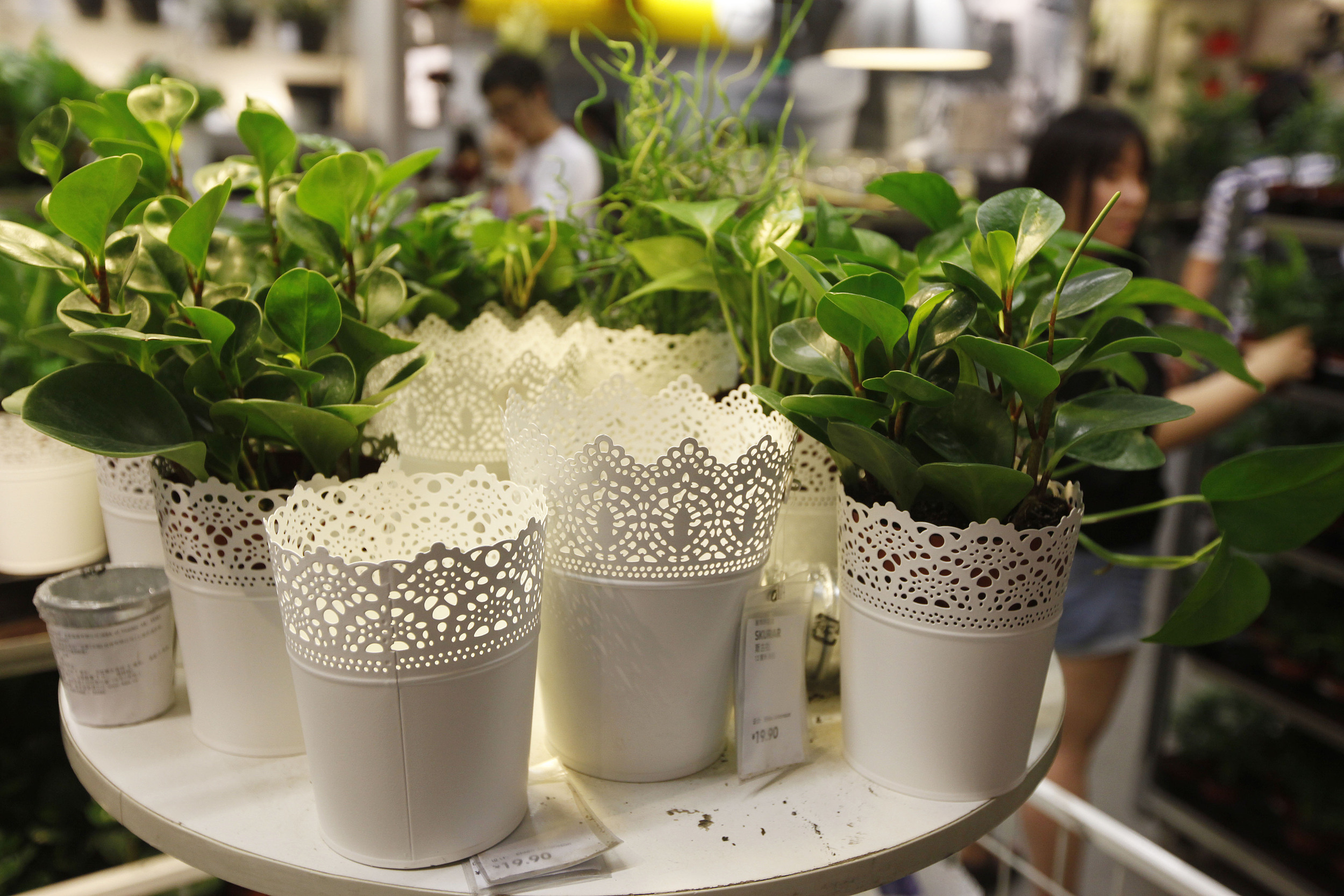
The world’s largest producer of decorative plastic planters has applied for an IPO, boasting a mostly U.S. clientele that includes retailing giants like Lowe’s, Walmart and Costco
Key Takeaways:
- CSW has filed to list in Hong Kong, even as its revenue and profit both declined in the first half of this year
- Despite its heavy reliance on the U.S., which accounts for 90% of its revenue, the company’s products are not subject to tariffs targeting Chinese goods
By Bai Xin Rui
Its main market is the U.S., but these days Consumer Solutions Worldwide (CSW), (Cayman) Ltd. is looking to put down some new roots in Hong Kong. The global gardening giant, known for its decorative indoor and outdoor planters, filed to list in Hong Kong earlier this month, hoping to sell investors on its position as the world’s largest manufacturer in its decidedly traditional manufacturing niche.
CSW was founded in 2004 by current Chairman Lo King Cheung, a former computer programmer who later headed for greener pastures by setting his sights on gardening. He began by producing horticultural products in the southern boomtown of Shenzhen in 2006, and five years later started selling directly to major U.S. retailers that now account for most of his sales. He still dominates the company ahead of the listing, holding 78.2% of CSW’s shares, making him arguably the world’s most valuable gardener.
The company’s product portfolio is of the ordinary garden variety, including outdoor and indoor decorative plastic planters, which accounted for 65.3% and 21% of its revenue in the first half of this year, respectively. Outdoor decorative planters are generally greater than 12 inches (30 centimeters) in diameter, making them suitable for larger spaces in patios and gardens. Indoor planters, meanwhile, are typically under 12 inches in diameter for use in smaller spaces.
The big majority of the company’s revenue, over 90%, comes from the U.S. through long-term relationships with leading retailers including Lowe’s, Walmart, Costco and Home Depot. It sells strictly to other businesses, mostly retailers, and doesn’t engage in direct sales to consumers.
Fertile U.S. market
The U.S. gardening market is quite substantial, with over 55% of households owning a garden or yard that could be suitable for CSW’s products. Retail sales of decorative gardening pots alone in the U.S. totaled $1.5 billion in 2024 and are expected to reach $2 billion by 2029, growing 6.1% annually during that time, according to third-party market data in the company’s prospectus.
As urban population density increases, gardening has become an increasingly important way for residents to alleviate stress and enhance their mental health. In 2023, 81% of U.S. households participated in gardening activities of some kind, up 10 percentage points from pre-pandemic levels, demonstrating a growing consumer preference for cultivating natural environments and embracing sustainable lifestyles.
CSW currently operates five manufacturing facilities in China covering 123,800 square meters, with annual production capacity for over 18 million of its various products. Although the majority of the company’s products are sold in the U.S., they are not subject to China-specific tariffs imposed by President Donald Trump this year due to an exemption for decorative gardening products. Nonetheless, to mitigate against such future risks, CSW has also begun building a new factory in Cambodia, with production set to begin next year.
While things may look rosy in its primary U.S. market, the same isn’t true for CSW’s own business. The company’s revenue wilted 4.1% year-on-year to 186 million yuan ($26.4 million) in the first half of 2025, as it blamed a more cautious approach by its clients, particularly concerning larger-volume outdoor products. At the same time, increased automation helped to improve the company’s production efficiency, which, combined with depreciation of China’s yuan against the U.S. dollar, boosted the company’s gross profit margin by 3.5 percentage points year-on-year to 60%. That helped to lift the company’s gross profit 1.8% year-on-year in the first half of the year to 110 million yuan.
Rising costs pressure bottom line
Despite the gross profit increase, the company faced pressure from rising administrative expenses and higher sales and distribution costs. Its sales and distribution costs alone jumped 22.6% to 21.7 million yuan in the first half of the year, primarily due to increased transportation expenses associated with the launch of new products, leading to higher staff costs and commission expenses. That weighed on the company’s bottom line, with CSW’s net profit slumping by 15.7% to 33.88 million yuan in the first half of the year.
Not surprisingly, CSW’s revenue is subject to seasonality due to the very seasonal nature of gardening. The company’s peak sales period typically runs from October each year to April the following year, as its big retail clients stock up on goods ahead of the spring and summer planting seasons. That means that given that its products are mostly shipped to the U.S. via sea freight, a process typically requiring about two months, revenue and profitability in the second half of the year are usually stronger than the first half. Given its limited growth prospects and old-school background, the company is also hoping to attract investors by committing to distributing 20% or more of its profits as annual dividends.
Broadly speaking, CSW is quite the traditional model of a Chinese manufacturer selling into the export market. That makes it suitable for valuation comparisons with similar Hong Kong-listed exporters like Techtronic Industries (0669.HK), VTech (0303.HK), and Man Wah (1999.HK), which trade at forward price-to-earnings (P/E) ratios of 16.9 times, 14 times, and 8.4 times, respectively. CSW could face challenges getting valued at the high end of that range due to its considerably smaller revenue than the other three companies, compounded by its own shrinking revenue and profits. Consequently, the company may need to settle for a forward P/S ratio of less than 10 times if it hopes to attract investors, especially in the current hot Hong Kong IPO market with so many other choices.
Beyond addressing its rising costs, the company could leverage acquisitions to scale its business and build its revenue and valuation. The world’s five largest decorative plastic planter makers currently control just 19% of the market. As the industry leader, CSW holds 4.6% of that, giving it plenty of room for growth through acquisitions, which could provide some upside for its stock if it moves in that direction.
To subscribe to Bamboo Works weekly free newsletter, click here
Related Articles
RELATED ARTICLES
-
Seeking a profile boost, Boxihe pivots to Hong Kong IPO

- Apparel maker Tanboer seeks fashionability from buoyant IPO market
- What 1.4 billion consumers? Mannings China exit extends foreign retail exodus
-
Stumbling Transsion calls on Hong Kong investors. But will they answer?
688036.SHG
-
Rebounding Vobile explores AI, in further move from content-protection roots
3738.HK
-
Xunlei rediscovers its ‘thunder’ with return to video roots
XNET.US
- Hong Kong IPOs explode in first half as China Inc. abandons New York