Middle East expansion charges up Zhida’s stock
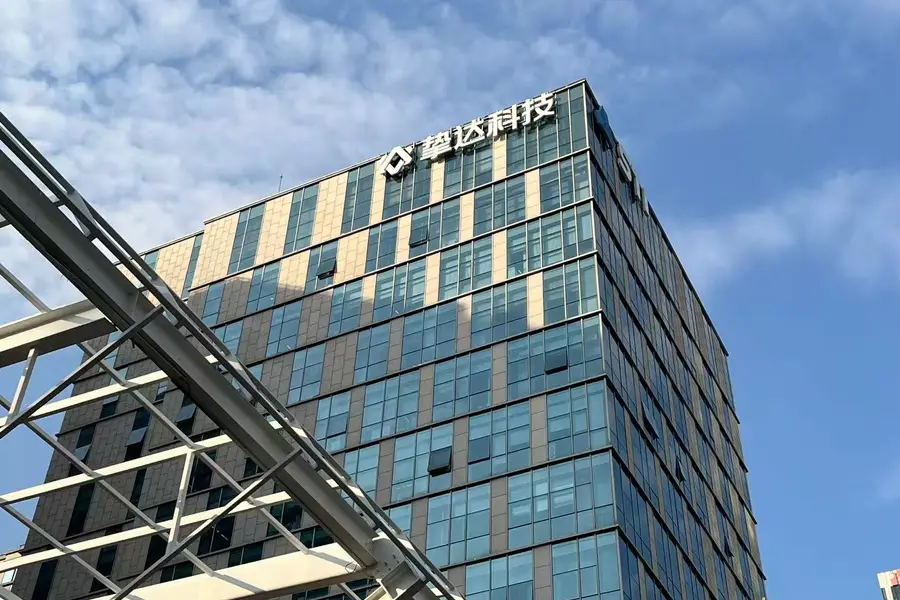
Shares of the EV charger maker, whose backers include BYD, jumped nearly 10% after announcing its latest expansion plan
Key Takeaways:
- Zhida plans to enter the Middle East, targeting Saudi Arabia, as it seeks growth outside the lower-margin China market
- Despite ongoing losses, shares of the leading EV charger maker currently trade at around triple their IPO price
By Bai Xin Rui
Electric vehicles (EVs) are not only charging up sales for manufacturers, but are also lighting a similar fire under the business of related component and equipment makers. One segment getting such a lift is the segment for chargers that keep EVs humming.
That’s turbocharged shares of leading Chinese EV charger maker Shanghai Zhida Technology Development Co. Ltd. (2650.HK) in the two months since its Hong Kong IPO. Its stock got some extra lift more recently with its announcement of plans to expand to Saudi Arabia. The news sent its shares soaring 8.7% the following day.
Founded in November 2010 by current Chairman Huang Zhiming, Zhida began to make EV chargers and smart home accessories in 2015. It started selling its products overseas as early as 2021 and paved the way for its eventual listing with its reorganization as a joint-stock company in September 2022. Its stable of strategic investors includes BYD, the world’s largest new energy vehicle (NEV) maker.
While China has drawn attention for its strong promotion of EVs, accounting for more than half of global sales, Saudi Arabia is also promoting the technology as part of its broader drive into cutting-edge technologies to wean its economy from reliance on oil and gas. That’s led it to forge a growing number of partnerships with companies that can help it reach that objective, with Zhida as one of the latest. The new partnership, announced at the end of last month, is a multi-year supply agreement worth over 100 million yuan ($14 million) with Saudi Controls Ltd. Under the deal, Zhida will provide AC and DC EV chargers over the next five years.
Growing NEV ecosystem
As the Middle East’s economic powerhouse, Saudi Arabia is rapidly advancing its energy transition under its Vision 2030 plan. The government aims to reduce the country’s dependence on oil and other fossil fuels and plans to invest at least $39 billion by 2030 to build an NEV ecosystem. That will naturally require the large-scale deployment of EV charging infrastructure.
Beyond Saudi Arabia, the broader Middle East market also holds out significant opportunities for Zhida and its peers. Home EV charger sales in the region reached 106,400 units last year and are projected to surge to 872,000 by 2029, representing 52.3% annual growth that far exceeds the global average of 20.3% and is second only to Southeast Asia’s expected growth rate of 64.9%.
Zhida says it is China’s largest maker of home EV chargers with 13.6% of the domestic market and 9% of the global market. Its top five customers, primarily automakers, retailers and distributors, account for 53.5% of its revenue, with the largest contributing 17%. Domestic media reports have identified shareholder BYD as Zhida’s largest client.
Premium pricing overseas
While bulk selling to automakers brings in big unit sales, such sales also come at a cost of lower prices. Such sales totaled 85,000 units, down from 125,000 in the year-ago period. Equally significant, the price of those chargers fell 7.5% year-on-year to an average of 780.8 yuan from 721.9 yuan over that time. Meantime, overseas products sold for much more than ones sold domestically. Chargers sold outside China fetched an average 1,089.3 yuan apiece in the first quarter, more than 50% higher than the 723.7 yuan average for the domestic market.
Sales also vary according to time of year. Zhida often records stronger sales during the fourth quarter, when China’s auto sector frequently boosts promotions to sell more EVs before the end of the year.
Despite its broadly rising sales, profitability remains elusive for the company. Its net loss quadrupled last year to 239 million yuan, and the blood-letting continued with a 17.05 million yuan loss in this year’s first quarter. Here, however, we should point out the latest loss represents a 45.8% year-on-year improvement.
Charging into robotics
To improve both its sales and profitability, Zhida, like China’s EV makers, is trying to accelerate its overseas expansion to take advantage of stronger pricing. At 32.13 million yuan, international revenue accounted for just 14.8% of Zhida’s total in the first quarter, leaving substantial room for growth.
The company is also pursuing robotic chargers, delivering 10 units in the first quarter. Such chargers carry gross margins of 30%, around 10 percentage points above the roughly 20% for its mainstream chargers. Zhida views autonomous charging robots as crucial for eventual vehicle-grid integration, enabling real-time data collection for efficient charging management and scheduling. It forecasts its sales from that segment will roughly triple between now and 2029, projecting 902,000 in annual unit sales by the latter date.
While EV chargers represent an essential and distinctive niche, barriers to entry are relatively low – especially for the lower-end models that are Zhida’s specialty. The company’s lack of profitability also remains a concern.
The Saudi deal added to a speculative rally that has seen Zhida’s shares triple from their IPO price of HK$66.92 in October, reducing the potential for much more upside. At such heights, major improvement in the company’s fundamentals looks necessary to justify its current valuation.
To subscribe to Bamboo Works weekly free newsletter, click here
Related Articles

RELATED ARTICLES
-
Zhida seeks to recharge its finances with another IPO bid
-
WuXi AppTec frees up money for Middle East push
2359.HK603259.SHG
- BRIEF: Meituan’s Keeta enters Dubai, its third Middle East market in 40 days
-
China’s corporate pivots: Alibaba’s food delivery gambit and WuXi AppTec’s geopolitical hedge
2359.HK
-
BRIEF: Zhida shares triple in trading debut after weak pricing
2650.HK
-
Auto stalwart Dongfeng charges up NEV business with Voyah listing plan
0489.HK600006.SHG
- WUS Printed Circuit charges up Hong Kong’s growing tech pool