FAST NEWS: Hutchmed Sells Cancer Drug’s Overseas Rights for up to $1.13 Billion
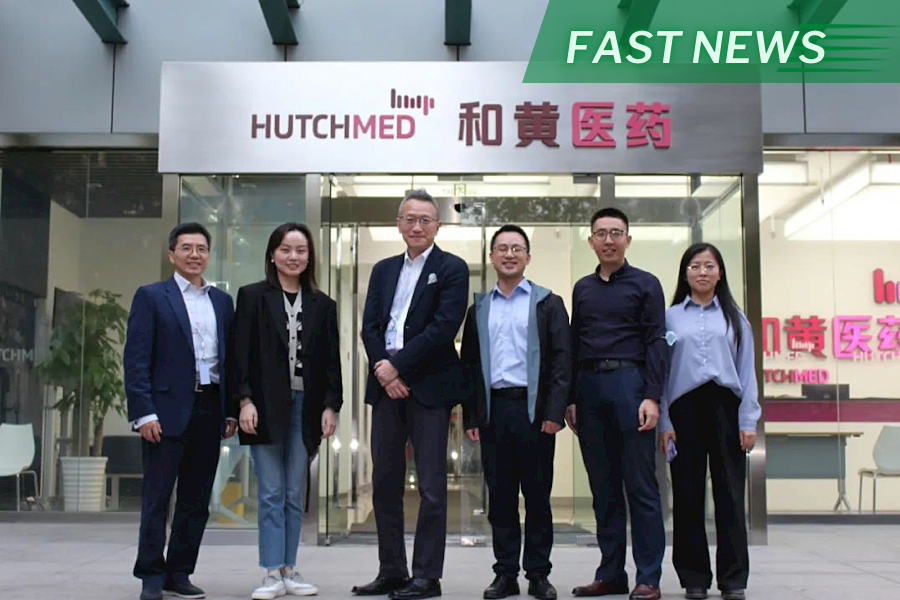
The latest: Hutchmed (China) Ltd. (HCM.US; 0013.HK) announced on Wednesday that it has exclusively licensed Japan’s Takeda Pharmaceutical (TAK.US; 4502.T) to develop, manufacture and sell its metastatic colorectal cancer drug fruquintinib worldwide, with Hutchmed responsible for sales of the drug in mainland China, Hong Kong and Macau.
Looking up: Hutchmed will receive up to $1.13 billion in total payments. That includes $400 million up front on closing, as well as potential regulatory, development and sales milestone payments, plus royalties on net sales.
Take Note: Fruquintinib was approved for sale in China in September 2018 but has not yet received similar approval elsewhere. Its applications for the U.S., EU and Japan are not expected to be complete until later this year.
Digging Deeper: Founded in 2000, Hutchmed is a biopharmaceutical company owned by Hong Kong billionaire Li Ka-shing that develops and sells innovative cancer drugs. The company had three drugs approved for sale in China at the end of last June, generating revenue of $202 million in the first half of last year. It recorded a net loss of $163 million for the period. In addition, the company has 13 oncology candidates in clinical trials in China, seven of those also in clinical trials in the U.S. and Europe.
Market Reaction: Hutchmed’s Hong Kong-listed shares rose on Thursday, closing up 10.9% at HK$30.60 by the midday break. The stock now trades in the middle of its 52-week range.
Translation by Jony Ho
To subscribe to Bamboo Works free weekly newsletter, click here
Related Articles
Han’s CNC revenue doubles in first nine months on booming demand from AI
Longsys profit leaps in first nine months
Transsion stumbles out of the gate after weak pricing