Cheng-Tech motors into crowded self-driving field
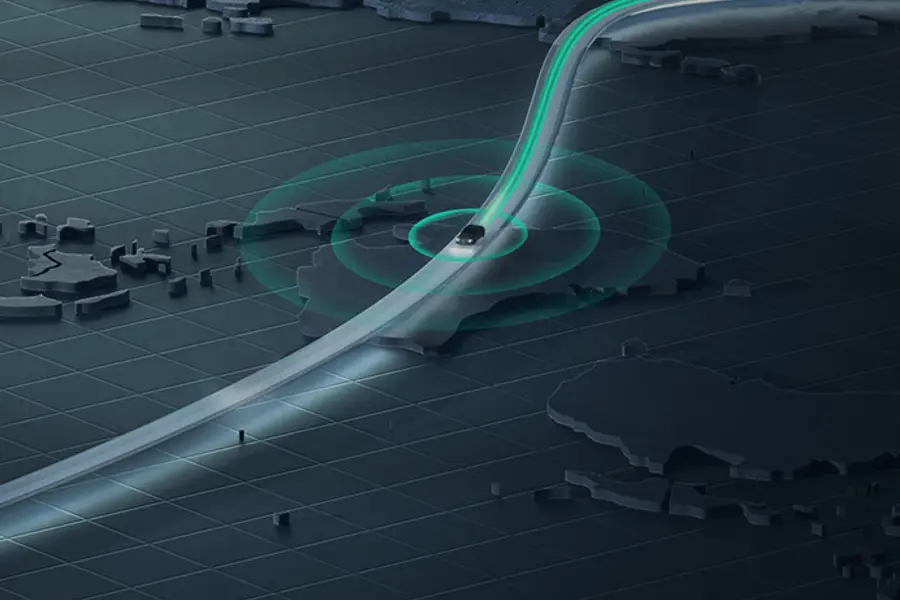
The millimeter-wave radar maker, led by a former Huawei employee as its founder, has filed for a Hong Kong IPO
Key Takeaways:
- Cheng-Tech has filed to list in Hong Kong, reporting its revenue surged 464% in the first half of last year, though it remained in the red
- The millimeter-wave radar maker faces risks from reliance on a single client, and is making efforts to diversify
By Bai Xin Rui
As autonomous driving gains speed and acceptance, key components are fueling the technology’s rise. While cameras and light detection and ranging (LiDAR) are among the higher-profile of those, Shenzhen Cheng-Tech Co. Ltd. hopes to impress investors with its status as China’s third-largest maker of automotive millimeter-wave radar, as it revs up for a Hong Kong IPO. The company aims to capitalize on current enthusiasm for technology stocks, including a growing number engaged in autonomous driving, as Hong Kong experiences one of its hottest IPO markets in years.
Cheng-Tech has some strong credentials in the smart car space, established in 2016 by former Huawei worker Chen Chengwen, and Zhou Ke, who possesses over 20 years of experience in automotive electronics. The company began mass deliveries of its corner radars for passenger vehicles in 2020. A year later it secured designation as a Tier-1 supplier for a German automaker. In 2022, it won orders from a leading domestic OEM after being named as a designated supplier.
The company has also signed on multiple investors since its founding, including listed companies Ningbo Shanshan and Beijing Xinleineng Technology, among others. Chairman Chen is currently its largest shareholder with a 15.48% stake.
The company’s primary product, millimeter-wave radar, functions as a non-contact sensor that emits radio wave signals. It then receives those signals when they bounce back and processes them to detect targets and determine a car’s spatial position, movement direction, speed, distance, and surrounding objects.
While many autonomous vehicles are typically equipped with cameras and LiDAR, millimeter-wave radar can operate effectively under all weather conditions. It also offers strong anti-interference capabilities and penetrative properties. Those factors, combined with growing cost effectiveness, are making the technology an increasingly important component in autonomous driving perception systems.
The millimeter-wave radar industry chain comprises upstream, midstream and downstream segments. The upstream consists mostly of components, including radio frequency front-end modules (MMIC), digital signal processors (DSP/FPGA), printed circuit boards (PCB), antennas and control circuits. The midstream encompasses millimeter-wave radar system design and manufacturing. Finished downstream products are mainly used in intelligent driving, traffic safety, robotics and the low-altitude economy.
Cheng-Tech is selling into a millimeter-wave radar market that is growing rapidly as autonomous driving gains momentum. The market grew from 17.8 billion yuan ($2.54 billion) in 2020 to 29.1 billion yuan by 2024, representing 13.1% annual growth over that time, according to third-party data in Cheng-Tech’s prospectus filed late last month. The growth rate is expected to accelerate in the years ahead, rising to 16.7% annually to reach 63 billion yuan by 2029. Automotive intelligent driving applications are the primary force driving the industry’s growth right now.
Rise of intelligent driving
Falling costs have been a primary factor boosting the recent adoption of millimeter-wave radar products into a growing number of low- to mid-priced vehicle models, as more cost-conscious buyers increasingly want such features. The technology can act as an important part of a car’s core perception system, complementing other sensing technologies like cameras, ultrasonic radar and LiDAR that often have various limitations, to prevent accidents, especially in complex or extreme driving scenarios.
Cheng-Tech has developed multiple millimeter-wave radar products catering to intelligent driving demands from Level 0 (L0) to Level 2+ (L2+), on an autonomous driving scale of 0 to 5, where L5 represents fully autonomous driving. Its products are used in both passenger and commercial vehicles, covering front radars as well as rear and side-facing radars.
The company’s revenue rose more than fivefold year-on-year to 539 million yuan in the first half of 2025, as its front millimeter-wave radar sales jumped 351% and corner millimeter-wave radar sales soared by 1,134%. The big rise lifted the company’s gross profit by 182% year-on-year to 74.51 million yuan in the six-month period.
But Cheng-Tech still lost 14.43 million yuan in the first half of 2025, partly due to a 4.22 million yuan provision for trade and other receivables. The bottom line also took a hit from a tripling in the company’s general and administrative expenses, which it attributed to higher salaries and bonuses, as well as increased share-based payments.
Heavy BYD reliance
While its prospects look relatively strong, a major headwind for Cheng-Tech is its heavy reliance on a single customer. Its listing application reveals that customer accounted for about 82% of its revenue in 2022, and the amount climbed steadily to reach 97.4% in the first half of 2025. While the company didn’t name the customer, other media reports revealed it is none other than leading electric vehicle (EV) maker BYD (1211.HK; 002594.SZ).
In a bid to lower that risk factor, Cheng-Tech says it is exploring collaboration opportunities with other automotive clients. Its listing application says Cheng-Tech has established business interactions with nine out of China’s top 10 car OEMs, encompassing activities such as technical exchanges, product testing and engagement in supplier qualification processes. But apparently none of those have resulted in significant new orders to date.
Simultaneously, Cheng-Tech says it plans to expand into other industries, including high-precision industrial measurement and the low-altitude economy, in a bid to broaden its customer base.
In terms of valuation, leading autonomous driving components maker Hesai (2525.HK, HSAI.US) commands a forward price-to-earnings (P/E) ratio of 40 times its expected 2026 profit. Given Cheng-Tech’s likelihood of also attaining near-term profitability, a pricing of the stock at a multiple below 30 times its projected 2026 earnings could give the shares some significant upside potential.
Conversely, a high pricing at a forward ratio of more than 40 times could risk sending the shares underwater if and when they make it to market. Overall, the company is unlikely to get a premium valuation as high as Hesai’s due to its excessive customer concentration and relatively smaller scale.
To subscribe to Bamboo Works weekly free newsletter, click here
Related Articles
RELATED ARTICLES
-
Black Sesame throws down the gauntlet to Qualcomm in autonomous driving race
 2533.HK
 -
Capital Securities offers limited value in crowded brokerage field
601136.SHG
- Joyson Electronic enters robotic race in bid to soup up its IPO
-
Sany hopes Hong Kong investors see it as global high-tech heavy hitter
6031.HK600031.SHG
-
Seyond survives marathon journey to Hong Kong listing
2665.HK
- WUS Printed Circuit charges up Hong Kong’s growing tech pool
- EnjoyGo shifts gears to driverless future on road to IPO