After carving out a place in the laser cutter market, xTool eyes Hong Kong IPO
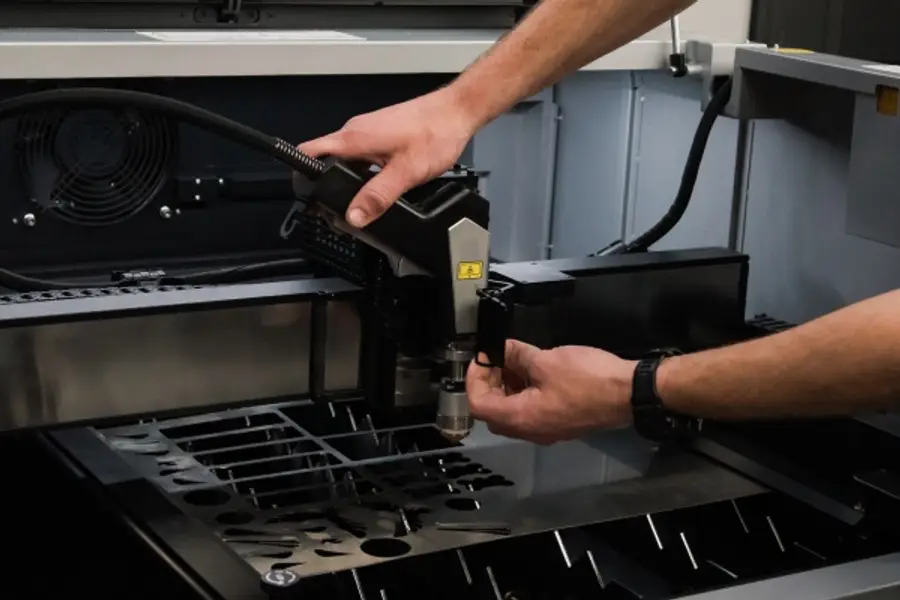
The leading maker of laser cutters and engravers boasts Tencent and HongShan as two of its backers, as well as Morgan Stanley as one of its IPO underwriters
Key Takeaways:
- Laser cutter maker xTool has filed for a Hong Kong IPO, boasting profitability and high margins thanks to its direct sales model that cuts out costly middlemen
- After reporting strong growth in 2024, unit sales of the company’s core laser cutters and engravers dropped in the first nine months of last year
By Doug Young
When it comes to new IPOs, tech companies are always trying to sell themselves on their cutting-edge technology. But xTool Innovate Ltd., which filed to list on the Hong Kong Stock Exchange on New Year’s Day, has a somewhat unique claim to that title, as one of the world’s leading makers of laser cutters and engravers.
The company looks like a relatively strong candidate in this emerging field, saying it controls a near majority 47% of the global market for laser engravers and cutters. Its products use similar technology to 3D printers, but are a slightly different breed in their more limited use as cutting and engraving tools rather than makers of finished products.
One of xTool’s biggest selling points is its A-list of backers, including internet giant Tencent and HongShan, formerly known as Sequoia China. Global heavyweight Morgan Stanley is also one of the IPO’s two lead underwriters, indicating demand from international investors is likely to be strong. That probably owes at least partly to the fact that the company gets the majority of its revenue from outside China, with about 85% coming from the U.S. and Europe last year.
The biggest red flag for investors is a sudden sharp slowdown in the company’s revenue growth last year, which is probably due to growing competition.
But for the most part, things look relatively good for xTool, which has the distinction of being both profitable and relatively cash rich, indicating it’s not making its listing under pressure to raise new money. The company had 1.14 billion yuan ($163 million) in cash at the end of last September, up from 569 million yuan a year earlier. And it more than doubled that by adding another $200 million at the end of last year in its latest funding round led by Tencent.
The company sells most of its products directly to consumers and small businesses, which allows it to maintain enviably high margins compared with some of its peers that rely more heavily on middlemen like distributors and e-commerce websites. Its gross margin stood at 56% in the first nine months of last year, compared with 46.6% for Swiss rival Bystronic (BYS.SW) and just 32.1% for China-based Han’s Laser (002008.SZ).
xTool also has an interesting element to its story through its Atomm online community, which allows users to open their individual studios and homes to offer live demos for others. “These community-led spaces serve as local hubs of creativity and education, enhancing our brand image by turning users into user-hosts,” the company said in its listing document. Such community development is an increasingly important element for many high-tech product and service providers, boosting loyalty and attracting new customers through word of mouth.
Valuations for laser cutter makers and engravers vary quite a bit, with Bystronic commanding a relatively low price-to-sales (P/S) ratio of 0.79, while Han’s Laser trades at 2.44. A ratio of around 3, which assumes a premium due to its high margins and large market share, would value xTool at about $1 billion, making it a tech “unicorn” if it can reach that level.
Slow start
xTool was founded back in 2013 by a then-youthful Wang Jianjun, now 40, who comes from an aircraft design background. But Wang didn’t find his company’s current business until a bit later with the launch of xTool’s first laser carver and engraving products in 2021. It has rapidly made up for lost time since then, and is now one of the top selling brands on Amazon’s U.S. site, where its products typically sell for between $1,000 and $1,800.
As we’ve previously noted, such third-party e-commerce sites account for a relatively small portion of xTool’s overall sales, making up 21% of the total in the first nine months of last year, down from 32% in 2023. The majority 61% of its sales came from its own websites in the first nine months of last year, up from 53% in 2023, while 18% came from offline channels.
The increasing purchases through the company’s own websites seem to show its strong efforts at building a user community are having some positive effects, helping to lower its cost of sales by cutting out middlemen.
The U.S. currently accounts for 55% of xTool’s sales, down from 62% from 2023, which shows it’s geographical sales mix is still changing. The company is exposed to Donald Trump’s U.S. tariffs against Chinese products, though those tariffs keep changing as the two countries try to negotiate a trade deal. That said, xTool also has some wiggle room through a manufacturing facility in Thailand, though that’s notably smaller than its main facility in China. It also has some flexibility through its use of third-party contract manufacturers that may be located offshore.
The company’s overall revenue surged 70% in 2024 to 2.48 billion yuan from the 1.46 billion yuan it recorded in 2023 as its sales quickly scaled up. But things began to slow sharply last year, with revenue up just 19% year-on-year in the first nine months of 2025 to 1.78 billion yuan from 1.5 billion yuan a year earlier.
More worrisome, the company’s actual unit sales of laser-based personal creative tools and accessories fell to 71,900 units in the latest nine-month period from 85,900 units a year earlier. xTool was able to offset some of the revenue pressure by charging higher prices for its products. It also made up for some of the lost business by rolling out a new line of laser printers last year. The company blamed the drop in unit sales to the timing of product launches and discontinuation of certain models. But such a decline for its core products doesn’t look particularly encouraging.
Despite that worrisome sign, the company remained profitable with an 83.1 million yuan profit in the first nine months of last year, up 58% from 52.6 million yuan in the year-ago period. It also notched another milestone last year when its total assets surpassed its total liabilities, giving it positive net assets.
The bottom line looks broadly positive for the company, thanks to its strong profitability and leading position in the laser cutting and engraving space. But xTool may need to ease investor concerns about stumbling sales for its core products if it hopes to achieve a premium valuation.
To subscribe to Bamboo Works weekly free newsletter, click here
Related Articles

RELATED ARTICLES
-
Muyuan eyes global pig pen with Hong Kong IPO
 002714.SHE
 - Low margins, losses dog Ringpai as it eyes Hong Kong IPO
- Lakala eyes Hong Kong IPO as it hops on the going-global bandwagon
- Banu cooks up strong growth with cheaper eats, 24-hour stores
-
Sichuan Teway spices up Hong Kong’s hot IPO market
603317.SHG
- Jingdong Industrials’ stalled Hong Kong IPO clears key hurdle
-
Tinci Materials eyes Hong Kong listing, hoping investors see past its sagging profits
002709.SHE