The steel trading platform is expanding its services across the supply chain and is tapping overseas markets, but the revenue-boosting moves come at a cost
Key Takeaways:
- Turnover rose nearly 37% last year but gross margins shrank and losses surged
- The company is ramping up its international presence and rolling out AI tools in a bid to fuel long-term growth
By Lee Shih Ta
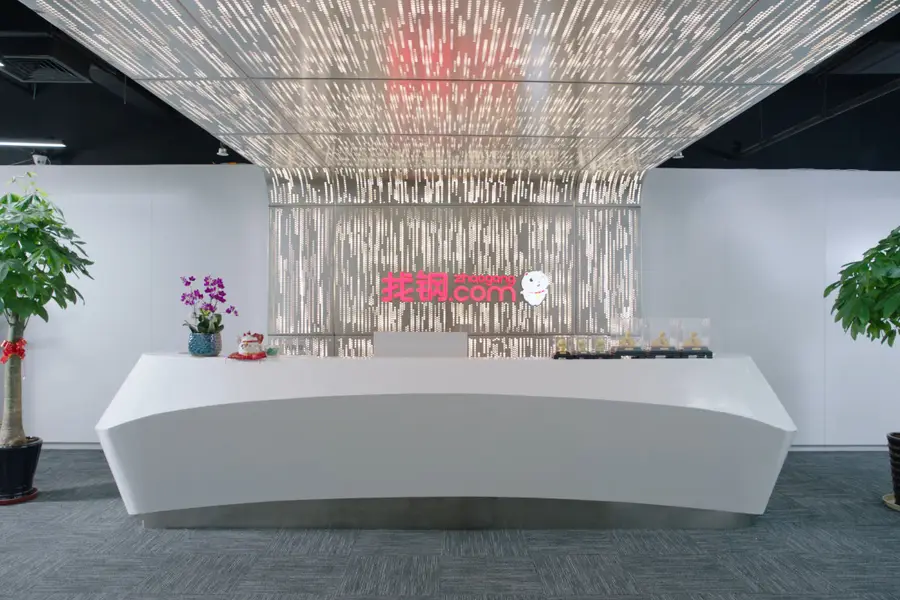
Once dubbed the Alibaba of the steel industry, ZG Group (6676.HK) is actively evolving into more than just an online trading hub.
And the changes underway at ZG Group illustrate a wider trend, as China’s online business platforms aim to become more deeply involved in the industries they serve.
For ZG Group, one of China’s biggest digital platforms for steel trading, that means moving beyond simple matching services into selling products and fulfilling orders, expanding overseas and rolling out AI upgrades.
The imperative is financial. In a maturing market, transaction fees from digitally matching steel suppliers, traders and end users are not enough to sustain long-term growth. Steel demand is driven by macroeconomic and property cycles, and the resulting volatility serves to intensify competition among platforms, making it hard to keep raising commission rates.
But getting more directly involved in the supply chain also has its downsides. The diversified revenue streams are often accompanied by declining profitability.
These dynamics are evident in the latest annual earnings from ZG Group, which reported a leap in revenues but on lower margins and with a much wider loss.
Integrated services
The company is now positioning itself as a technology services company, leveraging industrial data and AI agents to offer intelligent transactions, smart logistics and supply-chain services.
On the international front, the company aims to replicate itself overseas within three years, spearheaded by an accelerating push into the Middle East and Southeast Asia. It is set to bring a steel processing plant in Dubai into operation this year that could become a supply-chain hub for the region.
ZG Group has also launched AI-powered procurement and transaction assistants, hoping to turn them from internal tools into a revenue driver. It has also proposed a transaction model linking one AI agent with another. Meanwhile, it is branching out beyond the core steel business into electronic components and electrical products, signaling a shift towards serving a broader industrial supply chain.
So how are the numbers stacking up? Revenue rose 36.7% in 2025 to 2.12 billion yuan ($310 million) from the prior year. However, gross profit fell just over 11% to 379 million yuan, implying a gross margin of about 17.9%, a steep drop from 27.5% in 2024. The group’s net loss ballooned from about 68.7 million yuan in 2024 to a whopping 590 million yuan last year.
Growing pains
The company attributed part of the widening losses to non-cash factors such as listing-related costs and share-based payments. ZG Group made it onto the Hong Kong stock market last year after it was taken over by a publicly listed shell company, Aquila Acquisition Corp, in a so-called De-SPAC deal, using a backdoor route to a flotation.
However, even after excluding these effects, ZG Group’s adjusted EBITDA turned negative in 2025, indicating that the earnings pressure is coming from the business transformation.
A shifting revenue structure lies at the root of the challenge. The company is replacing income from its original high-margin platform with supply-chain services and trading businesses that generate lower returns.
Revenue from international transactions, with a gross margin of just 7.9%, grew 71.5% to 1.02 billion yuan last year, accounting for 48% of total turnover. Meanwhile, income from the non-steel transaction business jumped nearly 75% to 322 million yuan, around 15% of total revenue, with a gross margin of only 3%.
Transaction support services, which account for about 23% of revenue, logged a gross margin of only 6.1%. In contrast, transaction services with a gross margin of 88.2% fell 16%, reducing their overall revenue share to 12.4%. Technology subscription services, with a gross margin reaching 93%, contributed only about 1.4% of revenue.
Artificial intelligence remains one of the few ways to add value. The company’s AI-related revenue tripled to 335 million yuan last year, contributing about 15.8% of the top line. However, AI functions more as a tool to enhance efficiency for now, based on information disclosed by ZG Group. As such, the AI business has yet to show it can power high-margin growth in the near term.
ZG Group’s gross margin of about 18% falls between the levels of two significant peers, but at the lower end. Margins at ZKH Group (ZKH.US), which is also transitioning toward a supply-chain model, have been relatively stable, coming in at 14.8% in the fourth quarter. Way above them both is Full Truck Alliance (YMM.US), which still primarily operates a matching platform and is achieving gross margins in excess of 60%.
ZG Group is trading at a price-to-sales ratio of about 0.77 times, higher than ZKH’s 0.37 times but far below Full Truck Alliance’s 4.78 times. The gap suggests Investors view ZG Group more as a supply-chain company than a high-margin platform business. The company’s share price fell about 4% to HK$1.2 after the results and has tumbled more than 50% over the past six months amid ongoing worries about corporate direction and earnings.
Its market value could have even further to fall, if margins stay under pressure and AI cannot bridge the gap for now.
To subscribe to Bamboo Works weekly free newsletter, click here
Related Articles