Reborn Unisplendour trades in chips for digits
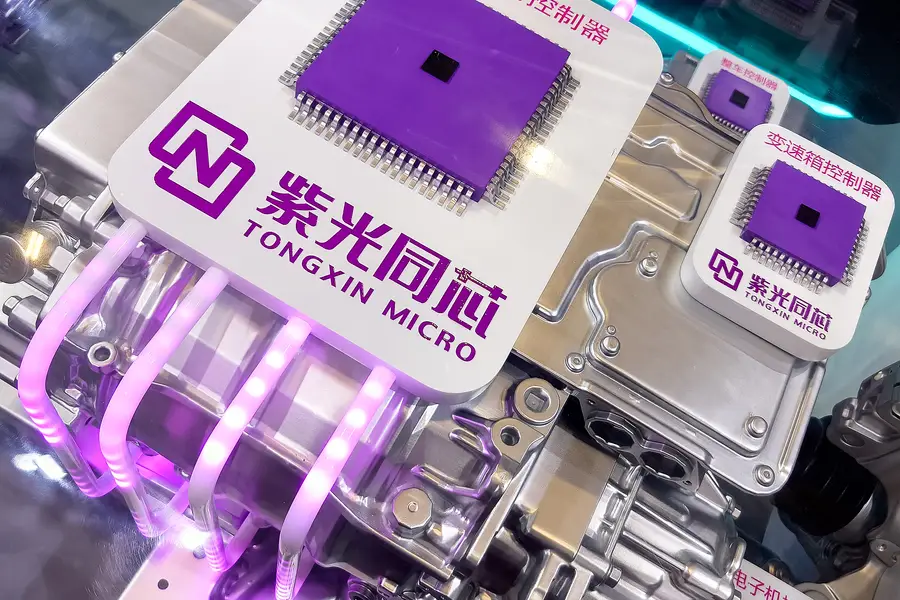
The new rendition of former chip highflyer Tsinghua Unigroup is charting a pragmatic course, shifting from M&A-driven expansion to digital infrastructure
Key Takeaways:
- Unisplendour has filed for a Hong Kong IPO, reporting its revenue grew 25.9% to 47.4 billion yuan in the first half of this year, even as its margins came under pressure
- The company, formed from former scandal-plagued semiconductor maker Tsinghua Unigroup, is focused on AI computing infrastructure as its primary growth engine
Lee Shih Ta
A decade ago, former Tsinghua Unigroup Chairman Zhao Weiguo sent shockwaves through the Greater China semiconductor community when he vowed to buy TSMC and MediaTek, two of Taiwan’s leading players in the sector. Those were heady days when Unigroup was a Chinese sensation seen as one of its best hopes to compete with some of the biggest players across the Taiwan Strait and around the world.
Fast forward to the present, when Zhao is serving a prison sentence for corruption, while his scandal-plagued Unigroup has only recently emerged from a bankruptcy restructuring. Like a phoenix rising from the ashes, the new company is now setting its sights on a return to the global capital market with a plan to list its flagship asset, Unisplendour Corp. Ltd. (000938.SZ) in Hong Kong.
But the new Unisplendour is hardly the same as its predecessor.
With annual revenue of more than 70 billion yuan ($9.9 billion), Unisplendour has emerged as a top contender in China’s digital infrastructure arena. It stands out as one of the few domestic players offering full-stack capabilities spanning computing, storage, networking, security, cloud and integration, allowing it to provide end-to-end services for government, enterprise and internet clients. The company still gets some revenue from its older information and communication technology (ICT) distribution business, but the contribution is steadily falling.
Unisplendour ranked third by revenue in China’s digital infrastructure market in 2024 with 8.6% of the market, according to third-party data in the listing document filed last week. Crucially, it was the second largest player in both networking and computing infrastructure – the sector’s core segments – underscoring its status as a top-tier player in China’s domestic computing power sector.
Computing power muscle
Digital solutions has become an increasingly important revenue source for Unisplendour, rising from less than two-thirds of its revenue in 2022 to 70.6% in 2024, and further climbing to 76.7% in the first half of this year. Meanwhile, the contribution from its ICT distribution segment dropped from 37% to under 23% over that time. The biggest growth came from its computing business segment, covering AI servers and computing clusters, whose revenue grew by 9.46 billion yuan year-over-year in the first half. That lifted the segment to roughly 65% of the company’s digital solutions revenue, making it Unisplendour’s primary growth driver.
The company’s revenue is expanding as China’s computing power build-out accelerates. Its overall revenue grew just modestly from 73.7 billion yuan in 2022 to 79 billion yuan in 2024. But the growth rate picked up this year, with revenue jumping 24.9% year-over-year in the first half of 2025 to 47.4 billion yuan. The jump reflects a recent acceleration in computing center construction, large model training, and industry cloud deployments.
But tension between scaling up and maintaining margins remains unavoidable in such a climate of heavy capital spending needed to keep up with growing demand. As that happens, the company’s overall gross margin has gradually eroded from 19.8% in 2022 to 16% last year, and fell further still to 14.4% in the first half of this year.
Computing power products inherently carry thin margins due to the industry’s relative maturity. Compounding this, a high degree of customer concentration means the relatively small number of major cloud and internet players wield significant bargaining power, forcing companies like Unisplendour to sacrifice price for scale, squeezing its profitability. Consequently, Unisplendour’s net profit margin has slipped in sync with its falling gross margin, contracting from 5.1% in 2022 to just 2.1% in the first half of this year.
As its margins come under pressure, Unisplendour reported its net profit fell about 25% last year to 1.57 billion yuan from 2.1 billion yuan a year earlier. Beyond falling prices, another key drag on the company’s bottom line was surging finance costs. Significant debt financing, combined with related option liabilities from its acquisition of an additional 30% stake in networking equipment maker H3C, drove Unisplendour’s finance costs up 170% year-over-year to 860 million yuan last year, directly eroding its bottom line. The company’s profit rebounded in the first half of this year, rising 4% year-over-year to 1.04 billion yuan.
At the same time, Unisplendour’s cash flow turned negative in the first half, with an operating outflow of 2.82 billion yuan in the period, primarily due to a buildup in inventory and receivables as the company expanded. Its cash stood at 7.44 billion yuan midway through the year, showing it still had plenty of near-term liquidity.
The rapid development of AI applications is rapidly boosting demand for powerful infrastructure to run such programs. In such a landscape, computing power, storage and networking capabilities form the bedrock of AI productivity. At the same time, clients are increasingly looking for companies that can provide end-to-end and system-level integration services. Unisplendour’s comprehensive capabilities in those regards could position it well to secure hosting contracts for large-scale computing power and smart city projects that others may be unable to match.
Global ambitions
The listing document shows that Unisplendour plans to spend its IPO proceeds on underlying technologies like high-performance computing (HPC), cloud and digital platforms, enhancing its core computing resources. Such focus also aligns with China’s national priorities for self-reliance in AI infrastructure, meaning the company is well positioned to receive strong government support in its data infrastructure foray.
Beyond China, Unisplendour also operates in over 100 countries and regions, with 32 subsidiaries across Asia, Europe, Africa and Latin America. That footprint lays the groundwork for future AI infrastructure ventures in emerging markets – a potential source of future growth.
Unisplendour is already listed on China’s domestic A-share market in Shenzhen, where its shares currently trade at a forward price-to-earnings (P/E) ratio of around 50 times, near a three-year high. That’s well ahead of Hong Kong-listed shares for Lenovo (0992.HK) at roughly 10.5 times, and ZTE (0763.HK; 000063.SZ) at 24.4 times.
What’s past is past. With its days of grand pronouncements behind it, Unisplendour is turning to a present where its performance is doing the talking. Backed by scale and big potential for its role in the high-growth AI infrastructure market, the company is offering greater promise than before. If it can address concerns about its eroding margins and high finance costs, it could command a valuation premium to its peers when it lists in Hong Kong.
To subscribe to Bamboo Works weekly free newsletter, click here
Related Articles