Earth Clone designer 51World faces IPO reality check
The maker of “digital twin” tools and simulations, including a plan for a virtual copy of the earth’s surface, is grappling with earnings pressure and rising competition
Key Takeaways:
- The IPO filing marks a second listing attempt by 51World, which logged higher revenues but widening losses in the first half of the year
- Gross margin fell by 10 percentage points as the company’s business shifted from standardized software solutions to more bespoke projects
By Lee Shih Ta
Creating a digital clone of the earth sounds more like the plot of a science fiction movie than the pitch for an IPO.
But this futuristic concept is at the core of a Hong Kong listing application by a company that specializes in creating virtual copies of real-world environments.
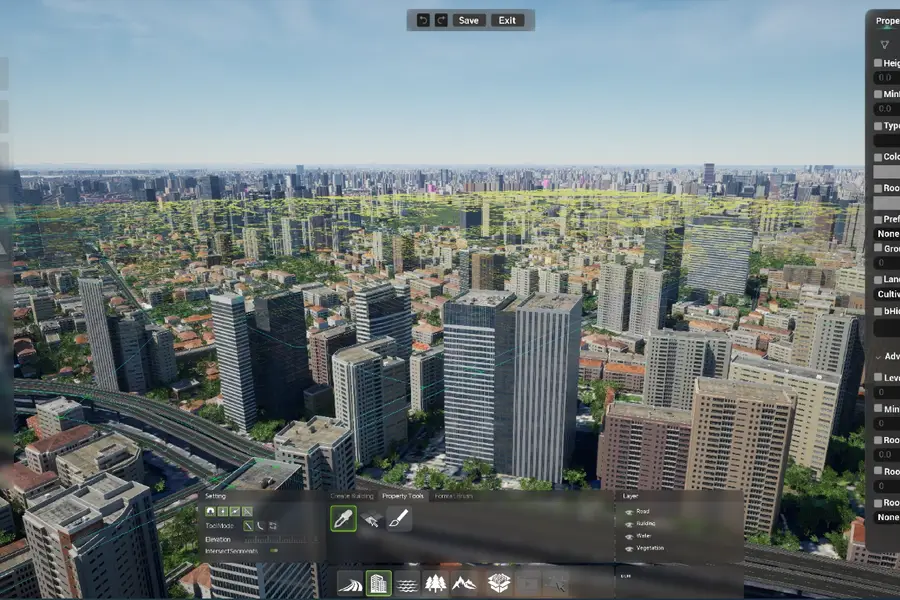
In doing so, Beijing 51World Digital Twin Technology Co. Ltd. aims to enable businesses to scope out or simulate a range of systems or spaces, from the design industry to urban planning, smart driving and traffic control.
The company’s name is inspired by an ambition to create a digital twin of the 510 million square kilometers of the earth’s surface. This story line may sound familiar to some investors, as 51World has tried to sell the concept to the capital markets before.
It made a first listing application a year ago but has only now gained regulatory clearance to press ahead under Hong Kong rules giving easier exchange access for specialist financial companies. The hiatus has meant that an initial burst of enthusiasm has been tempered by questions over whether the company can translate its compelling vision into commercial results.
According to its IPO paperwork, 51World posted annual revenue of 256 million yuan ($36 million) in 2023 and 287 million yuan in 2024 while logging net losses of 87.08 million yuan and 78.97 million yuan. In the first half of this year, revenue surged 62% to 53.82 million yuan from the same period of 2024, but losses jumped nearly 45% from 65.06 million yuan to 94.05 million yuan. Meanwhile, the company’s gross margin fell by 10 percentage points to 41.1%.
While turnover has grown year after year, losses have yet to narrow. At the root of the problem is a shift in business structure from standardized software to more customized project services.
Turnkey engineering
The company operates three core businesses, namely its digital twin platform 51Aes, a data and simulation platform called 51Sim, and 51Earth, its digital earth platform. Around 80% of revenue has consistently come from the digital twin project, which initially focused on software licensing and standardized modeling. The nature of that business, offering the potential to scale up and replicate processes, allowed gross margin to peak at 69.2%.
More recently the focus has shifted toward digital governance projects at city level or involving big industrial parks. These custom-built services require project management support and sustained delivery on site, with rollout cycles typically lasting longer than a year. Revenue can only be recognized at the end of the process once the budget has been disbursed and government inspections completed. The front-loaded costs and belated income stream have put pressure on margins.
The first-half gross margin for the company’s main earnings engine, 51Aes, fell 17 percentage points to 43.4%. The other two businesses fared better but together contributed just a fifth of turnover and could not make up for the drop. In the 51Earth business, margin edged up from 37.3% to 39.4%, while 51Sim turned around from a 9.6% deficit a year earlier to a positive gross margin of 29.4%.
The company noted that its work as a systems integrator for a smart village project in Beijing’s Changping district acted as a drag on gross margin at 51Aes. This emergent trend could become more of a factor, as most new contracts are also expected to take the form of turnkey engineering packages.
Shifting cost base
Changes in the company’s business mix are reflected in costs. R&D spending fell sharply from 103 million yuan in 2023 to 58.31 million yuan in 2024, dropping from around 50% of operating expenses to approximately 28%. By contrast, general and administrative expenses surged 76% in the first half to 46.08 million yuan, already exceeding half of the annual total of 89.60 million yuan in 2024.
At the same time, cash flow pressure has become more pronounced. The prospectus shows that net cash outflows from operating activities widened to around 41.7 million yuan in the first half. At the mid-year point, ready cash and equivalents had fallen sharply to 166 million yuan from about 270 million yuan a year earlier.
Up until now, eight funding rounds have raised about 800 million yuan from investors such as SenseTime, Moore Threads, China Merchants Securities and prominent private equity player Ge Weidong. After the last round, 51World achieved a valuation of 4.4 billion yuan. Founder Li Yi holds a controlling 24.7% stake through directly owned shares or via Starcraft Technology.
As an incentive to get on board, investors were granted preferential privileges including repurchase, co-sale and tag-along rights that would terminate in the event of a successful IPO. This also implies that the company may be contractually obliged to buy back investor shares if a listing is not achieved within a stipulated timeframe.
Intensifying competition from industry peers is also a challenge. SuperMap Software (300036.SZ) has rolled out a rival solution for digital twin cities and Digital China (000034.SZ) has partnered with Baidu, China Telecom and other enterprises in the same space, leveraging strengths in data integration and cloud computing.
For 51World, the Earth Clone mission remains a compelling narrative. But unless a balance can be struck between expanding major engineering projects and developing standardized products, the dream of a virtual world may never be fully realized.
To subscribe to Bamboo Works weekly free newsletter, click here
Related Articles