Neglected Burning Rock charms investors with high margins, narrowing losses
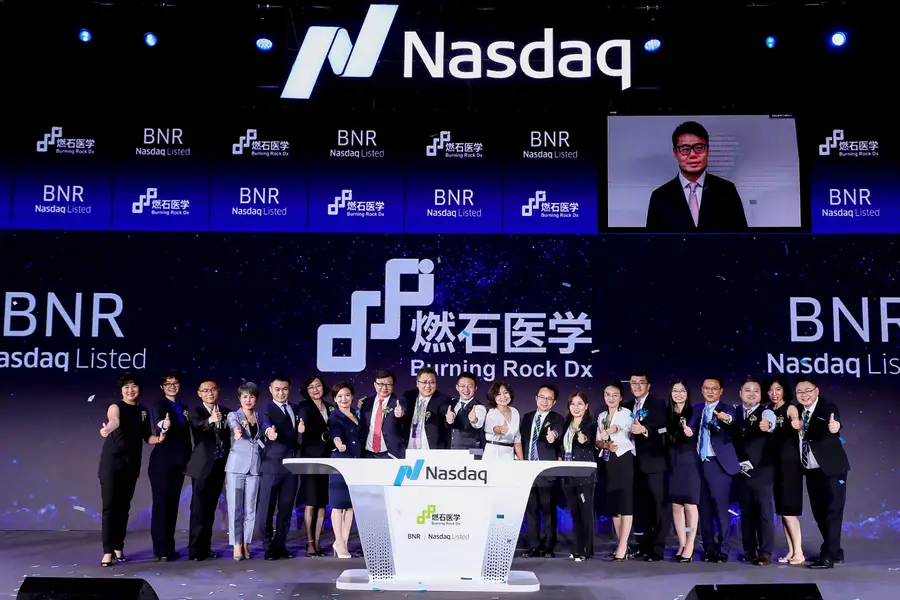
The cancer diagnostics company’s revenue rose slightly in the third quarter, as its gross margin rose by nearly 4 percentage points
Key Takeaways:
- Burning Rock’s revenue rose 2.3% in the third quarter, as declines for its core cancer diagnostic products were offset by a big rise for its R&D services
- The company’s stock has tripled this year, including a 33% jump in the last week after its latest earnings announcement, as it moves closer to profitability
By Doug Young
As we head into the end of a banner year for Chinese stocks, we’ll take a closer look at the latest earnings from cancer diagnostic company Burning Biotech Ltd. (BNR.US), which is part of a small group whose shares have done especially well. We’ve previously called these stocks “China Easter Eggs,” because they seemed to be companies that had good growth prospects despite being neglected by investors.
But for Burning Rock, the case is less clear, since the company has been steadily losing money since its New York IPO in 2020, and its revenue wasn’t growing very fast. The best explanation for a tripling of its stock this year seems to be its enviably high gross margins, which are well ahead of global peers. But the company’s high operating expenses have kept Burning Rock squarely in the red.
The flow of red ink continued in the third quarter, though the company’s loss narrowed sharply, hinting that Burning Rock may finally make it to the promised land of profitability in the not-too-distant future. The company doesn’t seem in danger of a cash crunch anytime soon because a significant part of its expenses are from non-cash items like stock-based compensation and depreciation costs, giving investors one less thing to worry about.
Whatever the reason, investors certainly seemed to like the company’s latest financial report, released last week. The stock rose by about a third in the five trading days since then to reach a two-year high, giving it a market cap of $230 million.
Burning Rock’s enviably high gross margins aside, there are a few other positive developments that could explain recent investor enthusiasm towards the company, which we’ll detail shortly. But the big gains this year could also owe simply to investors “discovering” the company after several years of neglect. Even after the stock’s 207% gain this year, it still trades at a price-to-sales (P/S) ratio of 3.0, close to the 3.17 for France’s bioMérieux (BIM.PA) but still quite a bit behind the 5.14 for the much larger Thermo Fisher Scientific (TMO).
Burning Rock makes cancer diagnostic products that are used both by partner hospitals for in-hospital testing, as well as by individuals for at-home testing. The at-home testing products have higher margins, but have taken a hit in the last two years because they rely heavily on doctor referrals. But doctors have been providing such referrals less in the last two years following a government crackdown on the practice of medical device companies paying doctors for such referrals.
The company has been trying to focus more on its in-hospital business, which isn’t affected by the government crackdown. It was having success boosting revenue from that segment until the latest quarter, when the figure fell 17.1% year-on-year to 52.8 million yuan ($7.45 million) from 63.8 million yuan. The company only cited a “decrease in sales volume” for the drop, without further explanation. And there wasn’t any chance for investors to ask company officials directly about the decline, since it discontinued its quarterly earnings calls last year.
Growing R&D income
The company’s at-home testing business, referred to as “central lab” business in its reports because test results are processed in a central laboratory, also fell 7.9% year-on-year to 36.8 million yuan from 40 million yuan a year earlier due to lingering effects from the crackdown.
The company’s lone saving grace was a 69% jump in revenue from its R&D services, which rose to 42 million yuan from 24.9 million yuan a year earlier. While that looks like a potential source of excitement as a new growth engine, a look back at the company’s recent reports shows this particular revenue source is quite unstable and can both rise and fall in any specific quarter.
Still, the big jump in R&D revenue helped Burning Rock record an overall revenue increase of 2.3% in the third quarter, with the figure rising to 131.6 million yuan from 128.6 million yuan a year earlier.
Its cost of revenue was also quite low and fell year-on-year for the quarter, giving the company a very attractive gross margin of 75.1% for the quarter, up nearly 4 percentage points from 71.4% a year earlier. By comparison, bioMérieux’s gross margin for the last 12 months stood at 56.3%, while Thermo Fisher Scientific’s was even lower at 41.3%.
Unfortunately for Burning Rock, the company’s expenses are quite high. That figure stood at 115 million yuan in the latest quarter, equal to about 87% of its revenue, though down 12% year-on-year. Still, such high expenses ultimately weighed on the company’s bottom line, though its net loss narrowed sharply to 16.8 million yuan from 35.7 million yuan a year earlier, showing it could finally become profitable soon.
In one other positive development, the company announced that Japan had approved some of its products to be used as “companion diagnostics” for capivasertib, an oral breast cancer drug developed by AstraZeneca. But even here, we should point out Burning Rock’s global business isn’t doing particularly well, with its non-China revenue dropping to just 17.2 million yuan in the third quarter from 25.8 million yuan a year earlier.
Other Chinese “Easter Eggs” we’ve written about this year include wearable device maker Zepp (ZEPP.US), whose shares are up 10-fold since January, and So-Young (SY.US), whose shares have tripled, as well as Here Group (HERE.US), formerly known as QuantaSing, whose stock is up 150%. But all of those companies had relatively clear growth catalysts that were previously overlooked by investors.
The case is much hazier for Burning Rock, whose core business looks solid enough but isn’t going anywhere fast. What’s more, the company doesn’t seem to have any major new growth catalysts in its pipeline. Its high gross margins and movement toward profitability are both encouraging signs. And we should also point out that even after this year’s rally, the stock still trades at less than a tenth of the highs it reached in 2021 shortly after its IPO.
To subscribe to Bamboo Works free weekly newsletter, click here
Related Articles